
The landscape of enterprise technology has shifted dramatically, and organisations across every sector now face a pivotal choice: embrace AI transformation or risk obsolescence. This journey extends far beyond deploying new software-it requires rethinking how work gets done, how employees collaborate, and how value reaches customers. For forward-thinking enterprises, AI transformation represents an opportunity to fundamentally reimagine operations, decision-making, and competitive positioning in ways that were impossible just a few years ago.
Understanding the Scope of AI Transformation
AI transformation encompasses the comprehensive integration of artificial intelligence capabilities across an organisation’s people, processes, and technology infrastructure. Unlike isolated pilot projects or departmental experiments, true transformation touches every aspect of how a business operates.
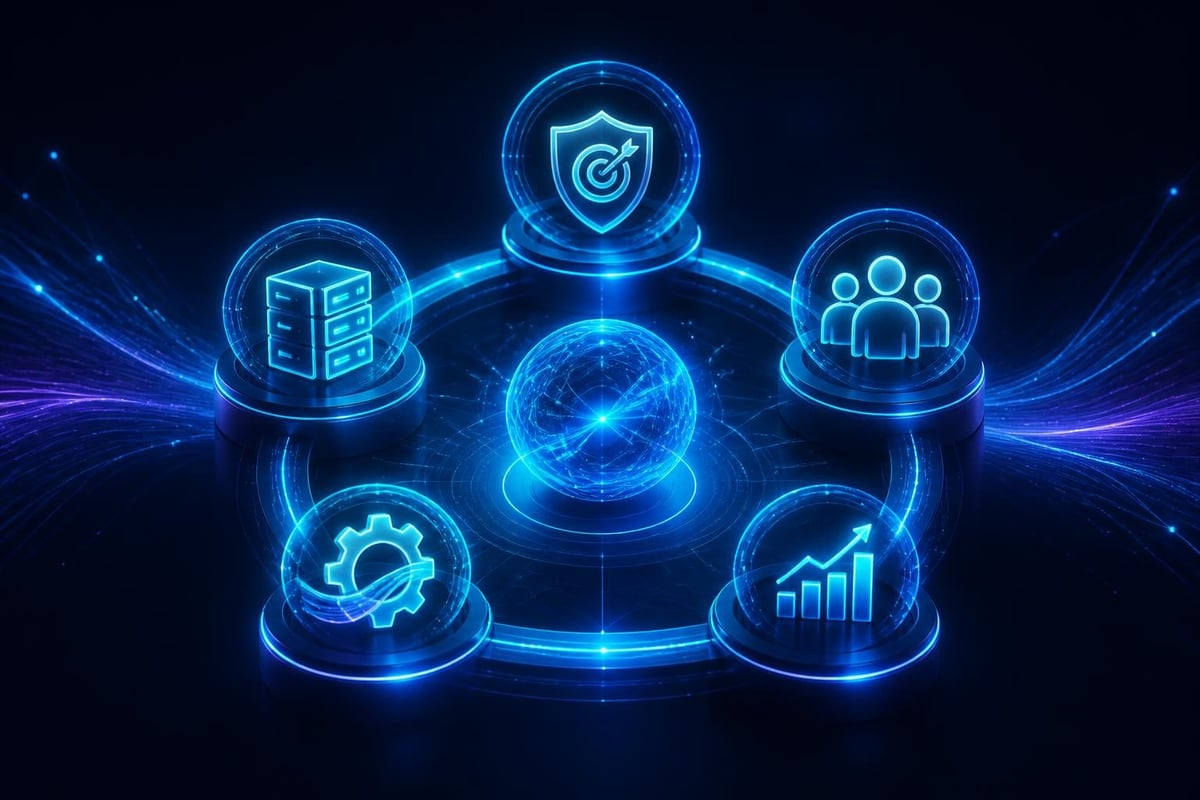
The scope begins with strategic vision. Leadership must articulate clear objectives that connect AI investments to measurable business outcomes. This means identifying which processes will benefit most from automation, where predictive analytics can improve decision-making, and how generative AI might unlock new customer experiences.
The Human Dimension
People remain central to successful AI transformation. Employees need:
- Clear communication about how AI will augment their roles
- Training programmes that build confidence and competence
- Opportunities to co-create AI solutions for their daily challenges
- Support structures that address concerns about job security
According to the Stanford HAI AI Index 2024, organisations investing in workforce development alongside AI technology achieve significantly higher adoption rates and faster time-to-value. The data reveals that companies treating AI transformation as primarily a technology challenge struggle with change resistance and underutilisation.
Process redesign follows naturally from employee empowerment. When teams understand AI capabilities, they identify bottlenecks and inefficiencies ripe for intelligent automation. Empowering employees through accessible AI tools creates a culture of continuous improvement.
Building the Strategic Foundation
Every successful AI transformation begins with strategic clarity. Organisations must answer fundamental questions before significant investment: What specific business problems will AI solve? How will success be measured? What risks require mitigation?
Aligning AI Strategy With Business Objectives
The most effective AI transformations stem from business strategy, not technology trends. Consider these alignment approaches:
- Revenue enhancement – Deploying AI to personalise customer experiences, optimise pricing, or accelerate sales cycles
- Operational efficiency – Automating repetitive tasks, streamlining workflows, or reducing error rates
- Innovation acceleration – Using AI to generate insights, prototype faster, or explore new business models
- Risk mitigation – Applying AI for fraud detection, compliance monitoring, or cybersecurity
Harvard Business Review research demonstrates that executives who frame AI as a competitive advantage rather than a threat drive more ambitious transformation programmes. This mindset shift encourages experimentation whilst maintaining appropriate governance.
| Strategic Approach | Primary Focus | Typical ROI Timeline | Risk Level |
|---|---|---|---|
| Quick wins | Automation of repetitive tasks | 3-6 months | Low |
| Process optimisation | End-to-end workflow enhancement | 6-12 months | Medium |
| Business model innovation | New revenue streams | 12-24 months | High |
| Cultural transformation | Organisation-wide AI literacy | 18-36 months | Medium |
Establishing Governance and Risk Management
AI transformation introduces novel risks around bias, privacy, security, and reliability. Robust governance frameworks provide guardrails that enable innovation whilst protecting stakeholders.
The NIST AI Risk Management Framework offers structured guidance for identifying, assessing, and mitigating AI-specific risks. Organisations adopting this framework establish clear accountability, implement continuous monitoring, and build stakeholder trust.
Key governance elements include:
- Ethics committees that review AI use cases for potential harms
- Model validation processes ensuring accuracy and fairness
- Data governance policies protecting privacy and ensuring quality
- Incident response procedures for when AI systems behave unexpectedly
Understanding AI adoption best practices helps organisations balance innovation velocity with responsible deployment.
Technology Infrastructure and Architecture
The technical foundation determines what’s possible in AI transformation. Organisations need scalable infrastructure that supports experimentation whilst maintaining security, performance, and cost efficiency.
Cloud Platforms and AI Services
Modern AI transformation typically leverages cloud platforms offering pre-built AI services alongside infrastructure for custom development. Microsoft Azure, for instance, provides a comprehensive ecosystem spanning infrastructure-as-a-service through to ready-to-use cognitive services.
Infrastructure considerations include:
- Compute resources for model training and inference
- Storage systems optimised for large datasets
- Networking capabilities supporting distributed AI workloads
- Security controls protecting sensitive data and models
The Azure AI platform demonstrates how integrated services accelerate AI transformation by reducing complexity and time-to-deployment.
Integration With Existing Systems
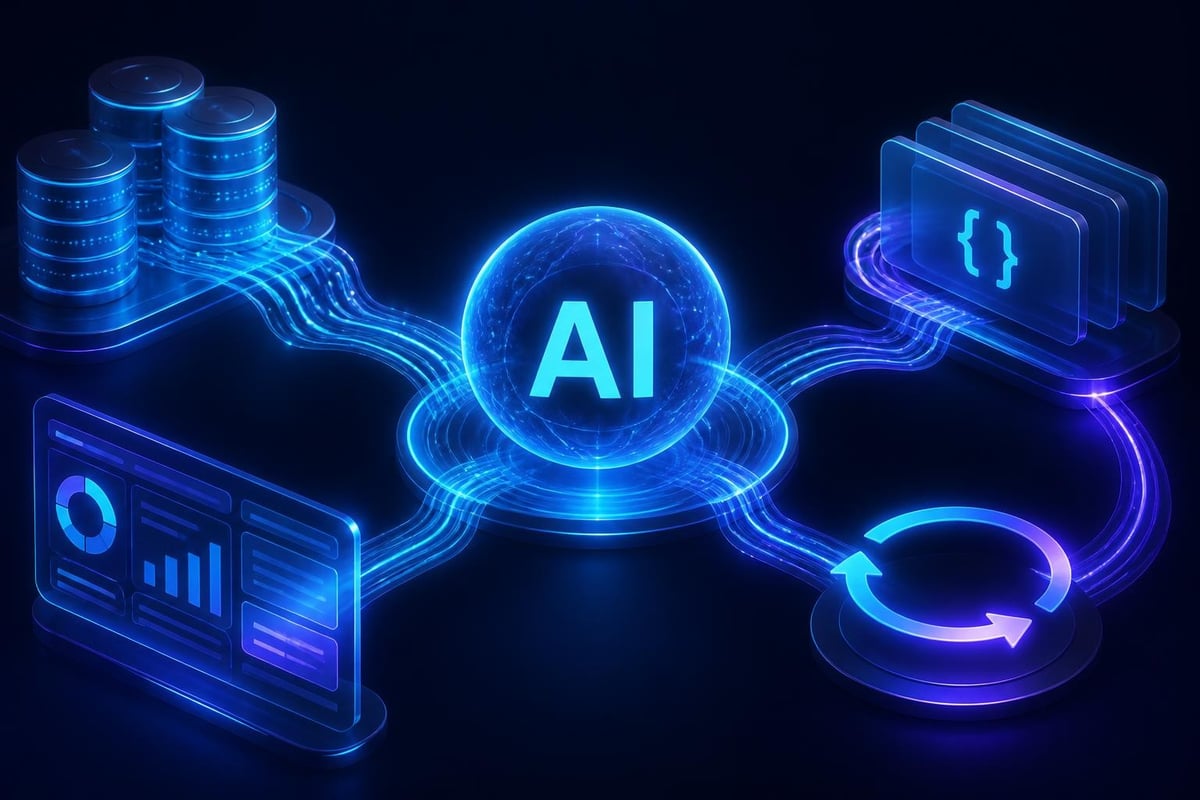
AI capabilities must connect seamlessly with existing enterprise systems-ERP, CRM, HRMS, and operational databases. AI system integration challenges often determine transformation timelines more than the AI technology itself.
Successful integration strategies:
- Start with API-first architectures that expose data and functionality
- Implement data pipelines ensuring AI models access current, clean information
- Design user experiences that embed AI insights into existing workflows
- Plan for bi-directional data flow supporting continuous learning
Implementation Approaches and Methodologies
The path to AI transformation varies by organisation size, industry, and maturity. However, certain patterns consistently produce better outcomes than others.
Phased Rollout Versus Big Bang
Most successful transformations favour phased approaches that build momentum through demonstrable wins. This methodology:
- Reduces risk by limiting initial scope
- Generates learnings that inform subsequent phases
- Builds internal advocates through early successes
- Allows infrastructure to scale organically
Phase 1: Foundation (Months 1-6)
Establish governance, select initial use cases, build core infrastructure, pilot with friendly user groups.
Phase 2: Expansion (Months 7-18)
Scale successful pilots, add complexity through integration, broaden use cases across departments, invest in training.
Phase 3: Optimisation (Months 19+)
Refine models based on production data, automate operations, explore advanced capabilities, embed AI-first thinking.
The World Economic Forum’s strategies emphasise that successful AI transformation requires patience and persistence, with most organisations taking 18-36 months to achieve mature capabilities.
Agile and Iterative Development
AI projects benefit from agile methodologies that embrace experimentation and rapid iteration. Traditional waterfall approaches struggle with AI’s inherent uncertainty-model performance often surprises even experienced practitioners.
Key practices include:
- Sprint-based delivery releasing functionality every 2-4 weeks
- Continuous feedback loops from end users to data scientists
- A/B testing comparing AI-enhanced versus traditional approaches
- Retrospectives capturing learnings and adjusting approach
Exploring custom AI development reveals how tailored solutions address unique business requirements whilst maintaining agility.
Workforce Enablement and Change Management
Technology alone never drives transformation-people do. The human dimension of AI transformation often determines success more than technical factors.
Skills Development and Training
AI transformation requires new skills across multiple roles. Organisations must invest systematically in building capability:
| Role Category | Key Skills Needed | Training Approach |
|---|---|---|
| Leadership | AI strategy, ethics, ROI evaluation | Executive workshops, advisory support |
| Business users | AI tool proficiency, prompt engineering | Hands-on labs, use case practice |
| IT professionals | AI operations, integration, security | Technical certifications, project work |
| Data teams | ML engineering, responsible AI, MLOps | Advanced courses, mentorship |
Addressing Resistance and Building Buy-In
Change resistance represents a natural human response to uncertainty. Effective change management acknowledges concerns whilst creating compelling reasons to embrace new ways of working.
Successful approaches include:
- Transparent communication about AI’s role and limitations
- Involving employees in selecting and designing AI solutions
- Celebrating early adopters and sharing success stories
- Providing psychological safety to experiment and learn
Understanding the impact of AI on specific roles helps tailor change management to different employee groups.

Security, Privacy, and Compliance
AI transformation introduces new dimensions to enterprise security and compliance programmes. Organisations must address risks specific to AI systems whilst maintaining vigilance around traditional threats.
AI-Specific Security Considerations
AI systems face unique vulnerabilities:
- Model poisoning where attackers manipulate training data
- Adversarial attacks designed to fool AI into incorrect outputs
- Model theft through reverse engineering or extraction
- Privacy leakage where models inadvertently expose training data
The ENISA guidance on AI cybersecurity provides comprehensive frameworks for securing AI systems throughout their lifecycle. These controls should integrate with existing security operations rather than creating parallel structures.
Regulatory Compliance and Ethics
The regulatory landscape for AI continues evolving rapidly. Organisations deploying AI must monitor developments across multiple jurisdictions whilst implementing controls that demonstrate responsible use.
Building trustworthy AI requires attention to ethical AI design principles, including transparency, fairness, accountability, and privacy. These aren’t merely compliance requirements-they’re essential for maintaining stakeholder trust and social licence to operate.
Measuring Success and Demonstrating Value
AI transformation demands significant investment. Organisations must establish clear metrics that connect AI initiatives to business outcomes and demonstrate return on investment.
Key Performance Indicators
Effective measurement frameworks balance multiple dimensions:
Financial metrics:
- Cost savings from automation
- Revenue growth from AI-enhanced products
- Productivity improvements across processes
Operational metrics:
- Process cycle time reductions
- Error rate improvements
- Customer satisfaction scores
Strategic metrics:
- Speed of innovation
- Employee engagement with AI tools
- Competitive positioning
Continuous Improvement and Iteration
AI transformation is never truly complete. The technology advances rapidly, business needs evolve, and initial implementations reveal new opportunities. Successful organisations build continuous improvement into their AI operations.
This includes monitoring model performance over time, gathering user feedback systematically, experimenting with emerging capabilities, and refining based on accumulated learnings. The ability to adapt and evolve determines long-term success.
Industry-Specific Considerations
Whilst AI transformation principles apply broadly, implementation details vary significantly by sector. Each industry faces unique regulatory constraints, operational requirements, and competitive dynamics.
Manufacturing and Supply Chain
Manufacturers leverage AI for predictive maintenance, quality control, demand forecasting, and supply chain optimisation. The physical nature of operations requires careful integration between AI systems and operational technology.
Financial Services
Banks and insurers deploy AI for fraud detection, risk assessment, personalised advice, and regulatory compliance. Strict regulatory requirements and high accuracy demands shape transformation approaches.
Healthcare and Life Sciences
Healthcare organisations apply AI to diagnostic support, treatment planning, drug discovery, and administrative automation. Patient safety and privacy regulations create specific governance requirements.
Professional Services
Consultancies, law firms, and accounting practices use AI to augment knowledge work, automate research, and enhance client delivery. The focus centres on augmenting human expertise rather than replacement.
The Role of Partners in Accelerating Transformation
Few organisations possess all capabilities needed for successful AI transformation internally. Strategic partnerships accelerate progress by providing expertise, proven methodologies, and access to cutting-edge technologies.
Selecting the Right Partner
Effective AI transformation partners bring:
- Deep technical expertise across AI technologies
- Industry-specific knowledge and use case libraries
- Change management capabilities
- Ongoing support for operations and optimisation
Microsoft Solutions Partners like those specialising in AI infrastructure solutions offer integrated approaches that combine Microsoft’s AI platforms with transformation expertise.
Building Collaborative Relationships
The most successful partnerships operate as true collaborations rather than vendor-client transactions. This means:
- Joint planning and goal-setting
- Knowledge transfer to internal teams
- Shared accountability for outcomes
- Long-term engagement supporting evolution
Organisations exploring AI managed services often find that ongoing partnerships provide more value than point-in-time implementations, particularly as AI capabilities and business needs evolve.
Looking Ahead: The Future of AI Transformation
The pace of AI advancement shows no signs of slowing. Organisations that establish strong foundations now will find themselves well-positioned to adopt emerging capabilities as they mature.
Emerging Trends for 2026 and Beyond
Several trends are reshaping AI transformation strategies:
- Multimodal AI processing text, images, audio, and video together
- Autonomous agents that plan and execute complex tasks
- Federated learning enabling AI across distributed data
- Edge AI bringing intelligence closer to data sources
Understanding 2026 AI trends helps organisations prioritise investments and avoid premature commitments to nascent technologies.
Building Adaptive Organisations
The ultimate goal of AI transformation extends beyond implementing specific technologies. It’s about creating organisations that learn, adapt, and improve continuously-where AI becomes embedded in how work happens rather than something bolted on afterwards.
This requires cultural change as much as technical capability. Organisations must cultivate curiosity, embrace experimentation, and view failure as learning. The mindset shift from “we’ve always done it this way” to “how might AI help us do this better” represents transformation’s deepest impact.
AI transformation represents both a significant challenge and an extraordinary opportunity for enterprises willing to commit to the journey. Success requires balanced attention to strategy, technology, people, and governance, with clear metrics connecting initiatives to business value. Organisations that approach transformation systematically whilst maintaining flexibility to adapt will find themselves positioned for sustained competitive advantage in an increasingly AI-driven world. Stellium Consulting partners with enterprises throughout their AI transformation journeys, combining deep Microsoft AI expertise with proven methodologies for empowering employees, enhancing processes, and delivering measurable business outcomes. Contact us to explore how AI can transform your organisation.