
The landscape of artificial intelligence continues to evolve at an unprecedented pace, and staying informed through industry gatherings has become essential for enterprises seeking a competitive advantage. Across Switzerland and Western Europe, AI events in 2026 offer unique opportunities for organisations to explore cutting-edge technologies, forge strategic partnerships, and gain insights into transforming business operations through AI-powered solutions. From Microsoft-focused conferences to broader industry symposiums, these gatherings serve as critical touchpoints for decision-makers, developers, and AI strategists.
The Strategic Importance of AI Events for Enterprise Leaders
Attending AI events provides more than networking opportunities. These conferences deliver tangible value through hands-on workshops, case studies from successful implementations, and direct access to technology providers who shape the AI ecosystem. For enterprises working with Microsoft solutions, events focused on Azure AI, Copilot integrations, and Power Platform innovations offer particularly relevant insights.
The benefits extend across multiple dimensions:
- Direct engagement with Microsoft Solutions Partners who bring real-world implementation experience
- Exposure to emerging AI trends that inform strategic planning cycles
- Access to technical deep-dives that accelerate internal capability development
- Opportunities to evaluate vendor solutions in concentrated timeframes
Switzerland has emerged as a significant hub for AI innovation within Europe, attracting both established technology firms and innovative startups. The country’s central location, strong research institutions, and business-friendly environment make it an ideal venue for international AI events that draw participants from across the continent.
Microsoft-Centric Events Shaping Enterprise AI
Microsoft’s ecosystem dominates the enterprise AI landscape, and dedicated events provide invaluable insights for organisations already invested in Azure, Microsoft 365, and related platforms. Red Hat AI Elevate offers in-person events throughout 2026 designed specifically to help organisations build, deploy, and manage secure, cost-effective AI solutions at scale.

These Microsoft-aligned gatherings address critical challenges that enterprises face when implementing AI at scale. Sessions typically cover governance frameworks, security considerations, and integration patterns that align with existing Microsoft investments. For organisations exploring enterprise AI adoption, these events provide practical roadmaps validated by peer experiences.
| Event Focus | Primary Audience | Key Value Proposition |
|---|---|---|
| Azure AI Services | Cloud architects, developers | Technical implementation patterns |
| Microsoft Copilot | Business leaders, IT managers | Productivity transformation strategies |
| Power Platform AI | Citizen developers, analysts | Low-code AI application development |
| Security & Governance | CISOs, compliance officers | Risk management frameworks |
The emphasis on Microsoft technologies reflects market realities. Organisations that have standardised on Microsoft infrastructure seek events that address their specific technical context rather than generic AI theory.
Premier AI Conferences Across Western Europe
Western Europe hosts several flagship AI events that attract international participants and showcase advances across the AI spectrum. The 40th Annual AAAI Conference on Artificial Intelligence, scheduled for January 2026 in Singapore, represents the academic pinnacle, though its influence extends to European researchers and practitioners who contribute papers and attend workshops.
Within Europe proper, numerous conferences cater to different segments of the AI community. QCon AI targets developers, architects, and engineering leaders with sessions on accelerating software development lifecycles and architecting for scale. This enterprise focus aligns well with organisations seeking to transform their development practices through AI-assisted coding and deployment automation.
Regional AI events across Western Europe typically fall into these categories:
- Academic conferences emphasising research publications and theoretical advances
- Industry gatherings focused on practical implementation and business outcomes
- Technology vendor events showcasing specific platforms and tools
- Vertical-specific symposiums addressing AI applications in finance, healthcare, or manufacturing
Switzerland’s position as a financial and pharmaceutical hub means many AI events in Zurich, Geneva, and Basel concentrate on these sectors. These specialised gatherings provide deeper insights into regulatory compliance, data privacy, and industry-specific use cases that generic AI conferences cannot match.
Navigating the AI Event Landscape
Selecting which AI events to attend requires strategic thinking aligned with organisational objectives. The comprehensive AI conference calendar for 2025-2026 demonstrates the sheer volume of options available, making curation essential.
Decision-makers should evaluate events based on several criteria beyond simple topic relevance. Consider the following dimensions:
- Speaker quality: Are presentations delivered by practitioners with demonstrable implementation experience?
- Participant profile: Will attendees include peers facing similar challenges and operating at comparable scales?
- Vendor balance: Does the agenda favour vendor pitches or substantive technical content?
- Interactive elements: Are workshops, labs, and roundtables included alongside passive presentations?
For organisations working with AI and Microsoft technologies, events that feature Microsoft MVPs, Azure specialists, and Solutions Partners often deliver the most applicable insights. These speakers understand the practical constraints of enterprise environments and can address integration challenges specific to Microsoft ecosystems.
The IEEE AI Coalition events provide another valuable resource, listing current and upcoming gatherings with technical focus areas clearly identified. These events tend toward engineering and research communities but increasingly include enterprise tracks addressing deployment and operationalisation challenges.
Swiss AI Events and Regional Innovation Hubs
Switzerland hosts numerous AI events throughout the year, many centred around its leading universities and research institutions. ETH Zurich and EPFL regularly organise symposiums that bridge academic research and commercial applications, creating valuable knowledge transfer opportunities.
The Swiss AI ecosystem benefits from close collaboration between academia, industry, and government. This tri-sector engagement manifests in events that bring together diverse stakeholders to address AI’s societal implications alongside technical advancements. For enterprises, these gatherings offer perspectives on regulatory trends, ethical frameworks, and talent development that inform longer-term strategic planning.
Notable characteristics of Swiss AI events include:
- Strong emphasis on data privacy and security, reflecting Switzerland’s banking heritage
- Multilingual proceedings accommodating German, French, and English speakers
- Integration of sustainability themes aligned with Switzerland’s environmental commitments
- Focus on precision industries where Swiss manufacturing excellence intersects with AI capabilities
Basel’s pharmaceutical cluster generates numerous AI-focused events addressing drug discovery, clinical trials optimisation, and regulatory compliance. Geneva’s international organisations host gatherings exploring AI governance and global policy frameworks. Zurich concentrates on financial services applications and general-purpose AI development.
Microsoft Events in the EMEA Region
Microsoft organises numerous events across Europe, the Middle East, and Africa that deserve attention from enterprises implementing AI solutions. While not exclusively Swiss, these gatherings attract significant Swiss participation and address regional considerations.
The Microsoft AI Tour visits major European cities throughout 2026, delivering one-day intensive sessions on Copilot deployment, Azure AI Services implementation, and responsible AI practices. These free events provide accessible entry points for organisations early in their AI journey.
More specialised Microsoft conferences address specific platforms. Power Platform conferences focus on low-code AI development, demonstrating how organisations can implement AI solutions without extensive data science teams. Security-focused events explore how AI enhances threat detection whilst introducing new vulnerabilities requiring governance frameworks.
| Event Type | Typical Duration | Investment Level | Target Audience |
|---|---|---|---|
| Microsoft AI Tour | 1 day | Free | Business leaders, IT managers |
| Platform Conferences | 2-3 days | Moderate | Developers, architects |
| Technical Summits | 3-5 days | Substantial | Senior technical staff |
| Partner Events | 1-2 days | Partner-exclusive | Solutions partners, consultants |
For organisations working with Microsoft Solutions Partners like Stellium Consulting, partner-exclusive events provide access to roadmap previews, advanced technical training, and direct engagement with Microsoft product teams. These gatherings inform how partners develop AI services and support client implementations.
Industry-Specific AI Gatherings
Beyond general-purpose AI events, vertical-specific conferences address unique industry requirements and regulatory environments. Financial services, healthcare, manufacturing, and public sector organisations benefit from gatherings that speak their language and address their particular constraints.
Industry-specific AI events offer several advantages:
- Use cases directly applicable to attendees’ operational contexts
- Regulatory and compliance insights from peers navigating identical frameworks
- Vendor solutions pre-filtered for industry relevance and certification requirements
- Networking with competitors and partners facing parallel challenges
Switzerland’s strong presence in pharmaceuticals and financial services means many European industry events choose Swiss venues. These gatherings often coincide with traditional industry conferences, adding AI tracks to established forums rather than creating separate events.
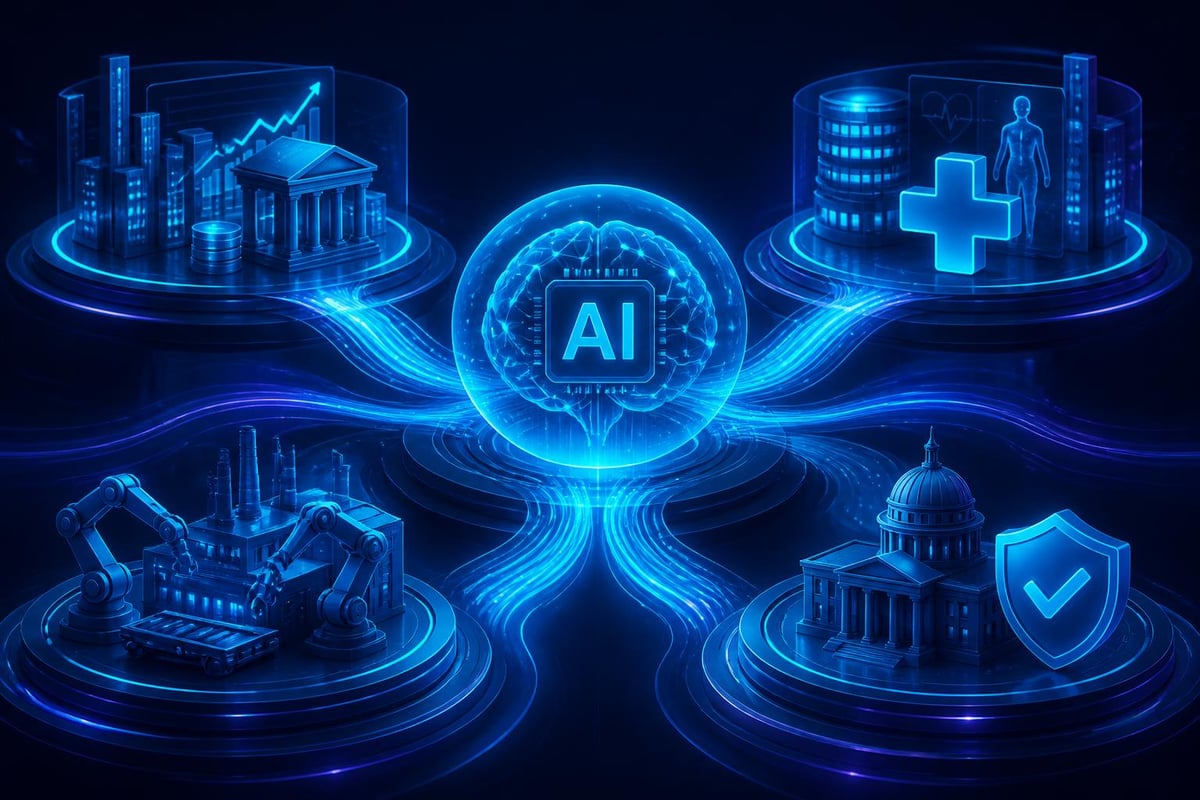
The manufacturing sector sees AI events focused on predictive maintenance, quality control automation, and supply chain optimisation. These gatherings increasingly feature AI orchestration platforms that coordinate multiple AI services across complex production environments.
Emerging Formats for AI Knowledge Transfer
Traditional conference formats evolve as organisers experiment with structures that maximise learning outcomes and participant engagement. Several innovative approaches characterise leading AI events in 2026.
Hackathons and prompt-a-thons bring developers together to build functional prototypes within compressed timeframes. These intensive sessions demonstrate what’s possible with current tools whilst surfacing practical integration challenges. Agentic AI development particularly benefits from hands-on experimentation that conferences enable.
Executive roundtables create intimate settings where business leaders discuss AI strategy, organisational change, and investment priorities without vendor presence. These confidential sessions produce candid insights rarely shared in public presentations.
Vendor showcases concentrated in exhibition halls allow efficient evaluation of competing solutions. Rather than scheduling individual demos, attendees can compare approaches side-by-side and identify shortlists for deeper evaluation. For marketing teams exploring AI-powered content creation, platforms like AdsRaw demonstrate how AI generates realistic UGC-style ad videos, whilst presentation specialists such as Prznt Perfect showcase how AI enhances visual storytelling for financial and tech businesses.
The notable AI conferences in 2026, highlighted by industry analysts, demonstrate this format diversity, ranging from intimate workshops to massive multi-track conferences serving thousands of participants.
Technical Deep-Dives and Certification Opportunities
For technical professionals, AI events provide concentrated learning opportunities that accelerate skill development beyond what self-paced online courses deliver. Workshops led by practitioners who’ve solved real implementation challenges offer context and nuance that documentation cannot capture.
Many AI events now incorporate certification examinations, allowing attendees to validate their knowledge through recognised credentials. Microsoft certification paths for Azure AI Engineer and Data Scientist roles align well with conference attendance, as the intensive learning environment prepares candidates for examination while providing networking with others pursuing similar credentials.
Technical sessions at AI events typically address:
- Architecture patterns for scalable AI deployment across cloud and edge environments
- MLOps practices integrating model training, validation, and deployment pipelines
- Security hardening for AI systems facing sophisticated adversarial attacks
- Performance optimisation, reducing inference latency and computational costs
- Integration techniques connecting AI services with existing enterprise systems
The hands-on nature of these sessions distinguishes them from webinars or recorded content. Attendees work with actual tools, encounter realistic obstacles, and receive immediate guidance from experienced instructors. This practical focus proves invaluable for organisations moving from proof-of-concept to production deployment.
Research Presentations and Academic Collaboration
Academic AI events contribute essential perspectives often missing from vendor-sponsored conferences. The top Scopus-indexed AI conferences for 2025-2026 represent venues where cutting-edge research receives peer review before publication, ensuring quality and rigour.
For enterprises, these academic gatherings provide early visibility into techniques that will influence commercial products in subsequent years. Understanding research trajectories helps organisations anticipate capability evolution and plan investments accordingly.
The research-to-practice pipeline typically spans:
- Year 1: Novel techniques published at academic conferences
- Year 2: Experimental implementations in research labs and innovative startups
- Year 3: Commercial products incorporating validated approaches
- Year 4: Enterprise adoption as solutions mature and prove reliability
Attending research-focused AI events positions organisations ahead of this curve, enabling proactive preparation rather than reactive scrambling when new capabilities emerge. The 2025 AI Agent Index exemplifies the type of technical documentation presented at academic venues, providing a detailed analysis of state-of-the-art systems that inform enterprise evaluation criteria.
Maximising ROI from AI Event Participation
Simply attending AI events generates limited value without deliberate strategies for capturing and applying insights. Successful organisations approach event participation as structured learning initiatives rather than isolated activities.
Pre-event preparation should include:
- Defining specific learning objectives aligned with organisational AI roadmaps
- Identifying key speakers and sessions addressing priority topics
- Scheduling meetings with vendors, partners, and peers in advance
- Preparing questions that probe beyond marketing materials to implementation realities
During events, effective note-taking systems ensure insights survive beyond memory’s ephemeral nature. Many attendees now use AI assistants to transcribe sessions, tag key concepts, and generate summaries for distribution to colleagues unable to attend. This democratises knowledge whilst creating searchable archives for future reference.
Post-event activities determine whether attendance generates actual change or merely temporary enthusiasm. Structured debriefs with stakeholders who didn’t attend, action planning sessions translating insights into initiatives, and follow-up with contacts made all amplify event impact beyond the days spent attending.
| Activity | Timing | Responsible Party | Expected Outcome |
|---|---|---|---|
| Objectives definition | 4 weeks pre-event | Department leadership | Focused learning agenda |
| Vendor research | 2 weeks pre-event | Technical evaluators | Meeting schedule |
| Attendance | Event dates | Cross-functional team | Notes, contacts, materials |
| Debrief presentation | 1 week post-event | Attendees | Knowledge transfer |
| Action planning | 2 weeks post-event | Project managers | Implementation roadmap |
| Follow-up execution | Ongoing | Various teams | Measurable business impact |
For organisations exploring AI strategy consulting or navigating AI implementation challenges, insights from AI events inform more realistic planning and help avoid common pitfalls that derail initiatives.
Virtual and Hybrid Event Considerations
The pandemic accelerated the adoption of virtual and hybrid event formats that persist in 2026, offering accessibility advantages whilst sacrificing some networking spontaneity. InfoBro AI’s comprehensive event listing demonstrates the global reach that virtual formats enable, connecting participants regardless of geography.
Virtual AI events provide distinct benefits:
- Elimination of travel costs and time, enabling broader participation across organisations
- Session recordings allow review and sharing with colleagues
- Chat-based networking that may feel more comfortable for introverted participants
- Global speaker access unconstrained by physical travel requirements
However, hybrid and in-person formats retain advantages that virtual experiences struggle to replicate. Hallway conversations, spontaneous problem-solving sessions, and relationship depth from shared meals create value difficult to quantify but essential for lasting partnerships.
Many organisations now adopt blended strategies, sending core teams to premier in-person AI events whilst leveraging virtual attendance for secondary conferences. This approach balances budget constraints with learning objectives, maximising exposure whilst controlling costs.
Building Long-Term Value Through Event Networks
The relationships formed at AI events often prove more valuable than the sessions attended. Regular participants develop networks spanning vendors, peers, academics, and consultants that serve as resources long after specific conferences conclude.
Active engagement in event communities between gatherings sustains these relationships. Many AI events now maintain year-round online forums where participants continue discussions, share updates on implementations, and seek advice on emerging challenges. These communities evolve into professional resources that transcend any single organisation’s boundaries.
For consultancies and solutions providers, consistent event participation builds market visibility and thought leadership. Speaking opportunities, panel participation, and workshop facilitation position organisations as experts whilst providing direct access to potential clients facing challenges they specialise in solving.
Strategic event participation for consultancies includes:
- Regular attendance establishes presence and relationships
- Speaking proposals demonstrating expertise and attracting qualified leads
- Sponsorship arrangements increase brand visibility among target audiences
- Client facilitation, helping key clients maximise their own event experiences
The investment in AI events compounds over time as reputation builds, relationships deepen, and market intelligence accumulates. Organisations treating event participation as a tactical expense rather than a strategic investment miss substantial opportunities for competitive advantage through superior market awareness and relationship capital.
The diverse landscape of AI events across Switzerland and Western Europe offers enterprises multiple pathways for staying current with technological advances, validating strategic directions, and building capabilities essential for AI-driven transformation. Whether focusing on Microsoft-centric gatherings or broader industry conferences, strategic participation accelerates organisational learning and implementation success. If you’re ready to translate insights from AI events into practical enterprise solutions, Stellium Consulting brings deep expertise in Microsoft AI technologies and proven implementation frameworks that transform conference learnings into measurable business outcomes.