
AI at work is no longer a distant concept; it is transforming how organisations operate in 2026. From empowering teams to streamlining processes, AI at work is driving both excitement and concern across every industry. This comprehensive guide reveals how businesses can unlock innovation and build a lasting competitive edge by embracing AI at work. You will learn what defines AI at work, the breakthrough innovation it enables, practical steps for adoption, ways to overcome common barriers, and the trends shaping the future. Ready to lead with AI-driven innovation? Start your journey here.
Understanding AI at Work in 2026
Artificial Intelligence has become a defining force in the modern workplace, touching every aspect of how organisations operate. AI at work now means more than just automating repetitive tasks. It encompasses a range of technologies that are transforming the way people collaborate, make decisions, and drive value.
Defining AI in the Modern Workplace
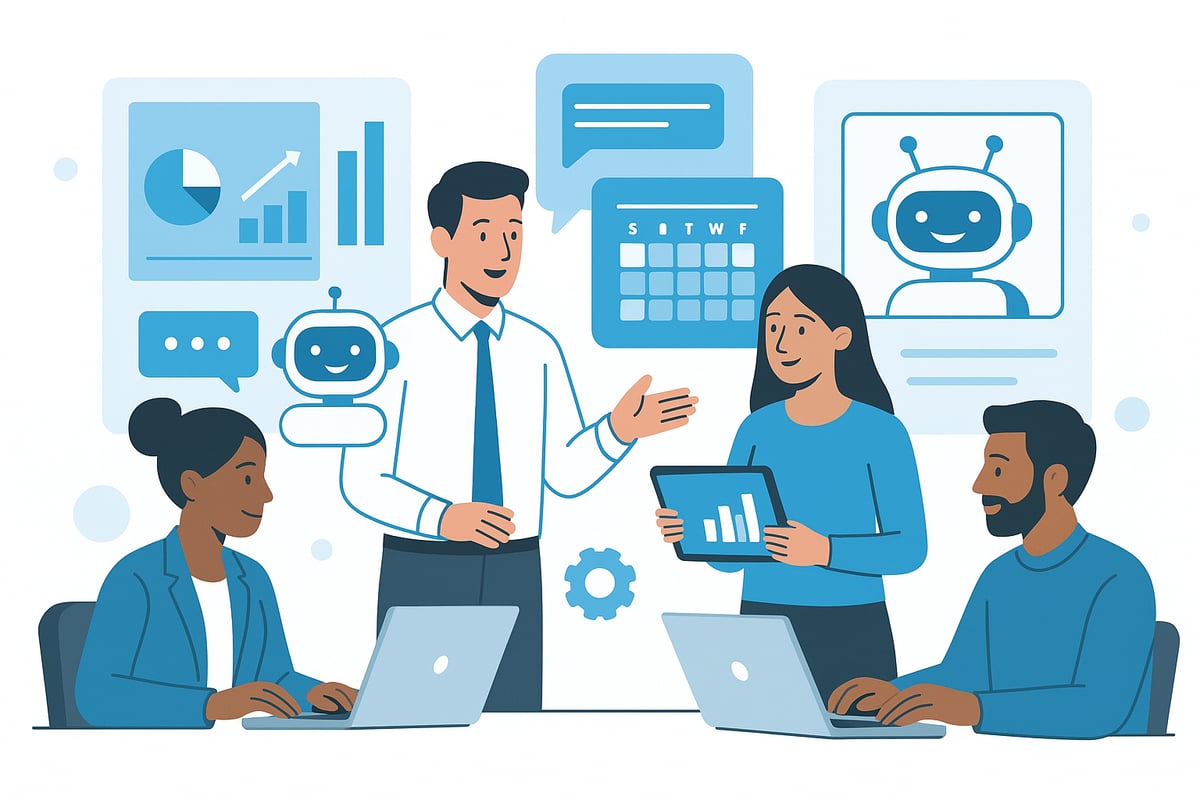
AI at work covers everything from machine learning and generative AI to advanced intelligent automation. In recent years, organisations have seen a shift from simple rule-based automation towards systems that can understand context, learn from data, and provide meaningful recommendations.
Unlike traditional software, which follows fixed instructions, AI adapts and evolves. Automation handles repetitive steps, but AI brings intelligence to tasks, supporting employees rather than replacing them. For example, AI can screen CVs in HR, analyse marketing campaigns, or predict equipment failures in operations.
A competitor insight highlights that AI is transforming workplaces of all sizes, not just tech giants. Real-world adoption is evident: HR teams use AI for candidate screening, marketers depend on automated campaign analysis, and operations managers rely on predictive maintenance tools. This evolution makes AI at work a strategic priority for forward-thinking leaders.
Key AI Technologies Shaping Work
Several major technologies now underpin AI at work. Natural language processing enables systems to understand and respond to human language, powering chatbots and virtual assistants. Computer vision interprets images and video, unlocking new capabilities in manufacturing and healthcare.
Conversational AI and predictive analytics are now integral to daily workflows. The rise of AI assistants and chatbots is particularly notable, streamlining scheduling, reminders, and customer support across organisations. Platforms like Microsoft Copilot and Azure AI have become essential for enterprise adoption, allowing businesses to embed intelligence directly into productivity tools.
A recent study found that 66% of employees report improved work quality with AI. For more on these benefits, see AI productivity in the workplace. In small and midsize enterprises, AI-powered scheduling and customer support tools have reduced manual workloads and improved service delivery, making AI at work accessible and scalable.
How AI is Embedded Across Industries
The impact of AI at work is visible in every sector. In finance, AI detects fraud and supports real-time risk assessment. Healthcare providers use AI for diagnostics and patient analysis, leading to faster and more accurate outcomes. Manufacturing relies on AI to optimise supply chains and monitor equipment health.
Retailers use AI for personalised shopping experiences, while public sector organisations leverage smart city planning and resource management. Over 60% of surveyed business leaders now see AI as essential for industry competitiveness, according to BCG (2025).
Success stories abound. One retailer improved customer satisfaction by adjusting inventory in real time with AI forecasts. Hospitals have shortened diagnostic times using AI-driven analysis. These examples show that AI at work is not limited by industry or organisation size, but is a catalyst for innovation and measurable results.
The Innovation Impact: How AI Unlocks New Value
AI at work is redefining what organisations can achieve. By embedding intelligent technologies into daily workflows, companies are unlocking new value streams, elevating productivity, and sparking fresh innovation. Let us explore how these advancements are shaping business outcomes across sectors.
Accelerating Productivity and Efficiency
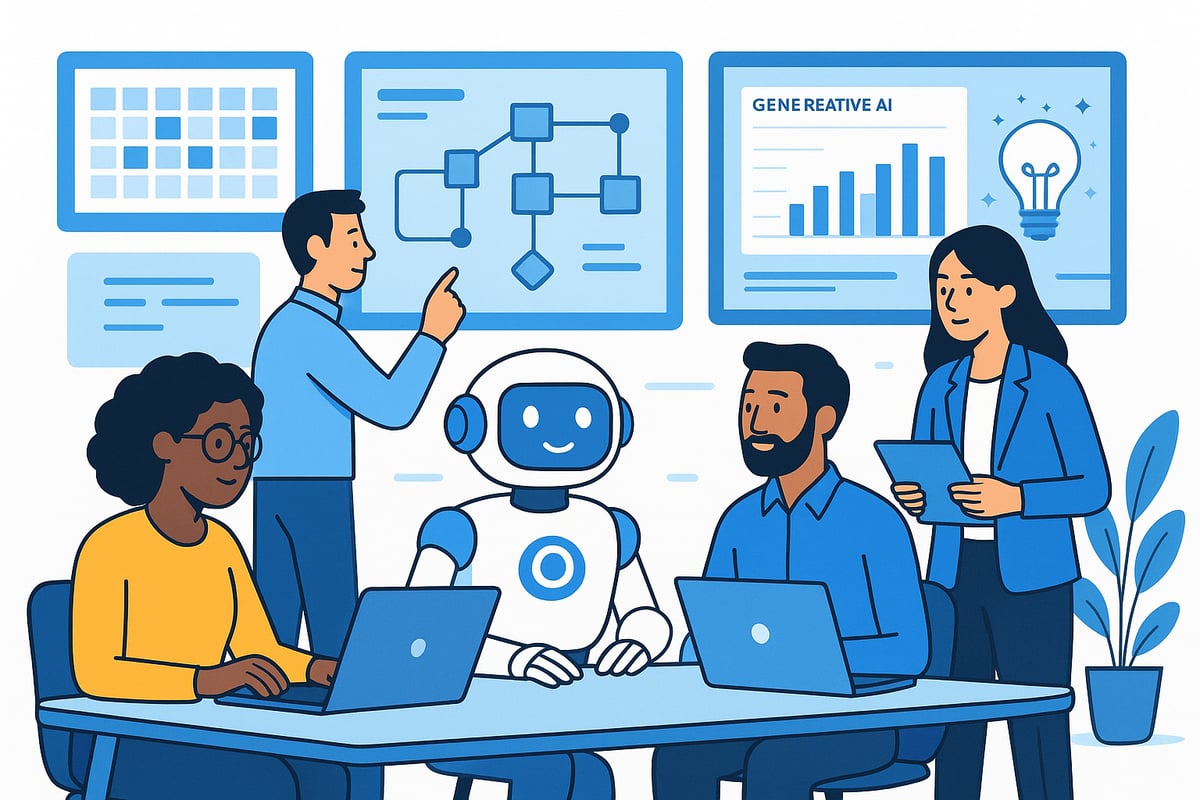
AI at work is a catalyst for efficiency, automating repetitive and time-consuming tasks so employees can focus on higher-value activities. From data entry to email sorting, AI reduces administrative burdens across departments.
For instance, HR teams now use AI to screen applications, rapidly identifying qualified candidates. This shift allows professionals to dedicate more time to strategic initiatives. According to a recent Boston Consulting Group report, over 80% of corporate affairs tasks can be augmented or automated by AI, leading to measurable gains in output and cost savings.
Employees report spending up to 30% less time on administrative work, a direct reflection of AI at work driving operational excellence.
Enabling Data-Driven Decision Making
With AI at work, organisations gain the ability to analyse vast datasets, uncovering patterns and actionable insights previously hidden. AI-driven recommendations now guide decisions in finance, marketing, and operations.
Teams leverage these insights for forecasting demand, identifying new market opportunities, and optimising resource allocation. This empowerment enables managers and employees to make informed, strategic choices, minimising guesswork and maximising outcomes.
The result is a culture where data-backed decisions are the norm, enhancing both agility and long-term competitiveness.
Enhancing Employee Experience and Collaboration
AI at work is transforming the day-to-day experience for employees. AI-powered assistants handle scheduling, reminders, and workflow management, reducing cognitive load and allowing staff to focus on meaningful work.
Adaptive AI platforms offer personalised learning and development, tailoring recommendations to individual needs. Intelligent chatbots improve knowledge sharing and streamline communication, making collaboration more seamless across hybrid or remote teams.
Recent data shows that 62% of employees feel less overwhelmed at work thanks to these advancements, highlighting the positive impact on wellbeing.
Fostering Creativity and Innovation
Beyond automation, AI at work serves as a creative partner. Generative AI tools help marketing teams brainstorm campaign ideas, draft content, and develop new concepts rapidly.
In research and product development, AI accelerates ideation by analysing trends and suggesting innovative solutions. This collaborative approach enables teams to move from idea to execution with greater speed and imagination.
AI’s role as co-creator is unlocking new frontiers in how organisations solve problems and develop products.
Driving Organisational Agility
Organisations using AI at work are better equipped to adapt to shifting markets. Predictive analytics enable scenario planning, helping leaders anticipate changes and respond proactively.
Retailers, for example, use AI to adjust inventory in real time based on demand forecasts. This agility ensures resources are optimised and risks are mitigated, keeping businesses competitive and resilient.
Such flexibility is vital in a world where change is constant and speed is essential.
Supporting Diversity, Equity, and Inclusion
AI at work also advances diversity, equity, and inclusion goals. AI-driven recruitment tools help reduce bias in candidate screening and performance evaluations.
Sentiment analysis and engagement monitoring provide insights into workplace dynamics, enabling leaders to address issues proactively and foster a more inclusive culture.
These capabilities ensure that talent decisions are fair, transparent, and aligned with organisational values.
Real-World Innovation Outcomes
Across industries, companies that embrace AI at work are seeing tangible results. Some have unlocked new revenue streams through personalised customer experiences, while others report higher satisfaction rates due to enhanced service and faster response times.
Consider the following examples:
| Company Type | AI Outcome | Value Unlocked |
|---|---|---|
| Retail | Real-time inventory management | Reduced waste, increased sales |
| HR Services | Automated candidate screening | Faster hiring, better matches |
| Manufacturing | Predictive maintenance | Lower downtime, higher output |
As Boston Consulting Group notes, companies leveraging AI at work see greater innovation momentum, yet gaps in adoption still exist. The potential for transformation is clear, and those who act now will shape the future of work.
Step-by-Step Guide: Implementing AI at Work
Adopting AI at work is a journey, not a single leap. Organisations thrive when they follow a structured approach, ensuring that AI delivers real impact and value. This step-by-step guide breaks down the process into practical actions, helping you unlock innovation and competitive advantage through AI at work.
Step 1: Identify High-Impact Use Cases
Start by mapping out where AI at work can create the greatest value. Assess current pain points, such as repetitive or data-heavy tasks that drain time and resources. Engage leaders and employees from different departments in workshops to spot opportunities for automation or augmentation.
Common high-impact areas include:
- Payroll automation and error reduction
- Streamlined onboarding for new hires
- Enhanced customer service with chatbots
Focusing on these areas ensures that your AI at work initiatives are both relevant and measurable. Prioritise use cases that align with your strategic goals and can show quick wins, building momentum for further adoption.
Step 2: Build AI Readiness and Upskill Teams
Successful integration of AI at work depends on your people’s readiness. Begin by evaluating the digital and AI literacy across your workforce. Invest in comprehensive training, from interactive workshops to hands-on sessions, so teams understand both the technology and its potential.
Encourage a growth mindset, where employees view AI at work as a tool for empowerment rather than a threat. Only half of leaders are currently satisfied with their team’s tech expertise, highlighting the importance of upskilling. Promote experimentation and celebrate learning from both successes and setbacks.
Step 3: Choose the Right AI Tools and Partners
Selecting the right technology is essential for AI at work to deliver results. Evaluate solutions based on scalability, ease of integration, user experience, and security. Compare leading platforms such as Microsoft Copilot, Azure AI, and Google Workspace AI, ensuring they meet your unique needs.
Reliable vendors offer strong support and regular updates, making long-term adoption smoother. For further guidance on making the best choices, consult resources like Enterprise AI adoption strategies, which outline best practices and common pitfalls. By partnering with trusted providers, you lay a solid foundation for your AI at work journey.
How Stellium Consulting Empowers AI-Driven Workplaces
Stellium Consulting stands out as a Microsoft Solutions Partner dedicated to enabling AI at work for enterprises. Their expertise lies in designing tailored AI-powered solutions that boost productivity, streamline processes, and empower employees at every level.
With a proven track record in integrating Microsoft Copilot, Azure AI, and custom deployments, Stellium delivers seamless, secure adoption. They provide end-to-end support, covering strategy, implementation, training, and ongoing optimisation.
Leading organisations across industries rely on Stellium to unlock measurable business outcomes with AI at work. Whether your goal is process optimisation or enhancing employee experience, Stellium Consulting ensures your transformation is both effective and future-proof.
Step 4: Pilot, Measure, and Scale AI Initiatives
Begin your AI at work rollout with a focused pilot in one department or workflow. Set clear objectives, such as reducing processing time or increasing accuracy. Use key metrics to track progress, gathering feedback from users at every stage.
Iterate based on real-world results, refining your approach before wider implementation. Once the pilot proves successful, develop a plan to scale AI at work across the organisation, ensuring consistent standards and support.
Step 5: Foster a Culture of Continuous Improvement
Embedding AI at work is an ongoing process. Foster a culture where teams regularly share feedback, success stories, and lessons learned. Encourage cross-team collaboration to spread best practices and spark new ideas.
Regularly review the impact of AI at work, adapting your strategy as technology and business needs evolve. This commitment to continuous improvement ensures your organisation remains competitive and innovative in the years ahead.
Overcoming Common Challenges and Barriers
Successfully embedding AI at work is not without its hurdles. Organisations face a unique mix of technological, cultural, and ethical challenges as they aim for sustainable transformation. By understanding these barriers and responding proactively, leaders can ensure AI at work delivers on its promise for both people and business.
Addressing Employee Concerns and Resistance
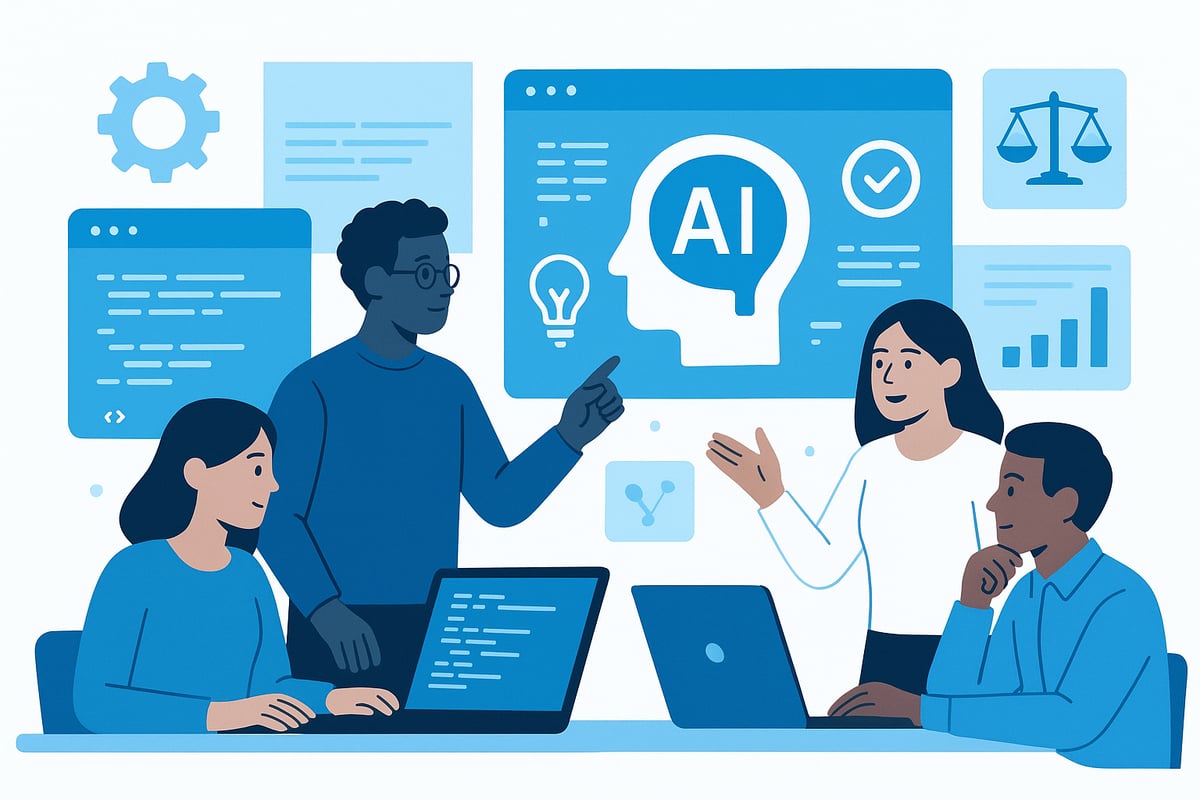
Introducing AI at work can spark anxiety among employees, especially around job security and changing roles. Open communication is essential. Leaders should clarify that AI supports, rather than replaces, human expertise.
- Hold regular Q&A sessions to address concerns.
- Share examples of AI reducing repetitive tasks and enhancing job satisfaction.
- Highlight stories of employees thriving alongside AI.
Recent data shows that as AI at work becomes widespread, engagement and confidence grow. According to Gallup: AI Use at Work Has Nearly Doubled, adoption has increased rapidly, and many report improved workplace experiences.
Ensuring Ethical, Responsible AI Use
Ethics are at the heart of successful AI at work strategies. Organisations must prioritise fairness, transparency, and compliance with regulations like GDPR and the AI Act.
- Conduct regular audits for bias in AI systems.
- Set up clear governance and accountability policies.
- Communicate data usage practices transparently to all staff.
By embedding ethical standards, organisations build trust, reduce risk, and unlock the full value of AI at work for everyone.
Managing Skills Gaps and Organisational Readiness
AI at work demands a workforce equipped with new skills. Not every employee needs to be a data scientist, but basic AI literacy is vital.
- Offer targeted training and hands-on learning opportunities.
- Encourage a culture where experimentation with AI at work is welcomed.
- Identify talent gaps early and invest in upskilling or reskilling.
Proactive development ensures teams remain agile and capable as AI at work evolves, empowering employees at all levels to contribute.
Integration with Legacy Systems and Processes
One of the biggest barriers to AI at work is the integration with legacy IT systems. Complex infrastructures often require a phased, strategic approach.
- Utilise APIs and middleware for smoother connectivity.
- Start with low-risk pilots before scaling up.
- Collaborate with technology partners experienced in AI at work transitions.
Solutions such as Microsoft Copilot can help bridge the gap, enabling organisations to modernise workflows without major disruptions. Seamless integration is key to realising the benefits of AI at work.
Measuring ROI and Business Value
To justify investment, leaders must track the impact of AI at work through clear metrics.
- Establish KPIs such as time saved, error reduction, or employee satisfaction.
- Use dashboards to monitor progress and inform adjustments.
- Set realistic timelines for outcomes, as benefits often compound over time.
Organisations with robust measurement frameworks are more likely to see lasting value and satisfaction from AI at work initiatives.
The Future of AI at Work: Trends and Predictions for 2026 & Beyond
The future of AI at work is rapidly unfolding, shaping how organisations operate and compete in 2026. As businesses embrace change, understanding these emerging trends will be critical for leaders seeking to stay ahead. Let us explore the seven key predictions that define the next era of AI at work.
Mainstream Adoption of Generative AI
Generative AI is no longer limited to early adopters. By 2026, it is a staple in content creation, marketing, and analytics. Teams leverage these tools to draft reports, generate creative assets, and personalise communications at scale. This shift unlocks new efficiencies, making ai at work a catalyst for innovation. As generative models mature, businesses across sectors will find fresh ways to improve productivity and customer engagement.
Rise of AI-Enhanced Collaboration Tools
Collaboration is being transformed by AI-powered meeting assistants, workflow automation, and knowledge management platforms. Tools such as Microsoft Copilot are now deeply integrated into daily operations, streamlining scheduling, note-taking, and project coordination. For a deeper dive into how these tools are reshaping business workflows, see AI and Microsoft Copilot integration. With seamless collaboration, teams can focus on strategic tasks, reinforcing the value of ai at work.
AI for Employee Wellbeing and Personalisation
AI at work is increasingly focused on supporting employee wellbeing. Adaptive learning platforms deliver personalised training, while AI-driven mental health tools provide timely support and resources. By analysing work patterns, companies can optimise workloads, reduce stress, and foster a more inclusive environment. The result is a workplace where employees feel valued and empowered to grow.
From Automation to Augmentation
The narrative is shifting from pure automation to augmentation. In 2026, AI at work does not replace humans but becomes a trusted partner for creative problem-solving, strategy, and decision-making. Employees and AI collaborate to navigate complex scenarios, combining analytical power with human intuition. This partnership enhances agility, helping organisations respond quickly to new challenges.
Regulatory and Ethical Evolution
As AI adoption accelerates, ethical considerations and regulatory compliance are top priorities. New standards require transparency, accountability, and fairness in AI systems. Leaders must ensure their AI deployments align with evolving regulations, such as the AI Act and GDPR. For further insights on these crucial changes, explore 7 AI trends shaping 2026. Responsible AI practices are essential to maintain trust and long-term success in the workplace.
Industry-Specific AI Innovations
Every sector is experiencing unique AI-driven transformation. In healthcare, AI supports diagnostics and personalised treatment plans. Financial services rely on intelligent fraud detection and robo-advisors. Manufacturing benefits from predictive maintenance and smart automation, while retail leverages AI for personalised shopping experiences. The public sector is investing in smart city planning and digital services. These advances reinforce the competitive edge of ai at work in every industry.
The Ongoing Need for Human-Centred AI
Despite rapid progress, a human-centred approach remains vital. AI at work must be designed with inclusivity, usability, and organisational culture at its core. Leadership plays a key role in guiding responsible adoption, ensuring that technology serves people, not the other way around. By prioritising empathy and collaboration, businesses will unlock the full potential of AI for the future.
As you’ve seen throughout this guide, unlocking innovation with AI at work isn’t just about technology—it’s about empowering your people, streamlining daily processes, and driving lasting organisational transformation. If you’re ready to put these insights into action and want tailored support for your unique workplace needs, we’re here to help. Stellium Consulting specialises in practical, enterprise-ready AI solutions that make a measurable difference. Let’s work together to turn your AI ambitions into real results—explore what’s possible for your organisation by visiting Explore our Enterprise AI Solutions.