
Artificial intelligence is reshaping the enterprise landscape at an unprecedented pace. According to IBM’s 2025 CEO Study, organisations are leveraging enterprise AI to redefine business models, streamline operations, and enhance competitiveness across global markets.
This surge in enterprise AI adoption offers both remarkable opportunities and new challenges for business leaders aiming to excel in 2026. From process optimisation to strategic decision-making, the stakes have never been higher.
This comprehensive guide will equip you with the insights and strategies needed to harness the full power of enterprise AI. Discover definitions, core technologies, implementation steps, real-world examples, governance, and future trends to drive your business forward.
What is Enterprise AI? Definition, Scope, and Evolution
Enterprise AI is the integration of advanced artificial intelligence into the core operations of large organisations. Unlike consumer or narrow AI, which focuses on specific tasks or personal use, enterprise AI addresses complex business challenges at scale. Over the past decade, the evolution from basic process automation to intelligent, data-driven systems has been rapid.
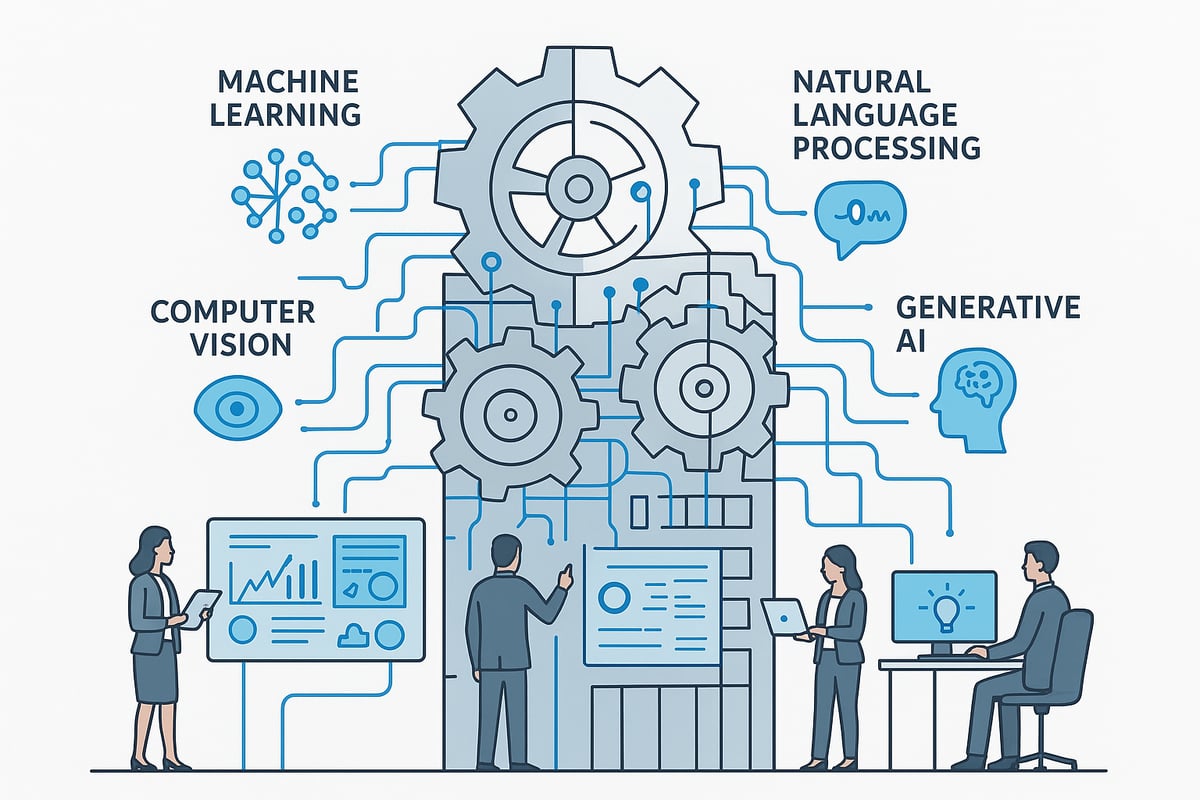
Today, enterprise AI encompasses several core technologies. These include machine learning, which enables systems to learn from data; natural language processing, which allows computers to understand and generate human language; computer vision for interpreting images and videos; and generative AI, which creates new content and insights. Together, these components power everything from process automation and workflow optimisation to strategic business decision-making.
By 2026, more than 70 per cent of large enterprises will have adopted AI-powered solutions, underscoring the technology’s central role in business transformation. This broad adoption is a testament to how enterprise AI delivers value across industries, driving efficiency and innovation.
Understanding Enterprise AI
Enterprise AI refers to the application of sophisticated artificial intelligence technologies within extensive business environments. It is distinct from consumer AI, which serves individuals, and narrow AI, which targets single-use cases. Enterprise AI is designed for scale, handling vast data volumes and complex workflows.
The journey began with simple rule-based automation, such as robotic process automation for repetitive tasks. However, modern enterprise AI systems now leverage data-driven models to drive intelligent decision-making, automate intricate processes, and deliver strategic insights. Machine learning, natural language processing, computer vision, and generative AI form the backbone of these solutions.
These technologies enable process automation, workflow optimisation, and predictive analytics, transforming how businesses operate. According to IBM, by 2026, over 70 per cent of enterprises will have integrated AI-powered tools to gain a competitive edge.
Enterprise AI vs. Traditional Automation
Traditional automation in business relied on predefined rules and scripts to perform repetitive tasks. While this approach improved efficiency, it was limited in flexibility and adaptability. In contrast, enterprise AI introduces self-learning capabilities, allowing systems to adapt and improve over time.
Consider the following comparison:
| Feature | Traditional Automation | Enterprise AI |
|---|---|---|
| Approach | Rule-based | Data-driven, self-learning |
| Flexibility | Low | High |
| Scalability | Limited | Enterprise-wide |
| Intelligence | None | Predictive and adaptive |
For example, rule-based automation might process invoices using fixed templates, while enterprise AI can intelligently extract data from varied formats, learn from exceptions, and optimise workflows. The result is a more resilient and scalable solution that evolves with business needs.
The Business Imperative for Enterprise AI
Embracing enterprise AI has become mission-critical for organisations seeking to stay ahead in a rapidly shifting landscape. Several factors are driving this urgency:
- The explosion of available data, which requires advanced tools for analysis and insight.
- Rising customer expectations for personalisation and real-time engagement.
- Talent shortage is increasing the need for automation and intelligent augmentation.
Enterprise AI is now essential for competitiveness and resilience. Insights from IBM’s Industries in the AI Era Report highlight how leading organisations are harnessing AI to innovate, streamline operations, and adapt to change. As the pace of digital transformation accelerates, those investing in enterprise AI are best positioned to thrive.
Core Technologies Powering Enterprise AI in 2026
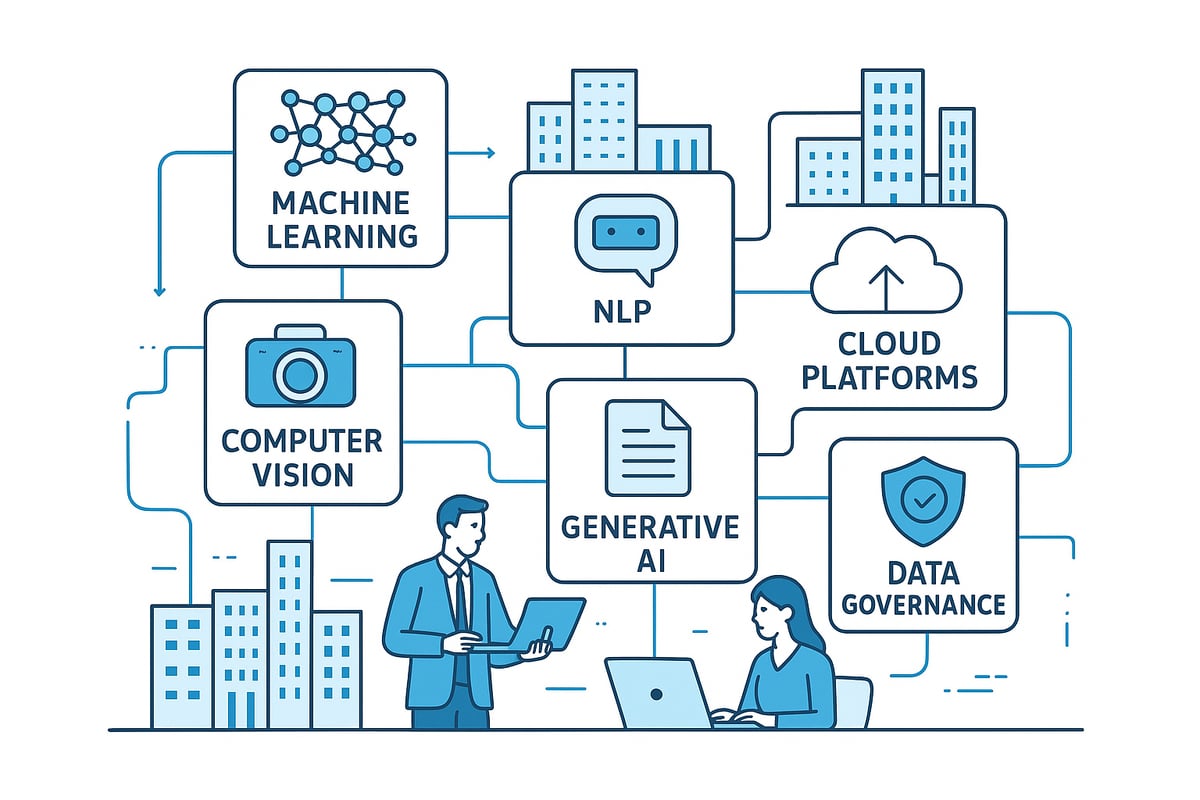
The backbone of enterpriseAI in 2026 is a sophisticated stack of technologies, each driving new levels of automation, intelligence, and value creation. Understanding these core components is essential for any business leader aiming to leverage enterpriseAI for strategic advantage.
Machine Learning and Deep Learning
Machine learning (ML) and deep learning are at the heart of enterprise ai. ML encompasses supervised, unsupervised, and reinforcement learning, each offering distinct enterprise applications.
- Supervised learning powers fraud detection and demand forecasting.
- Unsupervised learning uncovers hidden patterns in large datasets.
- Reinforcement learning optimises dynamic processes, such as supply chains.
Deep learning, a subset of ML, excels in recognising complex patterns in images, audio, and text. For example, financial institutions use deep learning for real-time fraud detection, while manufacturers rely on it for predictive maintenance.
Natural Language Processing (NLP) and Conversational AI
NLP enables enterpriseAIi systems to understand and interact with human language. This technology transforms customer service, HR, and business intelligence by automating communication and extracting insights from text and speech.
AI chatbots and virtual assistants now deliver 24/7 support, handle routine queries, and free up staff for higher-value tasks. In banking and retail, NLP-driven chatbots streamline customer engagement, improving satisfaction and operational efficiency.
Computer Vision and Image/Video Analytics
Computer vision empowers enterprise AI to interpret visual data from cameras and sensors. In manufacturing, AI-powered quality control systems analyse images to detect defects in real time.
Healthcare providers use computer vision for medical image analysis, improving diagnostic accuracy. Security systems leverage video analytics to monitor facilities, ensuring safety and compliance.
Generative AI and Large Language Models (LLMs)
Generative AI is revolutionising enterprise AI by enabling the creation of new content, from documents to code. Large language models (LLMs) automate report generation, streamline compliance, and support knowledge management.
In legal and compliance, generative AI produces draft contracts and summaries, saving time and reducing errors. For the latest developments, see Generative AI News and Insights.
Cloud AI Platforms and Integration
Cloud-based AI platforms are critical for scaling enterprise AI. Solutions like Microsoft Azure AI, AWS AI, and IBM WatsonX offer flexibility, security, and seamless integration with existing systems.
Over 80 per cent of enterprises now use cloud AI platforms for scalability and resilience. These platforms support rapid deployment, continuous updates, and robust security, making them ideal for enterprise-wide adoption.
Data Management and Governance Tools
Effective enterprise AI relies on high-quality data and strong governance. Enterprises are investing in data lakes, rigorous data quality controls, and comprehensive governance frameworks.
Tools like watsonx. data ensure data is accessible, secure, and compliant with regulations. Strong governance minimises risk, supports transparency, and builds trust in AI-driven decisions.
AI Security and Trustworthiness
Security and trust are non-negotiable in enterprise AI. Organisations must safeguard data privacy, ensure AI explainability, and address vulnerabilities.
IBM’s research highlights growing concerns about AI security and the need for transparent, auditable systems. By prioritising security and trust, enterprises can unlock the full potential of enterprise AI while managing risk.
Strategic Steps to Implementing Enterprise AI
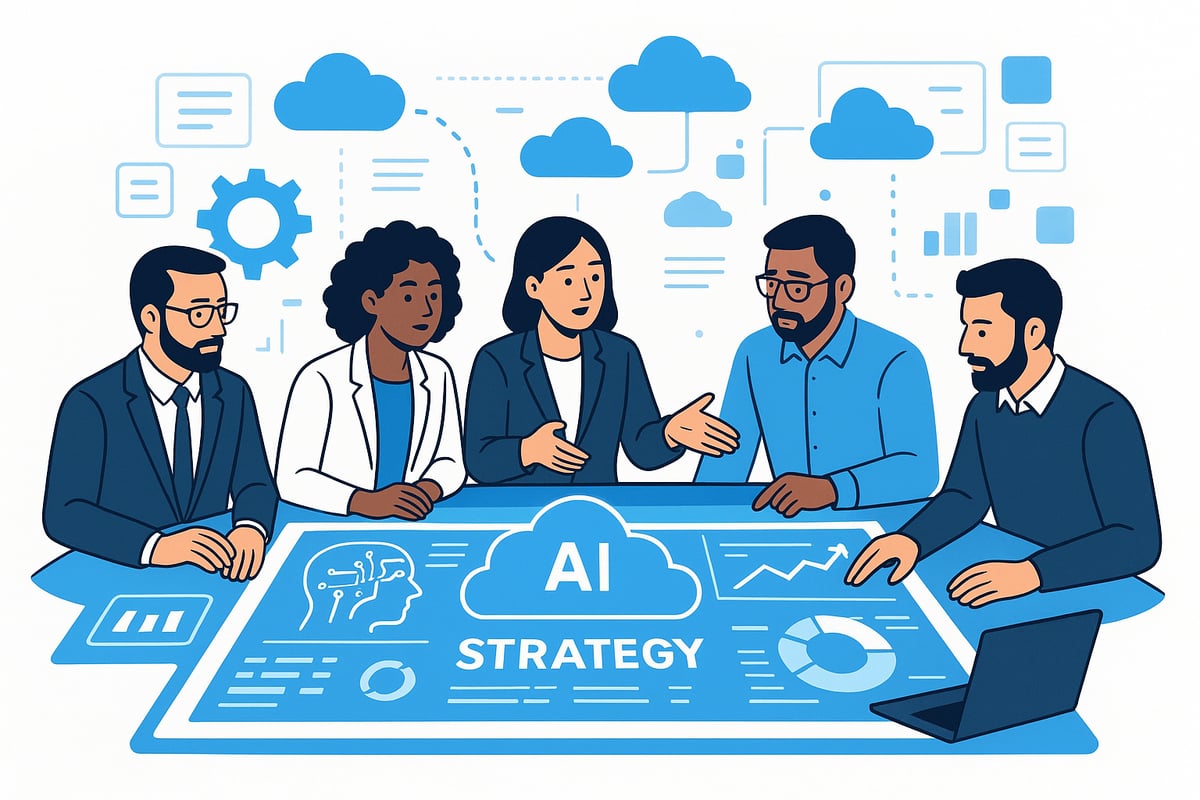
Implementing enterprise AI requires a clear, strategic approach. Success depends on aligning technology with business goals, building the right teams, and ensuring robust governance. Below, we outline the seven essential steps that help organisations unlock the full value of enterprise AI.
Step 1: Define Organisational Goals and Objectives
The first step in any enterprise ai journey is to set clear goals. Start by identifying where AI can deliver the most impact, such as improving efficiency, boosting innovation, or enhancing customer experiences.
Engage stakeholders from across the business to ensure alignment between ai projects and overall strategy. Define key performance indicators (KPIs) to measure the success of each initiative.
Setting objectives early helps maintain focus and ensures that enterprise AI investments drive measurable value.
Step 2: Assess Data Readiness and Develop a Data Strategy
Data is the lifeblood of enterprise AI. Assess your organisation’s data landscape by evaluating availability, quality, and accessibility. Identify data gaps and address issues such as silos or inconsistent formats.
Develop a comprehensive data strategy that includes:
- Data governance frameworks
- Compliance with regulations
- Processes for ongoing data quality management
A robust data foundation enables enterprise AI systems to deliver accurate insights and reliable automation.
Step 3: Build a Cross-Functional AI Team
A successful enterprise AI initiative requires collaboration across multiple disciplines. Assemble a cross-functional team that includes:
- Data scientists and engineers
- IT professionals
- Domain experts
- Business leaders
Diverse perspectives help identify opportunities and avoid blind spots. Foster a culture of continuous learning to keep the team ahead of emergingAIi trends and challenges.
Enterprise AI thrives when every function contributes expertise to the project.
Step 4: Select the Right Technologies and Partners
Choosing the right technology stack is crucial for enterprise AI scalability and integration. Consider these criteria:
- Compatibility with existing systems
- Scalability to support future growth
- Security and compliance features
- Vendor support and industry fit
Leading platforms such as Microsoft Azure AI, AWS, and IBM WatsonX offer modular services tailored for enterprises. For deeper insights on technology selection, explore how Empowering Enterprise AI Innovation with Azure AI can drive innovation and simplify deployment.
The right partners accelerate enterprise ai adoption and reduce risk.
Stellium Consulting: Empowering Enterprise AI Transformation
Stellium Consulting is a Microsoft Solutions Partner, specialising in bespoke enterprise AI solutions. Their approach covers strategy, implementation, and ongoing optimisation to maximise business outcomes.
By leveraging Microsoft Azure, Copilot, and advanced analytics tools, Stellium helps clients accelerate digital transformation. Their expertise spans industries such as finance, healthcare, manufacturing, and government.
Stellium’s hands-on delivery and technical depth ensure measurable results from enterprise AI investments. Trusted by industry leaders, they support clients at every stage of the ai journey.
Step 5: Develop, Test, and Launch Pilot AI Projects
Begin with pilot projects to validate value and uncover challenges before scaling enterprise AI. Pilots allow organisations to:
- Test solutions in a controlled environment
- Gather feedback from end users
- Refine models and processes
For example, launching an AI-powered chatbot in retail can improve customer service while providing insights for broader adoption. Successful pilots build confidence and lay the groundwork for enterprise-wide implementation.
Step 6: Integrate AI Solutions Across Business Functions
Integration is key to realising the full benefits of enterprise AI. Develop strategies to embed AI into core workflows and processes, ensuring seamless data flow between systems.
Change management is essential. Engage users early, provide training, and address concerns to drive adoption. For instance, integrating AI in manufacturing can streamline automation and boost productivity.
A systematic approach ensures that enterprise AI delivers value across all business functions.
Step 7: Monitor, Maintain, and Scale AI Initiatives
Enterprise AI requires ongoing oversight to maintain performance and adapt to changing needs. Establish monitoring frameworks to track KPIs, model accuracy, and user satisfaction.
Regularly review outcomes and apply iterative improvements. Successful pilots can be scaled using structured frameworks, ensuring lessons learned are applied enterprise-wide.
As adoption grows, establish processes for governance, security, and continuous learning. This approach ensures enterprise AI remains resilient, effective, and aligned with business objectives.
Real-World Enterprise AI Use Cases and Success Stories
Enterprise AI is driving innovation across industries, reshaping how organisations operate and compete. From supply chains to healthcare, these real-world examples showcase the measurable impact of enterprise AI in practice.

Supply Chain Optimisation
Enterprise AI is revolutionising supply chain management, enabling precise demand forecasting and real-time inventory control. AI-powered platforms analyse vast datasets to predict disruptions before they occur, helping enterprises respond quickly.
For example, IBM’s AI-driven supply chain solutions have reduced operational costs and improved delivery times for global manufacturers. By integrating enterpriseAIi, companies gain resilience and agility in their logistics operations.
Financial Services: Fraud Detection and Risk Management
In the financial sector, enterprise AI plays a vital role in combating fraud and managing risk. Machine learning models continuously monitor transactions, detecting anomalies that might indicate fraudulent activity.
Banks leverage enterprise AI to reduce false positives and enhance customer trust. By automating risk assessment, financial institutions can make faster, more accurate decisions, safeguard assets, and maintain regulatory compliance.
Personalised Marketing and Customer Experience
Enterprise AI transforms the marketing landscape by enabling hyper-personalised customer journeys. AI analytics segments audiences, tailors campaigns, and powers recommendation engines that boost engagement.
Retailers adopting enterprise AI see measurable improvements in sales and loyalty. According to IBM, the AI Spending Surge in Retail is a testament to how brands are prioritising AI-driven innovation for customer experience.
Human Resources and Talent Management
Enterprise AI is redefining HR by streamlining recruitment, automating resume screening, and predicting employee retention trends. Large organisations use AI-driven tools to match candidates to roles more efficiently.
This approach allows HR teams to focus on strategic talent management, while Enterprise AI uncovers insights from workforce data. The result is a more agile, data-driven approach to people management and organisational growth.
Cybersecurity and Threat Detection
With cyber threats becoming more sophisticated, enterprise AI is essential for real-time threat detection and response. AI systems monitor network activity, flagging potential breaches instantly.
Financial institutions trust enterpriseAIi to protect sensitive data and ensure compliance. Automated response capabilities mean quicker mitigation, reducing potential damage from cyber incidents and maintaining business continuity.
Healthcare Diagnostics and Research
In healthcare, enterprise AI accelerates diagnostics and research by analysing complex medical images and large datasets. AI models support clinicians by identifying patterns linked to disease and predicting patient outcomes.
Hospitals deploying enterprise AI report faster, more accurate diagnoses and improved patient care. AI also expedites drug discovery, helping bring life-saving treatments to market more efficiently.
Manufacturing and Quality Control
Manufacturers benefit from enterpriseAIi through automated quality control and predictive maintenance. Computer vision systems inspect products for defects, ensuring high standards and reducing waste.
Predictive analytics, powered by enterpriseAIi, forecast equipment failures before they happen. Automotive firms, for example, rely on AI-powered quality assurance to maintain competitiveness and drive operational excellence.
| Use Case | Impact of Enterprise AI | Example Application |
|---|---|---|
| Supply Chain Optimisation | Improved forecasting, cost reduction | IBM AI-driven logistics |
| Financial Services | Enhanced fraud detection, risk management | Transaction monitoring in banking |
| Marketing & Customer Experience | Personalised campaigns, increased engagement | Retail AI analytics |
| HR & Talent Management | Efficient recruitment and retention prediction | Automated candidate matching |
| Cybersecurity | Real-time threat detection, data protection | Network monitoring in finance |
| Healthcare Diagnostics | Faster, more accurate diagnosis and drug discovery | AI-assisted image analysis |
| Manufacturing & Quality Control | Defect detection, predictive maintenance | Automotive quality assurance |
Governance, Risks, and Best Practices for Enterprise AI
Navigating the governance, risks, and best practices of enterprise AI is essential for sustainable success. As adoption accelerates, enterprises must implement robust frameworks to ensure security, fairness, and measurable value. Let us explore the key areas that shape responsible enterprise AI deployment and how leaders can address the challenges ahead.
AI Governance and Compliance
Effective governance is the bedrock of responsible enterprise ai. Organisations must develop clear policies, ethical guidelines, and governance frameworks to guide AI deployment. This includes defining accountability, establishing oversight committees, and ensuring compliance with legal and industry standards.
A strong governance approach addresses data handling, model transparency, and lifecycle management. For practical strategies and frameworks, see the Copilot Control System and AI Governance resource. By prioritising governance from the outset, enterprises can foster trust, reduce risks, and alignAIi initiatives with business values.
Security, Privacy, and Data Protection
Enterprise AI systems process vast amounts of sensitive data, making security and privacy paramount. Addressing vulnerabilities in AI models, securing data pipelines, and ensuring compliance with regulations like GDPR are critical steps.
Key best practices include:
- Encrypting data at rest and in transit
- Implementing robust access controls
- Regularly auditing AI systems for vulnerabilities
Reports from C3.ai highlight that large language models can pose significant security risks if not governed properly. Enterprises must proactively manage these risks to safeguard their data and reputation.
Bias, Fairness, and Explainability
Bias in enterpriseAIi models can lead to unfair outcomes and reputational harm. Identifying, measuring, and mitigating bias must be embedded in the development lifecycle. Enterprises should use diverse datasets, regularly audit models, and employ fairness metrics.
Explainability is equally important. Transparent models help stakeholders understand decisions, fostering accountability. According to IBM, over 60 per cent of enterprises cite AI fairness as a top concern. By prioritising fairness and transparency, businesses build trust with customers, regulators, and partners.
Managing Change and Organisational Culture
Successful enterpriseAIi adoption demands cultural change and strong leadership. Resistance to new technology is common, so leaders should communicate benefits clearly and involve employees early.
Best practices include:
- Providing targeted AI training and upskilling
- Creating cross-functional teams to champion adoption
- Establishing feedback loops for continuous improvement
Initiatives like AI Academy and hands-on workshops help organisations bridge skills gaps and foster a culture that embraces innovation.
Sustainability and Environmental Impact
As enterpriseAIi scales, sustainability becomes a strategic priority. Large AI models and data centres consume significant energy, impacting environmental footprints. Enterprises must design energy-efficient solutions, optimise AI workloads, and consider renewable energy sources.
SustainableAIi practices not only reduce costs but also support corporate social responsibility goals. By measuring and minimising environmental impact, organisations can future-proof their enterpriseAIi investments.
Measuring Value and ROI
Quantifying the value of enterprise AI is vital for long-term success. Setting clear KPIs, tracking outcomes, and calculating ROI help justify investments and guide future strategy.
Key measures include:
- Efficiency gains from automation
- Revenue growth from personalised customer experiences
- Cost savings via process optimisation
For a broader perspective on emerging trends and value measurement, explore 7 AI Trends Shaping 2026. Regularly reviewing performance ensures enterpriseAIi delivers sustained business impact.
The Future of Enterprise AI: Trends and Predictions for 2026
The landscape of enterprise AI is undergoing rapid transformation as we approach 2026. Business leaders are increasingly looking to the future, aiming to harness AI-driven innovation for sustained growth and a competitive edge. According to the IBM 2025 CEO Study, executives see enterprise AI as a central pillar for business strategy, driving smarter decisions and new opportunities across industries.
Autonomous Enterprises and Agentic AI
A defining trend for 2026 is the emergence of autonomous enterprises, where enterprise AI systems make complex decisions with minimal human intervention. These agentic AI platforms, such as the C3 Agentic AI Platform, empower organisations to automate workflows, optimise operations, and adapt in real time.
Key features of autonomous enterpriseAIi include:
- Self-learning systems that continuously improve
- Real-time data analysis for proactive insights
- Automated decision-making in critical processes
Companies adopting agentic enterpriseAIi are seeing increased agility and resilience, positioning themselves ahead of competitors.
Industry-Specific AI Innovations
Industry-specific innovation is accelerating as enterprise AI becomes more tailored to unique sector challenges. In healthcare, AI enables advanced diagnostics and personalised treatment plans. The finance sector benefits from real-time fraud detection and regulatory compliance, while manufacturing leverages AI for predictive maintenance and quality assurance.
Examples of industry-specific enterprise ai applications:
- ESG analytics for sustainable operations
- AI-driven logistics in supply chain management
- Smart city solutions for government agencies
These innovations help businesses unlock value and meet sector-specific goals.
AI at Scale: Cloud, Edge, and Hybrid Models
Scaling enterprise AI requires flexible deployment options. The shift towards hybrid and edge models is enabling organisations to process data closer to its source, ensuring speed and resilience. According to AI’s Impact on Business Growth, over 80% of enterprises will operate hybrid AI environments by 2026.
Benefits of cloud, edge, and hybrid enterpriseAIi include:
- Enhanced scalability for growing data volumes
- Improved security and compliance
- Faster decision-making at the point of action
This architectural flexibility is essential for enterpriseAIi success in a rapidly changing landscape.
Democratisation of AI and Low-Code/No-Code Platforms
The democratisation of enterprise AI is empowering non-technical users to build and deploy solutions. Low-code and no-code platforms, such as Microsoft Power Platform and Copilot, are making enterprise AI accessible beyond data scientists and engineers.
Key outcomes:
- Faster innovation cycles
- Broader organisational participation
- Reduced development costs
This shift is enabling a culture of experimentation and continuous improvement within enterprises.
Evolving Regulations and Ethical Standards
As enterprise AI adoption grows, so does the need for robust governance and ethical standards. Anticipated changes in AI regulations will require businesses to adapt quickly to new compliance requirements.
Key focus areas include:
- Transparent and explainableAIi models
- Bias mitigation and fairness
- Global and industry-specific legal standards
Proactive governance ensures that enterpriseAI is used responsibly and sustainably.
The Workforce of the Future
EnterpriseAI is transforming the workforce, creating new roles and requiring new skills. Upskilling and AI literacy are becoming essential for employees at all levels.
Future workforce trends:
- AI-driven transformation in HR, operations, and customer service
- Continuous learning through AI academies and workshops
- Collaboration between humans and AI for optimal results
Preparing for these changes will help organisations maximise the value of enterprise AI and drive long-term success.
As you look ahead to 2026, embracing enterprise AI isn’t just about keeping up; it’s about unlocking genuine advantages for your business. We’ve explored how AI can transform everything from process automation and decision-making to customer experience and innovation. If you’re ready to put these insights into action and want to see how tailored AI solutions can empower your organisation, let’s continue the conversation. You don’t have to navigate this journey alone; discover how we can help you drive real results and future-proof your business.
Explore our Enterprise AI Solutions