
The modern enterprise landscape has witnessed a profound shift in how organisations approach productivity and operational efficiency. At the heart of this transformation lies the AI assistant, a sophisticated technology solution that has evolved from simple chatbots into powerful digital colleagues capable of understanding context, executing complex tasks, and delivering measurable business value. As organisations navigate the complexities of digital transformation in 2026, understanding how to leverage these intelligent systems has become essential for maintaining competitive advantage.
Understanding the Modern AI Assistant
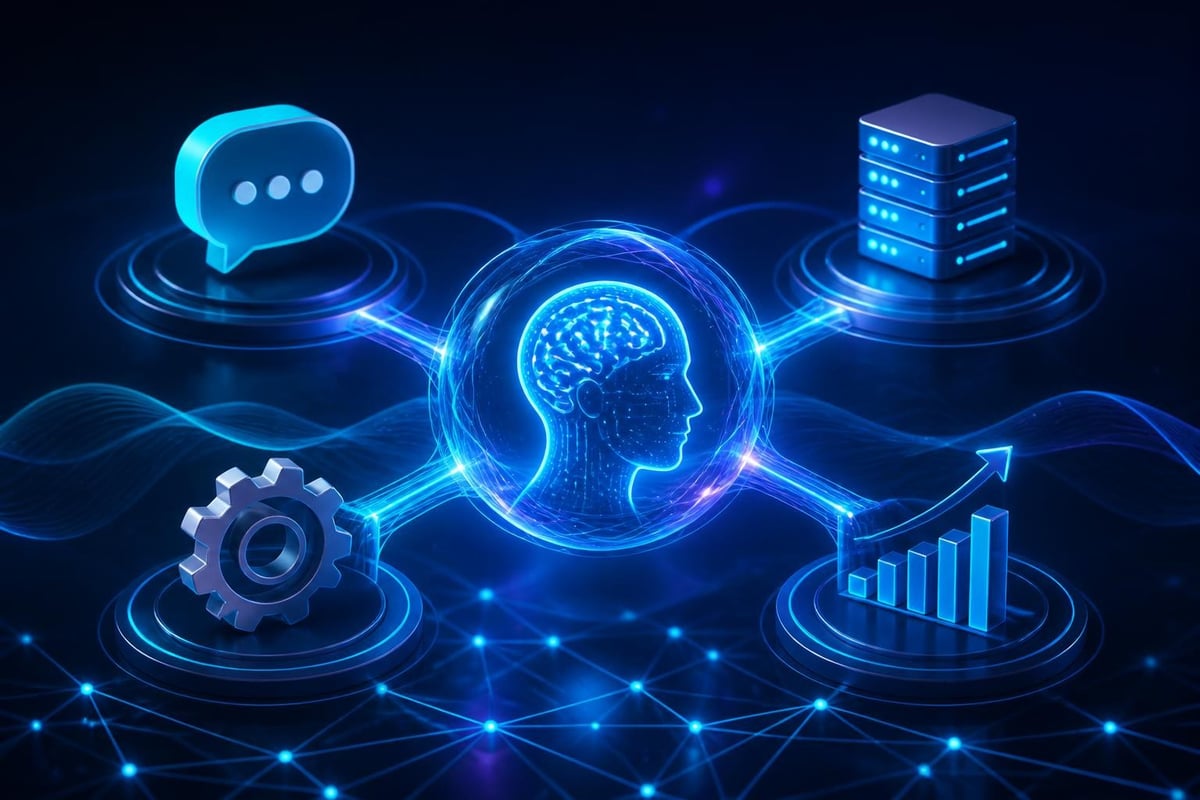
An AI assistant represents far more than automated responses or scripted interactions. These systems leverage advanced natural language processing, machine learning algorithms, and integration capabilities to understand user intent, process information across multiple data sources, and deliver contextually relevant outcomes. The distinction between basic automation and a true AI assistant lies in its ability to learn, adapt, and improve over time.
Today’s enterprise-grade solutions combine multiple AI capabilities into unified platforms. They process natural language queries, access structured and unstructured data, execute workflows across business systems, and provide personalised responses based on user roles and historical interactions. This convergence of capabilities transforms how employees interact with technology and complete their daily tasks.
Core Capabilities That Define Enterprise Solutions
Modern AI assistants deliver value through several interconnected capabilities:
- Natural language understanding that interprets user intent beyond keyword matching
- Multi-system integration connecting CRM, ERP, collaboration platforms, and custom applications
- Contextual awareness maintaining conversation history and user preferences
- Automated task execution triggering workflows and completing multi-step processes
- Adaptive learning improving responses based on feedback and usage patterns
The technical architecture supporting these capabilities has matured significantly. Recent advances in large multimodal agents demonstrate how next-generation systems can process text, images, and structured data simultaneously, enabling richer interactions and more comprehensive problem-solving capabilities.
Business Impact and Measurable Outcomes
The value proposition of implementing an AI assistant extends across multiple dimensions of enterprise operations. Organisations deploying these solutions report significant improvements in employee productivity, customer satisfaction scores, and operational efficiency metrics.
Productivity gains manifest in reduced time spent on routine tasks, faster access to information, and elimination of context-switching between applications. Employees can query business data conversationally, receive instant answers from knowledge bases, and automate repetitive workflows without technical expertise.
Quantifying Enterprise Benefits
| Metric Category | Typical Improvement | Impact Area |
|---|---|---|
| Task Completion Time | 40-60% reduction | Employee Efficiency |
| Information Retrieval | 70% faster access | Knowledge Management |
| Process Automation | 50-80% fewer manual steps | Operational Costs |
| Employee Satisfaction | 25-35% increase | Workforce Experience |
These improvements translate directly to bottom-line value. Business intelligence using AI demonstrates how organisations extract insights and drive decision-making through intelligent assistants that analyse data patterns and surface recommendations proactively.
The implementation of AI-powered solutions for employees shows measurable results across departments. Sales teams close deals faster with instant access to product information and customer history. Finance teams automate expense processing and compliance checks. HR departments streamline onboarding and employee queries.
Implementation Considerations for Enterprises
Successful deployment requires careful planning across technical, organisational, and governance dimensions. The journey begins with clearly defined use cases that align with strategic business objectives rather than implementing technology for its own sake.
Strategic Planning and Use Case Selection
Organisations should prioritise use cases based on three criteria:
- High-frequency tasks that consume significant employee time
- Well-defined processes with clear inputs, outputs, and decision logic
- Data availability ensuring systems can access required information sources
The most successful implementations focus initially on specific departments or functions before expanding enterprise-wide. This approach allows organisations to refine their AI assistant capabilities, gather user feedback, and demonstrate value before broader rollout.
Technical integration represents a critical success factor. Modern AI assistants must connect seamlessly with existing enterprise systems including Microsoft 365, Dynamics 365, SAP, Salesforce, and custom applications. Azure AI solutions provide the infrastructure and tools necessary for enterprise-grade deployments with appropriate security, compliance, and scalability controls.
Security and Governance Frameworks
Implementing robust governance ensures AI assistants operate within appropriate boundaries whilst maintaining data security and regulatory compliance. Key considerations include:
- Access controls defining which users can query specific data sources
- Audit trails logging all interactions and decisions for compliance purposes
- Data residency ensuring information remains in approved geographic locations
- Response validation implementing approval workflows for high-risk actions
- Privacy protection anonymising sensitive information and respecting user consent
The NIST Artificial Intelligence Risk Management Framework provides comprehensive guidance for organisations deploying AI systems responsibly. This framework addresses trustworthiness, transparency, accountability, and fairness considerations essential for enterprise adoption.

Designing Effective User Experiences
The success of an AI assistant depends heavily on user adoption, which requires intuitive interfaces and responses that meet user expectations consistently. Design considerations extend beyond visual aesthetics to encompass conversation flow, response accuracy, and failure recovery mechanisms.
Conversation design shapes how users interact with AI assistants. Effective implementations guide users through complex queries with clarifying questions, provide progress indicators for long-running tasks, and offer alternative paths when initial approaches fail. The assistant should communicate in language appropriate to the user’s role and expertise level.
Accessibility and Inclusive Design
Creating AI assistants that serve all users requires attention to accessibility standards and diverse user needs. WCAG 3.0 guidelines establish best practices for designing inclusive conversational interfaces that accommodate users with visual, auditory, cognitive, and motor impairments.
Recent research demonstrates the transformative potential of accessible AI systems. Studies on multimodal language models as visual assistants show how combining text, speech, and image processing capabilities enables AI assistants to support users with visual impairments in navigating physical and digital environments.
Design principles for inclusive AI assistants include:
- Support for multiple interaction modalities (text, voice, visual)
- Clear error messages with actionable recovery steps
- Adjustable response verbosity based on user preferences
- Compatibility with assistive technologies
- Cultural and linguistic adaptability
Performance Evaluation and Continuous Improvement
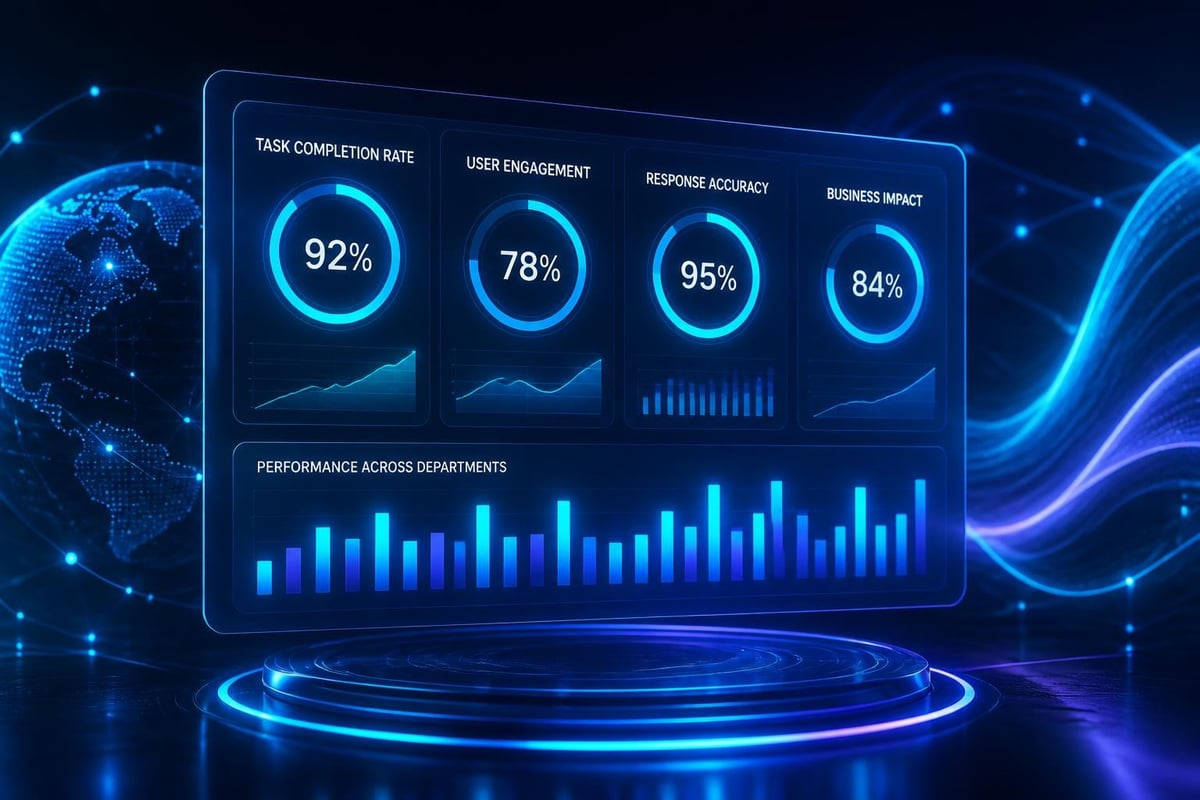
Measuring AI assistant effectiveness requires metrics that capture both technical performance and business outcomes. Evaluation frameworks for conversational assistants provide structured approaches to assessing response quality, task completion rates, and user satisfaction.
Key Performance Indicators
| KPI Category | Specific Metrics | Measurement Frequency |
|---|---|---|
| Technical Performance | Response accuracy, latency, availability | Real-time monitoring |
| User Engagement | Active users, queries per user, session duration | Daily/weekly tracking |
| Task Success | Completion rates, escalation frequency, retry attempts | Weekly analysis |
| Business Impact | Time saved, costs reduced, revenue influenced | Monthly/quarterly review |
Beyond quantitative metrics, qualitative feedback provides essential insights into user experience and improvement opportunities. Regular user surveys, feedback mechanisms within the assistant interface, and analysis of unsuccessful interactions guide iterative enhancements.
The continuous improvement cycle involves analysing performance data, identifying patterns in failed interactions, expanding knowledge bases, refining conversation flows, and training models on new data. AI workflow automation demonstrates how organisations systematically enhance their AI assistant capabilities over time.
Integration With Enterprise Ecosystems
An AI assistant delivers maximum value when deeply integrated within the broader enterprise technology ecosystem. This integration enables assistants to orchestrate actions across multiple systems, access comprehensive data sources, and deliver end-to-end process automation.
Modern integration architectures leverage APIs, webhooks, and middleware platforms to connect AI assistants with:
- Collaboration platforms (Microsoft Teams, Slack, Zoom)
- Business applications (CRM, ERP, ITSM systems)
- Data warehouses and lakes for analytics queries
- Custom applications specific to organisational needs
- External services for enriched functionality
AI system integration requires careful attention to authentication, data synchronisation, error handling, and performance optimisation. Well-designed integrations maintain security boundaries whilst providing seamless user experiences across system boundaries.
Creating Unified Digital Experiences
The most powerful implementations position the AI assistant as a unified interface layer that abstracts complexity from end users. Employees interact conversationally whilst the assistant orchestrates actions across multiple backend systems transparently.
Consider an employee requesting project status information. The AI assistant might query the project management system for task completion percentages, retrieve recent communications from the email platform, check budget utilisation in the financial system, and identify potential risks from the issue tracking database-all in response to a single conversational query.
This orchestration capability transforms how organisations approach AI productivity by eliminating the friction of navigating multiple interfaces and consolidating information from disparate sources.
Future Trajectories and Emerging Capabilities
The AI assistant landscape continues evolving rapidly with several emerging trends shaping future capabilities. Understanding these trajectories helps organisations plan long-term AI strategies and make informed investment decisions.
Agentic AI represents a significant evolution beyond traditional assistants. These systems not only respond to queries but proactively identify opportunities, suggest actions, and autonomously execute multi-step workflows with minimal human supervision. The transition from reactive assistance to proactive agency fundamentally changes the employee-technology relationship.
Emerging Capability Trends
Advanced AI assistants increasingly demonstrate:
- Cross-domain reasoning connecting insights across different business functions
- Temporal awareness understanding deadlines, schedules, and time-sensitive priorities
- Emotional intelligence detecting user sentiment and adapting communication accordingly
- Collaborative problem-solving working alongside humans on complex analytical tasks
- Predictive capabilities anticipating needs based on patterns and context
Looking ahead to future developments, 2026 AI trends highlight the accelerating pace of innovation in conversational AI, multimodal interfaces, and autonomous decision-making systems. Organisations that establish strong foundations today position themselves to adopt advanced capabilities as they mature.
The convergence of AI assistants with other enterprise technologies creates new possibilities. Integration with AI Copilot solutions demonstrates how organisations layer multiple AI capabilities to address different use cases whilst maintaining consistent user experiences.
Organisational Change Management
Technology deployment represents only one dimension of successful AI assistant implementation. Organisational change management proves equally critical as employees adapt to new ways of working and organisations reshape processes around AI capabilities.
Effective change management programmes address:
- Executive sponsorship demonstrating leadership commitment and strategic importance
- Communication strategies explaining benefits, addressing concerns, and celebrating successes
- Training initiatives building user competence and confidence with new tools
- Champion networks identifying enthusiastic early adopters who support broader adoption
- Feedback mechanisms creating channels for users to report issues and suggest improvements
Resistance often stems from concerns about job displacement, technology complexity, or loss of control over work processes. Addressing these concerns requires transparent communication about the AI assistant’s role as an augmentation tool that enhances human capabilities rather than replacing them.
Organisations implementing artificial intelligence automation solutions find that employees embrace AI assistants most readily when they experience direct personal benefits-reduced tedious work, faster access to information, and elimination of frustrating manual processes.
Building Towards Sustainable AI Assistant Programmes
Long-term success requires treating AI assistant deployment as an ongoing programme rather than a one-time project. Sustainable programmes establish governance structures, allocate ongoing resources, and create feedback loops that drive continuous improvement.
Programme Governance Structure
| Role | Responsibilities | Decision Authority |
|---|---|---|
| Executive Sponsor | Strategic direction, resource allocation | Final approval on major initiatives |
| AI Programme Manager | Day-to-day operations, vendor management | Tactical implementation decisions |
| Technical Lead | Architecture, integration, security | Technical standards and approaches |
| Business Liaisons | Use case identification, user feedback | Departmental priorities and requirements |
| Governance Board | Policy, compliance, risk management | Approval of new use cases and data access |
Establishing clear roles and responsibilities prevents implementation bottlenecks whilst ensuring appropriate oversight and accountability. The governance structure should balance agility with control, enabling rapid iteration whilst maintaining security and compliance standards.
Sustainable programmes also require dedicated resources for ongoing maintenance, enhancement, and support. As user adoption grows and use cases expand, organisations need teams capable of managing knowledge bases, refining conversation flows, monitoring performance, and addressing technical issues promptly.
AI managed services provide organisations with ongoing support and expertise without requiring extensive internal resources. This approach enables enterprises to maintain cutting-edge AI assistant capabilities whilst focusing internal teams on strategic initiatives.
AI assistants have evolved into essential enterprise tools that transform how organisations operate, how employees work, and how businesses deliver value. The successful implementations combine sophisticated technology with thoughtful design, robust governance, and sustained organisational commitment.
Stellium Consulting helps enterprises navigate the complexities of AI assistant implementation, from strategic planning and use case identification through technical deployment and organisational change management. As a Microsoft Solutions Partner specialising in AI-powered solutions, we bring deep expertise in delivering systems that enhance employee productivity, streamline business processes, and drive measurable outcomes. Discover how we can help your organisation harness the transformative potential of AI assistants at Stellium Consulting.