
The ai copilot revolution has arrived in enterprises worldwide, yet most organisations are fundamentally misunderstanding what they’ve adopted. This misconception isn’t just slowing down implementation-it’s preventing companies from accessing the exponential value that transforms operations, empowers teams, and creates sustainable competitive advantage. Understanding the true nature of AI copilot technology changes everything about how you approach deployment, measure success, and build towards comprehensive AI maturity.
The Fundamental Misconception Blocking AI Copilot Value
The most damaging myth surrounding ai copilot adoption is deceptively simple: organisations believe they’re implementing a productivity tool when they’re actually adopting a new way of working.
This distinction matters profoundly. Productivity tools automate existing tasks. They make current workflows faster or easier. An ai copilot, however, fundamentally restructures how knowledge workers approach problems, interact with information, and collaborate with systems.
Why This Changes Adoption Strategy
When enterprises treat Microsoft Copilot as another software deployment, they focus on:
- Licensing numbers and seat assignments
- Basic training sessions covering features
- Usage metrics that count interactions
- Short-term ROI calculations based on time saved
This approach consistently underdelivers. Teams receive access, attend a workshop, then return to established workflows with a new button they occasionally press.
Organisations that recognise ai copilot as a thinking methodology invest differently:
| Traditional Approach | Transformation Approach |
|---|---|
| Feature training | Workflow redesign |
| Individual adoption | Team behaviour change |
| Usage tracking | Maturity assessment |
| One-time deployment | Continuous iteration |
The transformation approach acknowledges that AI adoption requires strategic planning rather than simple implementation. It prioritises behaviour change over feature awareness.

Why AI Copilot Won’t Do the Work For You
Here’s the uncomfortable truth: expecting your ai copilot to complete tasks while you remain unchanged guarantees disappointment.
The “magic button” mentality assumes artificial intelligence will absorb context, understand unstated requirements, navigate organizational complexity, and deliver polished outputs autonomously. This simply isn’t how current AI copilot technology functions.
The Real Value Proposition
Microsoft 365 Copilot and similar tools excel at collaboration, not replacement. They accelerate thinking when you provide direction, enhance drafts when you establish structure, and surface insights when you ask informed questions.
Teams experiencing exponential value share common characteristics:
- They iterate actively. First responses become starting points, not endpoints.
- They provide context deliberately. Background information, constraints, and objectives shape better outputs.
- They integrate feedback loops. Human expertise refines AI suggestions continuously.
- They treat outputs as drafts. Critical thinking remains central to deliverables.
This collaborative model generates far greater value than automation alone. When knowledge workers partner with an ai copilot, they maintain strategic thinking while offloading repetitive elements, maintain quality control while accelerating production, and develop new capabilities while preserving institutional knowledge.
Recent developments like Microsoft’s integration with Anthropic’s Claude Cowork tool enhance these collaborative capabilities, enabling AI agents to handle more sophisticated workflows whilst still requiring human guidance and oversight.
Prompts Matter Less Than You Think
The explosion of “prompt engineering” courses and “perfect prompts” templates suggests that mastering specific phrases unlocks ai copilot potential. This focus misses the bigger picture.
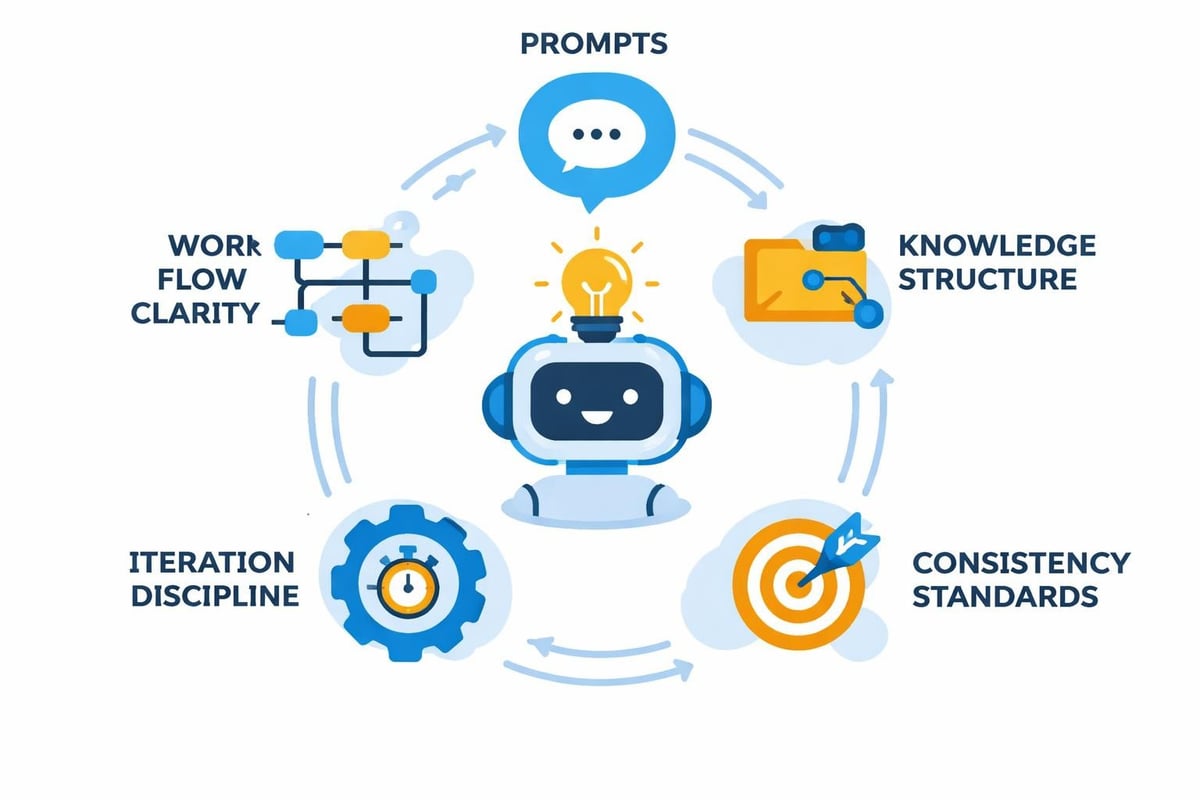
Prompts represent roughly 20% of the value equation. The remaining 80% comes from foundational elements that enable any prompt to work effectively.
The Hidden 80%
Knowledge structure determines whether your ai copilot can access relevant information. Fragmented data across disconnected systems, inconsistent naming conventions, and siloed repositories prevent even brilliant prompts from generating useful responses.
Workflow clarity establishes the context artificial intelligence needs. When processes remain undocumented, inconsistent, or understood only tacitly, AI copilot tools cannot replicate or enhance them.
Iteration discipline separates superficial usage from transformative adoption. Organisations that treat first outputs as final miss opportunities to refine, improve, and compound value.
Consistency standards enable learning and improvement. When every team member approaches similar challenges differently, patterns cannot emerge and efficiency gains remain localized.
These foundational elements require investment beyond training sessions. They demand thoughtful AI infrastructure planning that addresses data governance, process documentation, and organizational knowledge management.
Building the Foundation First
High-performing organisations sequence their ai copilot adoption strategically:
- Audit information architecture to identify gaps and redundancies
- Document core workflows that teams perform repeatedly
- Establish quality standards for outputs and interactions
- Create feedback mechanisms that capture lessons and improvements
- Only then scale prompt development as teams understand context
This sequence ensures prompts work within a supportive ecosystem rather than struggling against structural limitations. As Microsoft rolls out Wave 3 enhancements, this foundational work becomes even more critical for leveraging advanced features effectively.
Why Features Don’t Drive Transformation
Enterprises often fixate on ai copilot feature releases, believing new capabilities unlock transformation. The reality inverts this assumption: behavioral maturity drives feature value, not the reverse.
The Maturity Progression
AI copilot adoption follows a predictable maturity curve:
Stage One: Experimental
Individual contributors test features sporadically. Usage remains inconsistent. Value stays limited to occasional time savings.
Stage Two: Habitual
Teams incorporate ai copilot into daily workflows. Patterns emerge around specific use cases. Efficiency improvements become measurable.
Stage Three: Integrated
Organizations embed AI copilot within standard processes. Workflows adapt to leverage capabilities. Compounding benefits accelerate.
Stage Four: Transformative
Behavioral changes enable advanced AI capabilities. Automation opportunities become visible. Enterprise-wide innovation accelerates.
Most organizations stall between stages one and two, waiting for features to drive progression. Successful enterprises recognize that consistent behavior builds the habits that unlock advanced capabilities.
From Copilot to AI 360°
The true power of ai copilot maturity lies in creating pathways to comprehensive AI transformation. Teams that develop strong Copilot habits naturally progress towards:
- Workflow automation based on observed patterns
- Custom AI agents that handle repeatable processes
- Enterprise governance frameworks that manage AI at scale
- Organization-wide transformation leveraging multiple AI capabilities
This progression isn’t automatic. It requires deliberate cultivation of behaviors that support AI integration. Organizations focused on AI adoption best practices understand that maturity cannot be purchased or installed-it must be developed through consistent practice and organizational commitment.
| Maturity Stage | Primary Focus | AI Capability Unlocked |
|---|---|---|
| Experimental | Feature exploration | Individual productivity |
| Habitual | Daily integration | Team efficiency |
| Integrated | Process embedding | Workflow optimization |
| Transformative | Behavioral change | Enterprise AI ecosystem |
AI Copilot as Your Diagnostic Layer
Perhaps the most underappreciated value of ai copilot deployment comes before automation, before transformation, even before productivity gains. It comes from observation.
Discovering What Matters
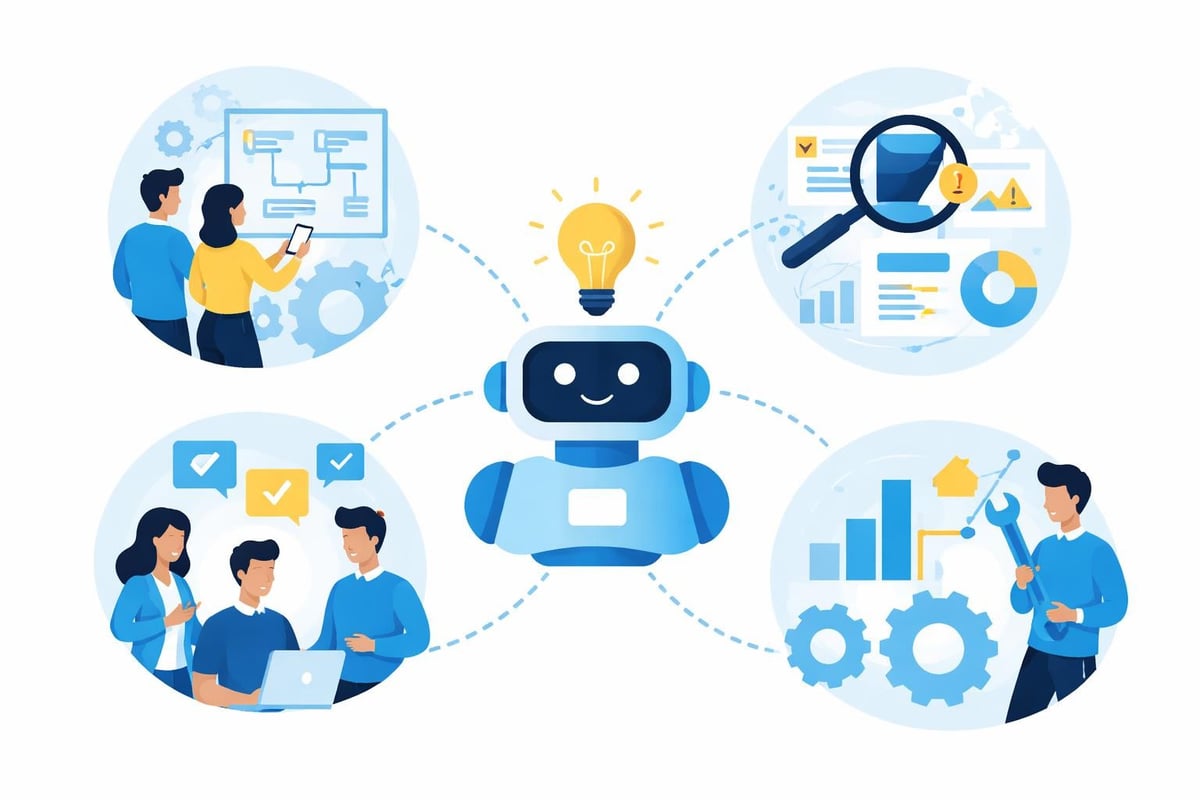
When teams use Microsoft Copilot naturally within their workflows, they generate invaluable diagnostic data:
- Which tasks repeat frequently across departments and roles
- Where knowledge gaps impede accuracy and slow decisions
- Which teams demonstrate higher AI maturity and why
- What actions could transition to autonomous agents safely
This diagnostic capability transforms ai copilot from a productivity tool into a strategic intelligence layer. It reveals where to invest in automation, which processes need documentation, what training gaps exist, and how to prioritize AI initiatives for maximum impact.
Building AI 360° Strategy
Organizations that treat ai copilot as diagnostic infrastructure approach their broader AI strategy differently. Rather than guessing which processes to automate or which agents to build, they observe actual usage patterns.
Example diagnostic insights:
A legal team repeatedly uses Copilot to summarize contract clauses. This pattern suggests an opportunity for specialized contract review agents with appropriate AI governance frameworks.
Finance departments show low Copilot adoption despite high potential. Investigation reveals data access restrictions preventing useful responses-highlighting infrastructure needs before feature deployment.
Customer service teams achieve high maturity quickly. Analysis shows strong process documentation and consistent workflows-identifying this team as ideal for piloting advanced automation solutions.
From Insights to Action
The diagnostic approach requires discipline. Organizations must:
- Capture usage data systematically without invading privacy
- Analyze patterns collaboratively with affected teams
- Prioritize opportunities objectively based on impact and feasibility
- Test hypotheses through pilots before scaling solutions
- Iterate continuously as behaviors evolve
This evidence-based progression prevents costly missteps. Rather than deploying agents prematurely or automating edge cases, enterprises focus resources where actual behavior demonstrates need and readiness.
As Microsoft introduces new premium tiers focused on AI and productivity, the diagnostic value of foundational ai copilot usage becomes even more critical for justifying investments and selecting appropriate advanced capabilities.
Why Copilot Alone Isn’t Enough (And Why That’s Perfect)
The final misconception about ai copilot technology is its completeness. Organizations sometimes assume Microsoft Copilot represents a finished solution-deploy it, train users, and transformation follows automatically.
This assumption misunderstands both Copilot’s purpose and its strategic value.
The Integration Ecosystem
AI copilot functions as an entry point, not a destination. It introduces teams to AI-assisted work, builds familiarity with conversational interfaces, and establishes foundational habits that support more sophisticated capabilities.
What Copilot enables:
- Natural language interaction with business systems
- Context-aware assistance across Microsoft 365 applications
- Knowledge synthesis from distributed information sources
- Workflow acceleration through intelligent suggestions
What Copilot connects to:
- Custom AI agents built for specialized processes
- Low-code platforms like Power Platform with Copilot integration
- Enterprise data platforms requiring sophisticated governance
- Industry-specific AI solutions addressing unique challenges
The power emerges from orchestration. When ai copilot usage reveals automation opportunities, organizations can deploy specialized agents. When teams develop strong prompting habits, they can leverage advanced AI services effectively. When maturity reaches critical levels, enterprise-wide transformation becomes achievable.
The Continuous Evolution
AI copilot technology continues advancing rapidly. Recent announcements like Copilot Cowork integrating Anthropic’s capabilities demonstrate how the platform expands to enable more complex workflows whilst maintaining the accessible interface that drives adoption.
This evolution reinforces why treating ai copilot as a diagnostic layer proves so valuable. As capabilities expand, organizations with mature usage patterns can adopt advanced features smoothly. Those still struggling with basics find themselves increasingly behind.
The maturity advantage compounds:
- Teams comfortable with daily Copilot usage adapt to new features faster
- Organizations with strong AI governance extend frameworks efficiently
- Enterprises that documented workflows through Copilot observation automate more effectively
- Companies that built consistent AI habits scale transformation more broadly
Measuring What Actually Matters
Traditional ai copilot metrics focus on easily quantifiable factors: active users, prompts submitted, time saved per interaction. These measurements miss the behavioral and organizational changes that generate lasting value.
Beyond Vanity Metrics
Meaningful AI copilot indicators include:
- Percentage of teams integrating Copilot into documented workflows
- Frequency of iterative refinement versus one-time queries
- Quality improvements in outputs compared to previous methods
- Cross-functional knowledge sharing enabled by AI assistance
- Rate of workflow automation opportunities identified
- Speed of maturity progression across organizational units
These metrics require more effort to capture but reveal whether ai copilot deployment drives genuine transformation or superficial adoption.
Organizations serious about AI productivity improvements establish measurement frameworks before rollout, ensuring they can track meaningful progress rather than convenient numbers.
Linking Usage to Outcomes
The most sophisticated enterprises connect ai copilot adoption to business results:
| Business Objective | AI Copilot Contribution | Measurement Approach |
|---|---|---|
| Faster decision-making | Accelerated information synthesis | Time from question to informed decision |
| Improved quality | Enhanced draft refinement | Error rates, revision cycles |
| Knowledge retention | Captured expertise accessibility | New employee productivity ramp time |
| Innovation capacity | Reduced time on routine tasks | Hours allocated to strategic initiatives |
This outcome-focused approach positions ai copilot as a strategic enabler rather than a standalone solution, aligning AI investments with organizational priorities and demonstrating tangible value to stakeholders.
Building Organizational Readiness
Successful ai copilot adoption requires preparation beyond technical deployment. Organizations must address cultural, structural, and operational readiness simultaneously.
Cultural Prerequisites
Psychological safety enables teams to experiment with AI assistance without fear of appearing incompetent. When asking Copilot questions feels risky, adoption stalls.
Learning orientation accepts that initial outputs won’t be perfect. Organizations demanding immediate expertise from AI copilot tools set unrealistic expectations.
Collaboration mindset treats artificial intelligence as a partner rather than a replacement. Teams viewing AI as threatening resist engagement.
Transparency standards ensure appropriate AI usage. Clear guidelines about when to use Copilot, how to verify outputs, and where human judgment remains essential prevent misuse.
These cultural elements develop through leadership modeling, communication clarity, and recognition of effective AI collaboration. Organizations cannot mandate culture change, but they can nurture environments where ai copilot adoption flourishes naturally.
Structural Enablers
Beyond culture, organizational structure significantly impacts ai copilot success:
- Clear accountability for AI maturity progression prevents diffused responsibility
- Dedicated resources for workflow documentation and optimization enable systematic improvement
- Cross-functional collaboration surfaces diverse use cases and shared learnings
- Executive sponsorship maintains focus during the behavioral change period
Companies that embed these structural elements alongside technical deployment achieve substantially better outcomes than those focusing solely on software rollout.
For enterprises seeking comprehensive guidance, resources on AI strategy consulting approaches provide frameworks for addressing these multidimensional requirements systematically.
The Path Forward
AI copilot adoption represents far more than technology deployment. It signals organizational readiness to embrace AI-assisted work, restructure knowledge workflows, and build towards comprehensive digital transformation.
The organizations that thrive understand:
- Copilot changes how teams think, not just what they produce
- Value comes from behavior change, not feature mastery
- Foundation matters more than prompts
- Maturity unlocks capabilities, not the reverse
- Diagnostic insights guide strategic investments
- Integration with broader AI ecosystems multiplies impact
This perspective shift transforms ai copilot from a productivity app into a strategic platform-one that reveals opportunities, builds organizational capabilities, and creates pathways to advanced AI maturity.
The journey requires patience, investment, and commitment to continuous improvement. But for enterprises willing to embrace this comprehensive approach, the returns extend far beyond individual efficiency gains to encompass organization-wide transformation and sustainable competitive advantage.
The journey to AI copilot maturity transforms how enterprises work, compete, and innovate-but only when organizations move beyond misconceptions to embrace behavior change, foundational excellence, and strategic integration. Whether you’re beginning your AI adoption journey or advancing existing capabilities, partnering with experienced specialists accelerates progress whilst avoiding common pitfalls. Stellium Consulting helps enterprises unlock the full potential of Microsoft AI solutions through strategic planning, implementation expertise, and ongoing optimization that drives measurable business outcomes.