
The integration of generative AI into enterprise operations has shifted from experimental to essential. Microsoft Azure OpenAI represents a convergence of cutting-edge language models with enterprise-grade cloud infrastructure, offering organisations a pathway to deploy AI capabilities whilst maintaining the security, compliance, and scalability requirements that modern businesses demand. For enterprises seeking to transform their operations through AI-powered solutions, understanding the full scope of what this platform offers is crucial for successful implementation.
Understanding the Microsoft Azure OpenAI Service Architecture
Microsoft Azure OpenAI delivers powerful language models through a managed cloud service that prioritises enterprise needs. Unlike consumer-facing AI tools, this platform provides dedicated capacity, private networking, and comprehensive data governance controls that align with corporate IT requirements.
The service architecture operates through dedicated Azure infrastructure, ensuring that your data remains within your organisation's security perimeter. When you deploy microsoft azure openai resources, you gain access to models including GPT-4, GPT-3.5, and DALL·E through REST APIs and SDKs that integrate seamlessly with existing Azure services.
Key architectural components include:
- Model deployment endpoints that run in your Azure subscription
- Virtual network integration for private connectivity
- Managed identity support for secure authentication
- Content filtering layers that screen inputs and outputs
- Rate limiting controls to manage costs and prevent abuse
Getting started with implementation requires careful planning around capacity, regional availability, and quota management. The official Microsoft quickstart guide provides practical code samples and SDK usage patterns that accelerate development timelines.

Regional Deployment and Data Residency Considerations
One critical advantage of microsoft azure openai is the ability to select specific Azure regions for model deployment. This matters tremendously for organisations with data sovereignty requirements or those serving customers in jurisdictions with strict data localisation mandates.
Currently available regions span North America, Europe, and Asia-Pacific, with Microsoft continuously expanding availability. The EU AI Act has introduced new compliance requirements for general-purpose AI systems, making regional deployment choices even more significant for organisations operating in or serving European markets.
| Region | GPT-4 Availability | Data Residency | Compliance Frameworks |
|---|---|---|---|
| UK South | Available | UK-based | GDPR, UK DPA |
| West Europe | Available | EU-based | GDPR, AI Act |
| East US | Available | US-based | SOC 2, HIPAA |
| Australia East | Limited | Australia-based | IRAP, ISM |
Selecting the appropriate region involves balancing latency requirements, regulatory constraints, and model availability. For multi-national enterprises, a multi-region strategy may prove necessary to optimise performance whilst maintaining compliance across different jurisdictions.
Enterprise Use Cases Transforming Business Operations
The versatility of microsoft azure openai enables deployment across numerous business functions. Organisations implementing these capabilities report significant improvements in employee productivity, customer experience, and operational efficiency.
Customer Service Enhancement
Intelligent chatbots and virtual assistants powered by Azure OpenAI handle routine enquiries, freeing human agents for complex issues. These systems understand context, maintain conversation history, and escalate appropriately when needed.
Implementation benefits observed:
- 60-70% reduction in average handling time for common queries
- 24/7 availability without proportional staffing increases
- Consistent responses aligned with brand voice and policies
- Multilingual support through single model deployment
- Sentiment analysis for proactive escalation
Knowledge Management and Document Intelligence
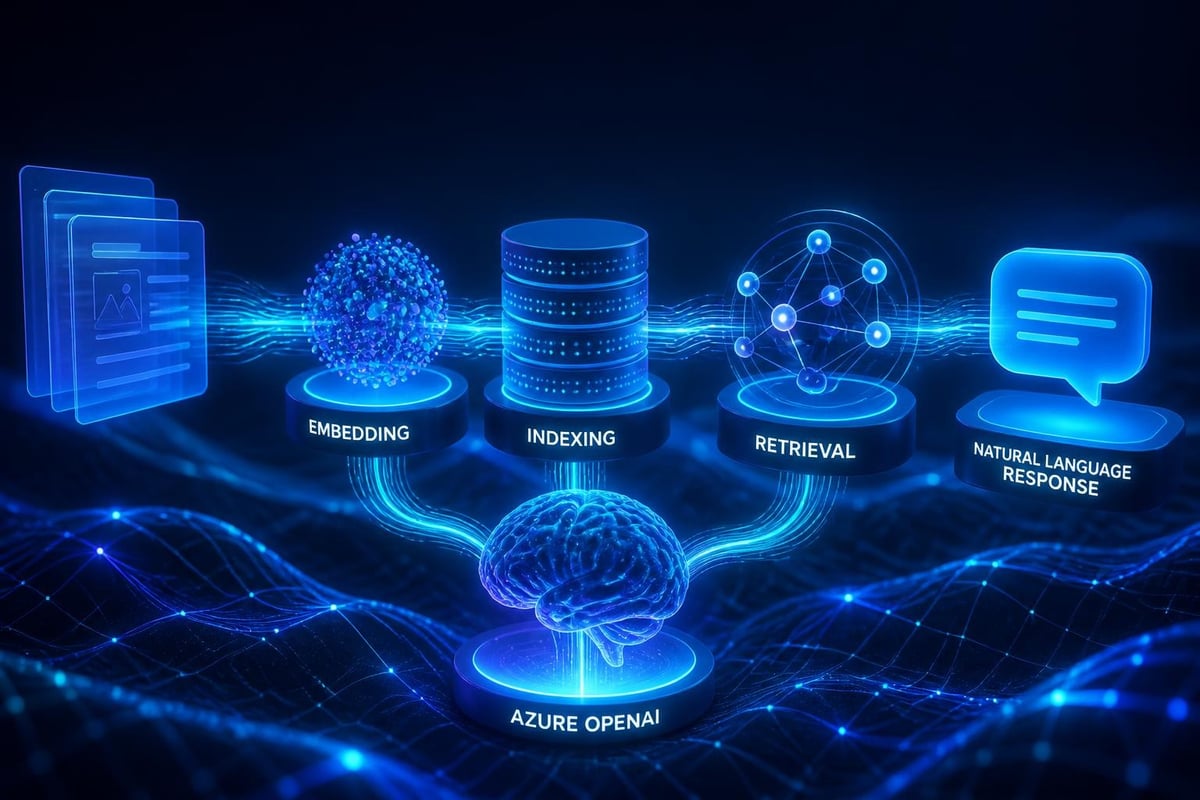
Enterprises possess vast repositories of unstructured data locked in documents, emails, and databases. Microsoft azure openai excels at extracting insights, summarising content, and answering questions across these information sources.
Advanced retrieval-augmented generation (RAG) architectures combine Azure Cognitive Search with OpenAI models, enabling employees to query company knowledge using natural language. This transforms how teams access institutional expertise and reduces time spent searching for information.
A Forrester Total Economic Impact study examining Azure OpenAI solutions documented measurable business value, with organisations reporting improved decision-making speed and reduced research time as primary benefits.
Code Generation and Development Acceleration
Development teams leverage microsoft azure openai for code completion, documentation generation, and test case creation. These capabilities accelerate development cycles whilst maintaining code quality through automated review suggestions.
- Generate boilerplate code from natural language descriptions
- Create comprehensive documentation from existing codebases
- Suggest optimisations and identify potential security vulnerabilities
- Translate code between programming languages
- Generate unit tests based on function signatures
Security, Governance and Responsible AI Implementation
Enterprise AI deployment demands rigorous attention to security, privacy, and ethical considerations. Microsoft Azure OpenAI provides multiple layers of protection, but organisations must actively configure and maintain these controls.
Data Privacy and Model Isolation
Unlike consumer AI services, your data submitted to microsoft azure openai remains completely isolated. Microsoft does not use your prompts, completions, or training data to improve base models or share information with other customers.
Privacy guarantees include:
- No data retention beyond processing requirements
- No model training on customer data without explicit consent
- Full data deletion capabilities aligned with GDPR requirements
- Audit logs tracking all API interactions
- Encryption at rest and in transit
Content Filtering and Safety Controls
The platform includes content filtering systems that detect and block harmful content across multiple categories. These filters operate on both user inputs and model outputs, creating a safety envelope around AI interactions.
| Filter Category | Detection Capability | Action Options |
|---|---|---|
| Hate speech | Identifies discriminatory language | Block, flag, or allow with warning |
| Sexual content | Detects inappropriate material | Configurable severity thresholds |
| Violence | Recognises violent descriptions | Customer-defined policies |
| Self-harm | Identifies concerning patterns | Immediate blocking recommended |
Organisations should calibrate these filters based on their specific use cases and risk tolerance. Overly aggressive filtering may impact legitimate use cases, whilst insufficient controls expose users to inappropriate content.
Compliance with AI Governance Frameworks
The NIST AI Risk Management Framework provides authoritative guidance for managing AI risks when deploying cloud LLM services. Aligning microsoft azure openai implementations with these principles strengthens governance and builds stakeholder trust.
Key framework elements include:
- Governance structures defining roles and accountability
- Risk mapping identifying potential harms and mitigations
- Performance measurement tracking model behaviour over time
- Transparency mechanisms documenting model capabilities and limitations
Research into production incidents in generative AI cloud services reveals common operational challenges including model degradation, latency spikes, and unexpected output patterns. Proactive monitoring and incident response procedures mitigate these risks.
Cost Optimisation and Resource Management
Microsoft azure openai operates on a consumption-based pricing model, with costs determined by model type, token volume, and deployment configuration. Strategic resource management significantly impacts total cost of ownership.
Token Economics and Pricing Structures
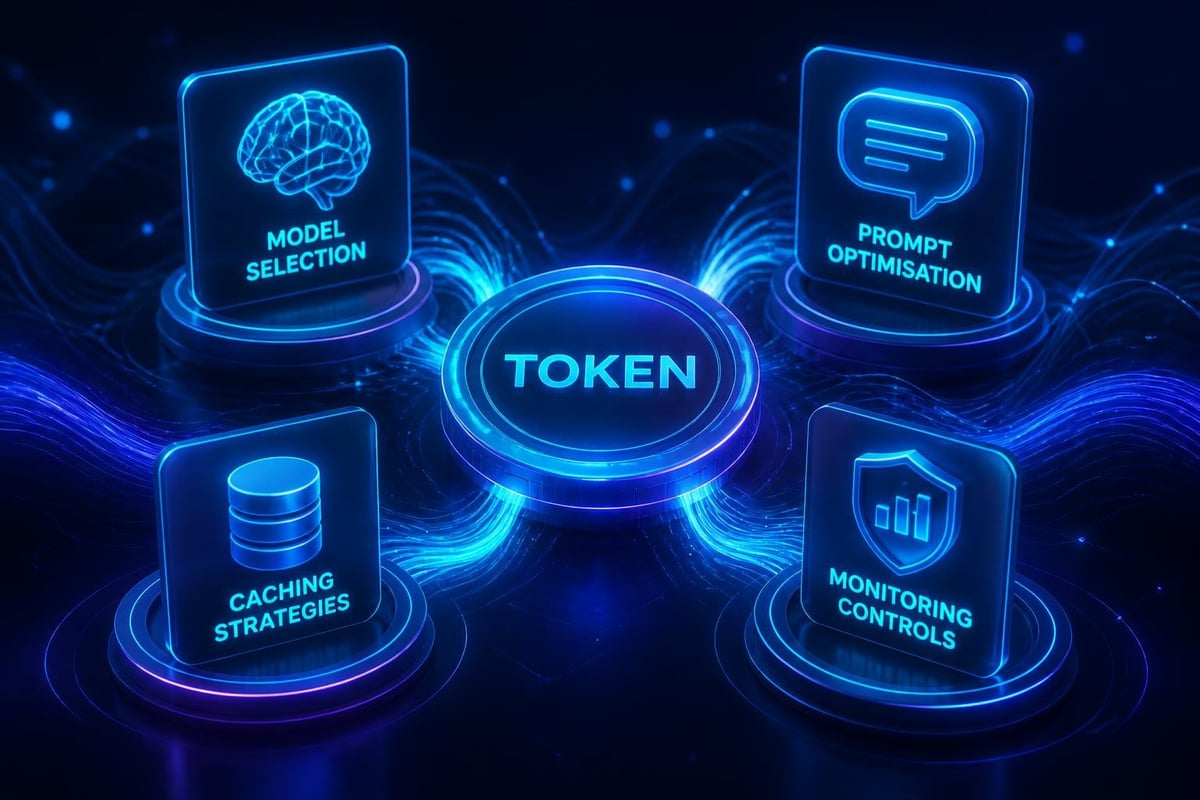
Understanding token consumption patterns forms the foundation of cost control. Tokens represent pieces of words, with pricing varying by model generation and capability level.
Pricing considerations:
- GPT-4 models cost substantially more per token than GPT-3.5
- Prompt tokens and completion tokens may have different rates
- Fine-tuned models include hosting fees plus usage charges
- Reserved capacity offers discounts for predictable workloads
Optimisation Strategies for Enterprise Deployment
Implementing cost controls requires technical and operational measures that balance capability with expenditure.
- Right-size model selection – use the least capable model that meets requirements
- Implement caching – store and reuse common responses
- Prompt engineering – craft efficient prompts that minimise token usage
- Rate limiting – prevent runaway costs from unexpected usage spikes
- Usage analytics – track consumption patterns by application and user
Establishing clear budgets per project or department, combined with automated alerts when thresholds approach, prevents cost surprises. Many enterprises implement approval workflows for applications projected to exceed specific monthly token budgets.
Integration Patterns and Technical Implementation
Successful microsoft azure openai deployment requires thoughtful integration with existing enterprise systems. Multiple architectural patterns accommodate different requirements and constraints.
API-First Integration Approach
The REST API provides the most flexible integration path, enabling any application capable of HTTP requests to leverage OpenAI capabilities. This approach suits organisations with diverse technology stacks or those building custom applications.
Standard integration workflow:
- Provision Azure OpenAI resource in selected region
- Deploy desired model to dedicated endpoint
- Configure authentication using API keys or managed identities
- Implement retry logic for transient failures
- Monitor usage through Azure Monitor metrics
SDK and Framework Integration
Microsoft provides SDKs for .NET, Python, Java, and JavaScript that simplify development. These libraries handle authentication, request formatting, and error handling, accelerating time to production.
Framework-specific extensions enable rapid prototyping. LangChain, Semantic Kernel, and similar orchestration frameworks provide pre-built components for common patterns like conversational memory, tool usage, and agent workflows.
Low-Code and Citizen Developer Enablement
Power Platform integration brings microsoft azure openai capabilities to business users through Power Automate flows and Power Apps custom connectors. This democratisation of AI empowers departmental solutions without requiring traditional software development.
Common low-code scenarios:
- Email classification and routing workflows
- Automated meeting summary generation
- Customer feedback analysis pipelines
- Content moderation in collaboration tools
- Form data extraction and validation
Performance, Reliability and Production Operations
Operating microsoft azure openai in production environments demands attention to performance characteristics, reliability patterns, and operational best practices that ensure consistent service delivery.
Latency Optimisation Techniques
Model inference time varies based on prompt length, completion length, and current service load. Typical response times range from one to ten seconds, with variability impacting user experience in interactive applications.
Reduction strategies include:
- Streaming responses to show partial results whilst generation continues
- Prompt compression removing unnecessary context
- Regional proximity deploying near end users
- Model selection choosing faster models where acceptable
- Connection pooling reducing connection establishment overhead
Capacity Planning and Quota Management
Azure OpenAI enforces quotas measured in tokens per minute (TPM) and requests per minute (RPM). Exceeding these limits results in throttling, with requests rejected until quota replenishes.
| Model Type | Default TPM Quota | Request Quota | Quota Increase Process |
|---|---|---|---|
| GPT-3.5 Turbo | 240,000 | 144 RPM | Support ticket required |
| GPT-4 | 40,000 | 60 RPM | Justification needed |
| GPT-4 Turbo | 150,000 | 90 RPM | Business case review |
Anticipating capacity needs based on expected user volumes, peak usage patterns, and average prompt sizes prevents service disruptions. Requesting quota increases requires several business days, making proactive planning essential.
Monitoring and Observability
Comprehensive monitoring enables rapid issue detection and resolution. Azure Monitor provides built-in metrics tracking request volume, latency percentiles, error rates, and token consumption.
Critical monitoring metrics:
- Request success rate – percentage of successful API calls
- P95 latency – 95th percentile response time
- Token utilisation – consumption relative to quota
- Error distribution – categorisation of failure types
- Content filter activations – frequency of blocked content
Alerting thresholds should trigger before issues impact users. For instance, alerting when token consumption reaches 80% of quota allows time for intervention before throttling begins.
Strategic Implementation Roadmap
Deploying microsoft azure openai across an enterprise requires phased implementation that builds capability progressively whilst managing risk and proving value.
Phase One: Pilot and Proof of Value
Begin with limited scope deployments targeting high-value, low-risk use cases. Pilot projects demonstrate capability, surface integration challenges, and validate ROI projections before broader rollout.
Pilot selection criteria:
- Clear success metrics aligned with business objectives
- Manageable scope completable within 90 days
- Stakeholder commitment and executive sponsorship
- Acceptable risk profile if results fall short
- Opportunity for measurable impact
Document lessons learned, technical patterns, and governance requirements during pilots. These insights inform subsequent phases and reduce implementation friction.
Phase Two: Scaling and Standardisation
Successful pilots warrant expansion to additional departments and use cases. Standardisation becomes critical as deployment count increases, preventing fragmentation and technical debt accumulation.
Establish centre of excellence (CoE) responsibilities including:
- Reference architecture maintenance
- Reusable component libraries
- Developer training and certification
- Security and compliance review processes
- Cost management and chargeback models
Phase Three: Enterprise Integration and Innovation
Mature microsoft azure openai programmes integrate AI capabilities deeply into core business processes and customer-facing applications. Innovation accelerates as teams build upon established foundations rather than recreating basic patterns.
Advanced capabilities unlocked in this phase:
- Multi-modal applications combining vision and language
- Complex agentic workflows with tool usage
- Fine-tuned models optimised for specific domains
- Real-time adaptation based on user feedback
- Cross-functional AI orchestration platforms
Microsoft Azure OpenAI represents a transformative opportunity for enterprises to embed advanced AI capabilities into their operations whilst maintaining the security, compliance, and governance standards that business demands. Success requires strategic planning, technical expertise, and commitment to responsible AI principles. Stellium Consulting partners with organisations to design, implement, and optimise Azure OpenAI solutions that empower employees, enhance business processes, and deliver measurable transformation outcomes. Our Microsoft Solutions Partner expertise ensures your AI initiatives align with both technical best practices and business objectives from initial strategy through production deployment.