The intersection of Microsoft and AI has evolved from experimental projects to mission-critical enterprise infrastructure. In 2026, organisations are no longer asking whether to adopt AI, but rather how to implement it strategically across every facet of their operations. Microsoft’s comprehensive AI ecosystem offers enterprises the tools, platforms, and frameworks needed to transition from traditional workflows to AI-first operations that deliver measurable business outcomes.
The Evolution of Microsoft’s AI Strategy
Microsoft’s journey in artificial intelligence represents one of the most significant technological pivots in corporate history. The company has transformed from a software licensing business into an AI-first platform provider, fundamentally reshaping how enterprises approach digital transformation.
The strategic partnership with OpenAI initially positioned Microsoft and AI at the forefront of the generative AI revolution. However, 2026 marks a pivotal shift towards greater independence and vertical integration. Microsoft launched seven in-house AI models designed to reduce developer costs and decrease reliance on external partners, demonstrating a commitment to owning the entire AI value chain.
Hardware Acceleration and Infrastructure
The foundation of any AI strategy rests on computational power. Microsoft’s investment in custom silicon addresses the growing demands of large-scale AI workloads. The Maia 200 accelerator represents a significant advancement in AI hardware, specifically engineered to enhance inference processing and support enterprise-scale deployments.

This vertical integration of hardware and software enables Microsoft to optimize performance across the entire stack. For enterprises, this translates to faster response times, lower operational costs, and greater reliability when deploying AI solutions at scale. The Maia architecture specifically addresses the bottlenecks that previously limited AI adoption in production environments.
Frontier Transformation: The New Enterprise Paradigm
The concept of “Frontier Transformation” has emerged as the defining characteristic of successful AI adoption. Microsoft’s exploration of how customers leverage AI reveals that the most successful implementations share common attributes: they embed AI at their core rather than treating it as an add-on feature.
Frontier Firms distinguish themselves through several key characteristics:
- AI-first architecture: Systems designed around AI capabilities rather than retrofitting AI into existing processes
- Data-driven decision making: Real-time analytics and predictive insights inform strategic choices
- Automated workflows: Repetitive tasks eliminated through intelligent automation
- Continuous learning: Systems that improve performance based on usage patterns and feedback
- Human-AI collaboration: Augmented intelligence that enhances rather than replaces human expertise
From Experimentation to Production
The transition from pilot projects to production-ready AI systems represents the most challenging phase of enterprise AI adoption. Microsoft’s fiscal year 2026 overview highlights this industry-wide shift from experimentation to deployment of AI for tangible business outcomes.
This progression requires more than technical capability. It demands organisational change management, governance frameworks, and a clear understanding of where AI delivers the greatest return on investment. Microsoft and AI success stories consistently demonstrate that the most significant gains come from targeting specific business processes where AI can automate decisions, surface insights, or enhance productivity.
Microsoft 365 Copilot: AI for Knowledge Workers
Microsoft 365 Copilot represents the most visible manifestation of Microsoft and AI integration for enterprise users. Embedded directly into the productivity applications that knowledge workers use daily, Copilot transforms how employees interact with information and complete tasks.
Research examining Copilot’s implementation in organisational settings provides valuable insights into real-world impact. Studies have assessed its usefulness, ease of use, and effects on productivity, revealing both significant benefits and areas requiring further refinement. The key to successful Copilot deployment lies in understanding which use cases deliver immediate value versus those requiring additional customisation.
Practical Applications Across Business Functions
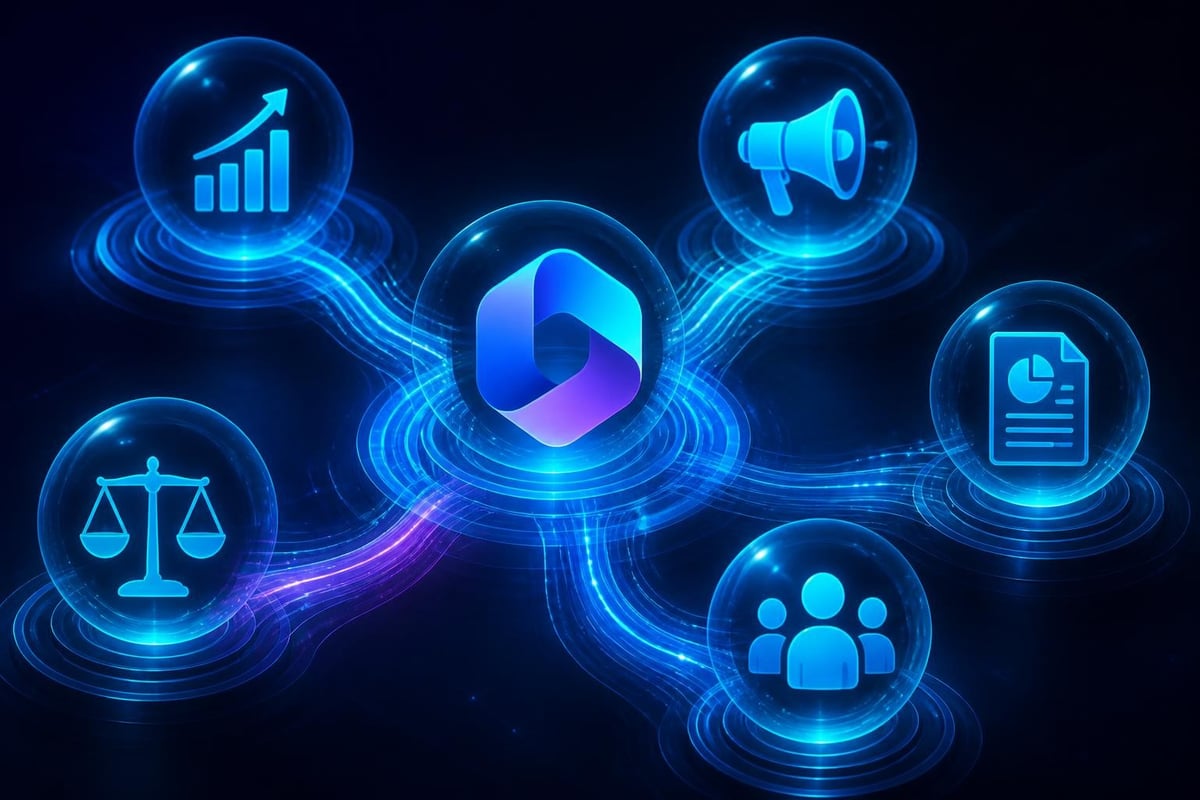
Different departments leverage Copilot’s capabilities in distinct ways:
| Function | Primary Use Case | Business Impact |
|---|---|---|
| Sales | Automated proposal generation | 40% faster quote turnaround |
| Marketing | Content creation and refinement | 3x increase in content output |
| Finance | Data analysis and reporting | 60% reduction in manual data processing |
| HR | Policy documentation and training materials | 50% faster onboarding documentation |
| Legal | Contract review and compliance checking | 70% faster initial contract review |
These applications demonstrate how Microsoft and AI tools address specific pain points within business processes. The most successful implementations focus on augmenting human expertise rather than attempting full automation of complex cognitive tasks.
Deployment Considerations for Enterprises
Rolling out Copilot effectively requires strategic planning. Organisations must consider:
- Data governance: Ensuring AI has access to relevant information whilst maintaining security boundaries
- User training: Developing prompt engineering skills across the workforce
- Change management: Addressing concerns about AI’s role in day-to-day work
- Performance metrics: Establishing clear KPIs to measure AI impact
- Continuous optimisation: Refining implementations based on usage patterns and feedback
The relationship between Microsoft and AI deployment success correlates strongly with how well organisations prepare their people and processes for AI-augmented workflows.
Azure AI Services: Building Custom Solutions
Whilst pre-built solutions like Copilot address common use cases, enterprises often require custom AI implementations tailored to their specific business requirements. Azure AI Services provides the foundational platform for building, training, and deploying proprietary AI models.
The platform encompasses several core components:
- Azure OpenAI Service: Access to advanced language models with enterprise-grade security
- Azure Machine Learning: End-to-end platform for developing custom models
- Cognitive Services: Pre-built APIs for vision, speech, language, and decision-making
- Azure AI Studio: Unified development environment for AI applications
- Prompt Flow: Tools for designing and testing prompt-based workflows
The In-House Model Strategy
Microsoft’s development of proprietary AI models represents a strategic shift in how the company approaches AI development. The vision to build humanist superintelligence aligned with human values underscores a commitment to responsible AI development.
These in-house models offer enterprises several advantages:
Cost efficiency: Reduced licensing fees for high-volume API calls lower the total cost of ownership for AI-intensive applications.
Customisation: Models fine-tuned for specific industry verticals or use cases deliver more relevant outputs than general-purpose alternatives.
Performance optimization: Purpose-built models for particular tasks often outperform larger, general models in specific domains.
Data sovereignty: Training and running models within an organisation’s Azure environment addresses compliance requirements around data residency.
Responsible AI and Governance
The increasing integration of Microsoft and AI across enterprise operations raises important questions about governance, ethics, and accountability. Microsoft has established comprehensive frameworks for responsible AI development that enterprises can adopt and extend.
Core Principles of Responsible AI
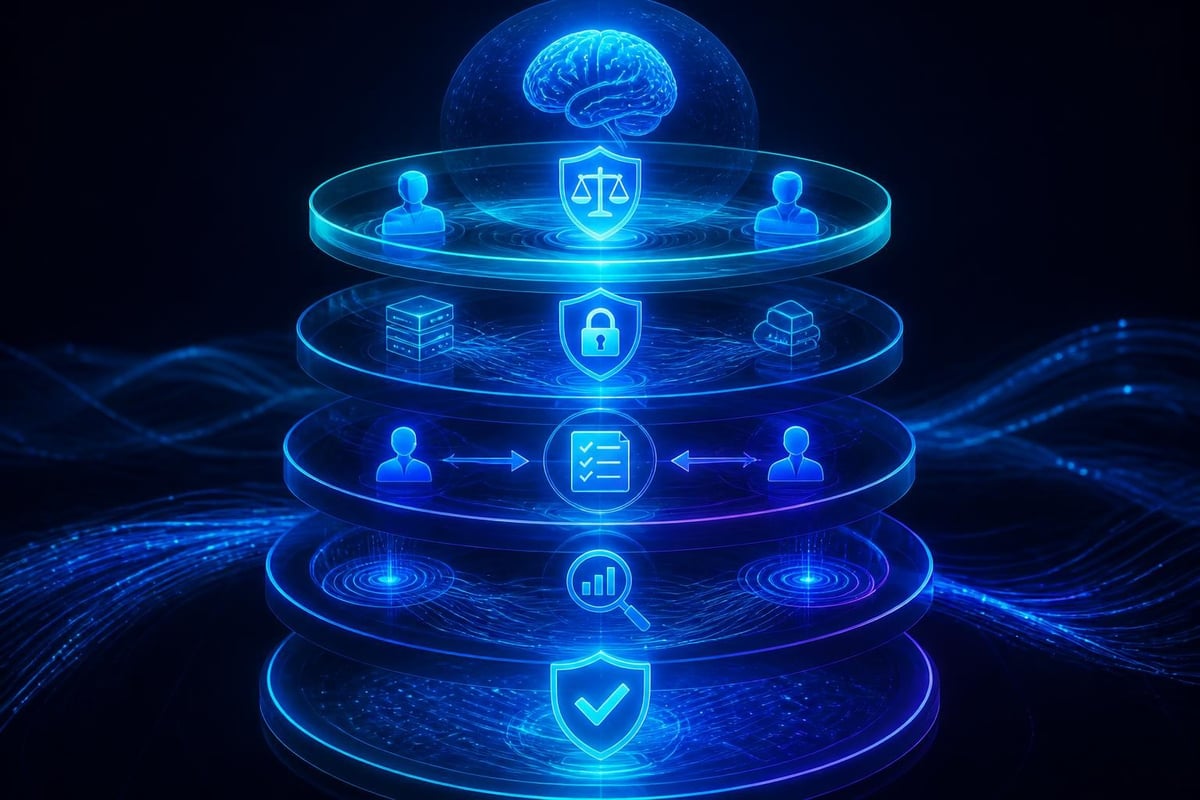
Microsoft’s approach centres on six fundamental principles:
- Fairness: AI systems should treat all people fairly, avoiding bias in decision-making
- Reliability and safety: AI must perform consistently and safely under expected conditions
- Privacy and security: AI systems must protect sensitive information and resist attacks
- Inclusiveness: AI should empower and engage everyone, considering diverse perspectives
- Transparency: People should understand how AI systems make decisions
- Accountability: Organisations remain responsible for AI system outcomes
These principles translate into practical requirements for enterprise AI deployments. Organisations must implement monitoring systems to detect bias, establish approval processes for high-stakes AI decisions, and maintain audit trails of how AI systems influence business outcomes.
Regulatory Compliance and Industry Standards
As governments worldwide introduce AI-specific regulations, the connection between Microsoft and AI governance frameworks becomes increasingly valuable. Microsoft’s compliance certifications and built-in controls help enterprises navigate complex regulatory requirements across different jurisdictions.
The platform provides tools for:
- Model documentation and lineage tracking
- Automated fairness assessments
- Privacy impact evaluations
- Explainability reports for AI decisions
- Compliance reporting for industry-specific regulations
Industry-Specific AI Applications
Different sectors leverage Microsoft and AI capabilities in ways that reflect their unique operational requirements and regulatory constraints.
Healthcare and Life Sciences
Healthcare organisations utilise Azure AI for medical imaging analysis, patient risk stratification, and clinical decision support. The platform’s HIPAA compliance and data residency controls make it suitable for handling protected health information whilst delivering advanced analytics capabilities.
Financial Services
Banks and insurance companies deploy AI for fraud detection, credit risk assessment, and regulatory compliance monitoring. The ability to process vast transaction datasets in real-time whilst maintaining strict security controls addresses the sector’s dual requirements for innovation and risk management.
Manufacturing and Supply Chain
Manufacturers implement predictive maintenance systems that reduce equipment downtime, quality control systems that identify defects, and demand forecasting models that optimise inventory levels. The integration of IoT data with AI analytics creates closed-loop systems that continuously improve operational efficiency.
Retail and Consumer Goods
Retailers leverage AI for personalisation engines, inventory optimisation, and dynamic pricing strategies. The ability to process customer behaviour data whilst respecting privacy regulations enables more sophisticated customer experiences without compromising trust.
Future Directions in Enterprise AI
The trajectory of Microsoft and AI development points towards several emerging trends that will shape enterprise technology strategies in the coming years.
Multimodal AI Systems
The next generation of AI applications will seamlessly integrate text, image, audio, and video processing. Microsoft’s development of MAI-Image-1, its first in-house AI image generator, signals this expansion beyond language-only models. Enterprises will deploy AI systems that understand and generate content across multiple formats, enabling richer interactions and more comprehensive automation.
Agentic AI Workflows
Current AI assistants respond to individual prompts, but emerging agentic systems will execute multi-step workflows autonomously. These systems will chain together multiple AI capabilities, make decisions based on intermediate results, and coordinate actions across different platforms to complete complex business processes.
Edge AI Deployment
Whilst cloud-based AI dominates current deployments, edge computing will bring AI processing closer to data sources. This shift reduces latency, enables offline operation, and addresses data sovereignty concerns for organisations operating in regulated environments or remote locations.
AI-Driven Business Process Reengineering
The most transformative applications of Microsoft and AI won’t simply automate existing processes but will fundamentally redesign how businesses operate. Organisations will question decades-old assumptions about workflow design, organisational structure, and customer interaction models as AI unlocks new possibilities.
Measuring AI Return on Investment
Quantifying the business value of AI investments remains challenging yet essential for sustaining executive sponsorship and securing additional resources. Successful organisations establish clear metrics before deployment and track them consistently.
Financial Metrics
Direct cost savings from automation, revenue increases from enhanced capabilities, and efficiency gains measured in time saved provide tangible ROI indicators. However, these metrics often miss strategic benefits that emerge over longer time horizons.
Operational Metrics
Process cycle times, error rates, customer satisfaction scores, and employee productivity measurements offer operational perspectives on AI impact. These indicators help identify which implementations deliver value and which require refinement.
Strategic Metrics
Market position, innovation velocity, and competitive differentiation represent longer-term strategic benefits that may justify AI investments even without immediate financial returns. The relationship between Microsoft and AI adoption and strategic positioning often manifests in an organisation’s ability to respond to market changes faster than competitors.
The integration of Microsoft and AI technologies represents a fundamental shift in how enterprises operate, compete, and deliver value. Organisations that embrace this transformation strategically position themselves for sustained success in an increasingly AI-driven business environment. Whether you’re beginning your AI journey or scaling existing implementations, expert guidance ensures you maximise the return on your technology investments. Stellium Consulting partners with enterprises to design, deploy, and optimise Microsoft AI solutions that transform business processes and empower employees, delivering measurable outcomes aligned with your strategic objectives.