
The Microsoft AI Cloud represents a paradigm shift in how enterprises approach digital transformation, combining Microsoft’s robust cloud infrastructure with cutting-edge artificial intelligence capabilities. As organisations navigate the complexities of 2026’s business landscape, the integration of AI-powered tools within Azure’s ecosystem has become essential for maintaining a competitive advantage. This comprehensive platform delivers scalable AI solutions that empower employees, streamline operations, and unlock new revenue streams across diverse industries.
Understanding the Microsoft AI Cloud Ecosystem
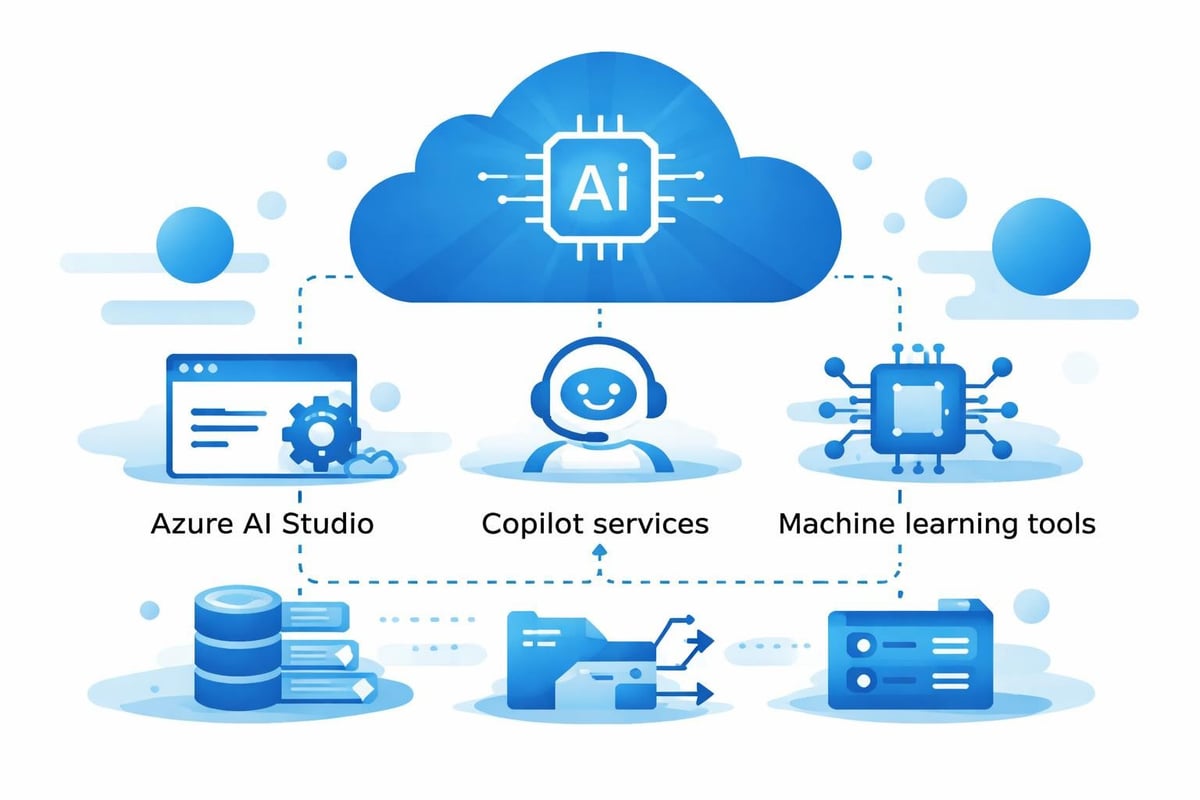
The Microsoft AI Cloud encompasses a comprehensive suite of services built on Azure’s global infrastructure, designed to meet enterprise-grade security, compliance, and performance requirements. At its core, this ecosystem integrates Azure AI services, Copilot capabilities, and advanced machine learning tools that enable organisations to build, deploy, and manage AI solutions at scale.
Azure AI Studio serves as the central hub for AI development, providing unified access to models, tools, and resources. Organisations can leverage pre-built AI models or customise solutions to address specific business challenges. The platform supports multiple frameworks and languages, ensuring flexibility for development teams with varying technical expertise.
Key Infrastructure Components
The foundation of the Microsoft AI Cloud rests on several critical infrastructure elements that work in harmony:
- Azure OpenAI Service: Delivers access to advanced language models, including GPT-4 and GPT-4 Turbo
- Azure Machine Learning: Provides end-to-end MLOps capabilities for model development and deployment
- Azure Cognitive Services: Offers pre-built APIs for vision, speech, language, and decision-making
- Azure Data Services: Ensures seamless data integration across structured and unstructured sources
- Azure Kubernetes Service: Enables scalable container orchestration for AI workloads
| Service Category | Primary Function | Enterprise Benefit |
|---|---|---|
| AI Development | Model training and customization | Faster time-to-market for AI solutions |
| Data Management | Unified data governance | Improved data quality and compliance |
| Security | Identity and access control | Enhanced protection for sensitive AI workloads |
| Monitoring | Performance tracking and optimisation | Reduced operational costs |
Deploying AI Solutions Across Business Functions
Organisations implementing the Microsoft AI Cloud discover transformative potential across multiple business domains. The platform’s versatility enables enterprise AI adoption strategies that align with specific organisational goals whilst maintaining governance and security standards.
Empowering Employees Through AI
Microsoft Copilot integration within the Microsoft AI Cloud revolutionises how employees interact with business applications. These AI assistants understand context, retrieve relevant information, and automate routine tasks across Microsoft 365, Dynamics 365, and custom applications.
Employees benefit from intelligent assistance that adapts to their workflow patterns. Whether drafting complex documents, analysing datasets, or managing customer relationships, Copilot provides contextual suggestions that accelerate productivity. The AI-powered employee empowerment approach reduces cognitive load whilst increasing output quality.
Enhancing Business Processes
Process optimisation represents a cornerstone of Microsoft AI Cloud implementations. Organisations leverage Azure’s AI capabilities to identify bottlenecks, predict maintenance needs, and automate decision-making within critical workflows.
Document intelligence transforms how businesses handle unstructured data. Advanced optical character recognition combined with natural language processing extracts meaningful insights from contracts, invoices, and reports. This automation eliminates manual data entry whilst improving accuracy rates beyond 98%.
Predictive analytics powered by Azure Machine Learning enables proactive business strategies. Supply chain managers anticipate demand fluctuations, finance teams identify fraud patterns, and HR departments predict employee retention risks before they materialise.
The integration of AI automation solutions creates workflows that continuously learn and improve. Microsoft’s approach to cloud-based AI models guides on selecting the appropriate deployment model for specific business requirements.
Technical Architecture and Deployment Models
The Microsoft AI Cloud supports multiple deployment architectures, each designed to address different organisational requirements for performance, security, and regulatory compliance. Understanding these options proves essential for enterprise architects planning AI initiatives.
Hybrid Cloud Integration
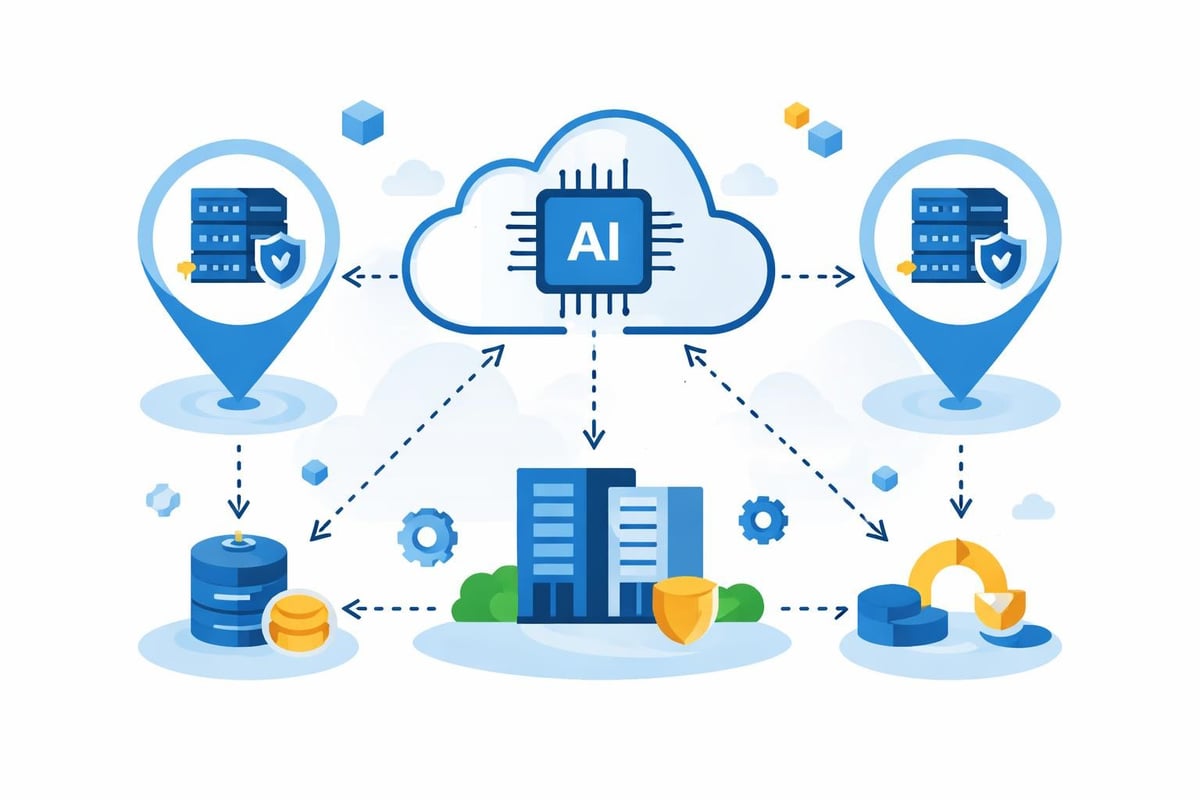
Microsoft recognises that many enterprises operate hybrid environments where certain workloads remain on-premises, whilst others migrate to the cloud. Microsoft AI Cloud provides seamless integration through Azure Arc, enabling AI model deployment and management across distributed infrastructure.
Organisations can train models using Azure’s massive computational resources while deploying them locally for latency-sensitive applications. This flexibility ensures optimal performance without compromising data residency requirements or regulatory constraints.
Multi-Region Deployment Strategies
Global enterprises benefit from Azure’s extensive network of data centres spanning 60+ regions worldwide. The Microsoft AI Cloud enables geographic distribution of AI workloads, ensuring low-latency access for users regardless of location.
- Assess regional requirements for data sovereignty and compliance
- Select primary and secondary regions based on user distribution
- Configure replication policies for model artefacts and training data
- Implement traffic routing using Azure Front Door or Traffic Manager
- Establish monitoring dashboards for cross-region performance tracking
Security and Compliance Framework
The Microsoft AI Cloud incorporates Microsoft’s responsible AI principles throughout its architecture, addressing critical concerns around data privacy, algorithmic fairness, and transparency. These frameworks ensure AI deployments meet stringent regulatory requirements across industries.
Data Protection Mechanisms
Organisations handling sensitive information require robust protection mechanisms. The Microsoft AI Cloud implements multiple security layers:
- Encryption at rest and in transit using industry-standard protocols
- Azure Confidential Computing for protecting data during processing
- Private endpoints that isolate AI services from public internet access
- Customer-managed encryption keys for enhanced data sovereignty
- Azure Policy enforcement ensures consistent security configurations
Microsoft’s Cloud Intelligence and AIOps integration demonstrates how AI enhances cloud security through intelligent threat detection and automated response capabilities.
Governance and Auditability
Enterprises must demonstrate compliance with regulations such as GDPR, HIPAA, and industry-specific requirements. The Microsoft AI Cloud provides comprehensive audit trails that track model training, data access, and inference requests.
Azure Purview delivers unified data governance, enabling organisations to understand data lineage, classify sensitive information, and enforce access policies consistently. This visibility proves invaluable during regulatory audits or internal reviews.
Advanced AI Capabilities and Innovation
The Microsoft AI Cloud continuously evolves, incorporating the latest advances in artificial intelligence research and development. Recent infrastructure investments, including Microsoft’s GB300 NVL72 Azure cluster deployment, demonstrate a commitment to providing cutting-edge capabilities.
Generative AI Integration
Generative AI represents one of the most transformative capabilities within the Microsoft AI Cloud. Organisations leverage these models for content creation, code generation, and complex problem-solving scenarios that previously required significant human expertise.
Azure OpenAI Service provides enterprise-grade access to models like GPT-4, DALL-E, and Codex. Unlike consumer-facing alternatives, these services include data privacy guarantees, ensuring training data never leaves the organisation’s control.
Custom model fine-tuning enables businesses to adapt general-purpose models for domain-specific applications. Pharmaceutical companies train models on medical literature, financial institutions create specialised risk assessment tools, and manufacturers develop predictive maintenance systems tuned to specific equipment.
| AI Capability | Business Application | Implementation Complexity |
|---|---|---|
| Language Understanding | Customer service automation | Medium |
| Computer Vision | Quality control inspection | High |
| Speech Recognition | Meeting transcription | Low |
| Predictive Analytics | Demand forecasting | High |
| Generative AI | Content creation | Medium |
Custom AI Model Development
Whilst pre-built models address many scenarios, enterprises often require specialised solutions. The Microsoft AI Cloud supports custom model development through Azure Machine Learning, providing tools for data scientists and ML engineers to build proprietary AI assets.
The platform handles complex MLOps requirements, including experiment tracking, model versioning, and automated retraining pipelines. Teams can collaborate effectively using shared workspaces whilst maintaining strict access controls over sensitive algorithms.
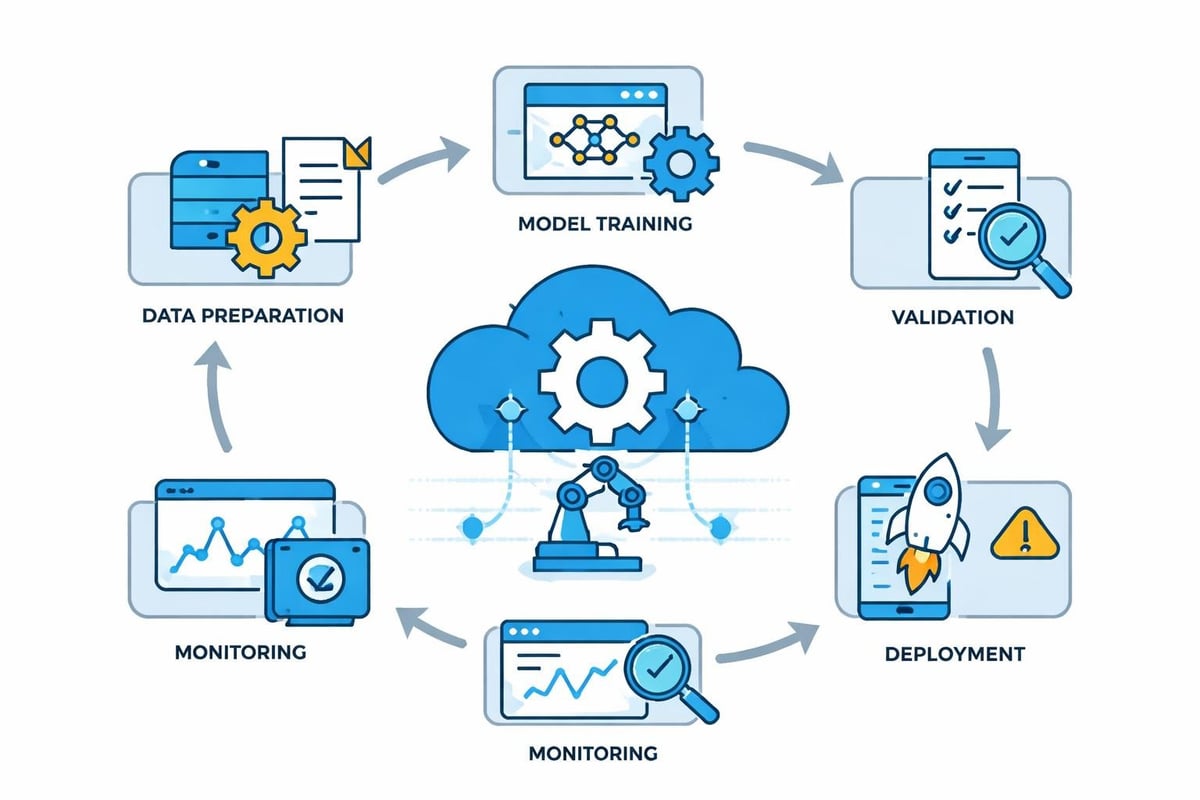
Understanding AI implementation challenges helps organisations anticipate obstacles and plan mitigation strategies during custom model development.
Cost Optimisation and Resource Management
The Microsoft AI Cloud offers flexible pricing models that align costs with actual usage, enabling organisations to optimise spending whilst maintaining performance requirements. Strategic resource management ensures AI investments deliver measurable ROI.
Consumption-Based Pricing
Azure’s pay-as-you-go model eliminates large upfront capital expenditures. Organisations pay only for computational resources consumed during model training and inference operations. This approach particularly benefits businesses with variable AI workloads or those piloting new initiatives.
Azure Reservations provide significant discounts for committed usage over one or three-year terms. Enterprises with predictable AI workloads reduce costs by 40-70% compared to on-demand pricing. The Microsoft AI Cloud supports reservation purchases at various scopes, allowing flexible management across subscriptions and resource groups.
Performance Optimisation Strategies
Efficient resource utilisation directly impacts costs. The Microsoft AI Cloud provides several mechanisms for optimisation:
- Autoscaling policies that adjust compute resources based on demand
- Spot instances offering steep discounts for interruptible workloads
- Model quantization reducing inference costs through smaller model sizes
- Batch processing consolidating requests to maximise throughput
- Regional cost arbitrage is deployed in lower-cost Azure regions when latency permits
Azure Cost Management tools provide detailed visibility into AI spending patterns, enabling finance teams to track costs by project, department, or business unit. These insights inform budgeting decisions and identify optimisation opportunities.
Integration With Enterprise Systems
The Microsoft AI Cloud excels at integrating with existing enterprise systems, ensuring AI capabilities enhance rather than replace current technology investments. This interoperability accelerates adoption by leveraging familiar tools and processes.
Microsoft 365 Integration
Organisations already using Microsoft 365 discover immediate value through Copilot integration. The Microsoft AI Cloud powers these intelligent assistants, providing contextual awareness across Word, Excel, PowerPoint, Outlook, and Teams.
Data governance policies extend seamlessly to AI-generated content. Information protected through sensitivity labels or data loss prevention rules maintains those protections when processed by Copilot, ensuring a consistent security posture.
Dynamics 365 Enhancement
The Microsoft AI Cloud transforms Dynamics 365 into an intelligent business platform. Sales teams receive AI-generated insights about customer behaviour, service agents get contextual recommendations for issue resolution, and finance professionals benefit from automated reconciliation and anomaly detection.
These Microsoft AI services demonstrate practical applications that deliver measurable business outcomes without requiring extensive technical expertise from end users.
Third-Party Application Connectivity
REST APIs and SDKs enable integration with non-Microsoft systems. Organisations connect the Microsoft AI Cloud to Salesforce, SAP, ServiceNow, and countless other enterprise applications. This connectivity ensures AI insights reach decision-makers within their preferred tools.
Azure Logic Apps and Power Automate provide low-code integration options, enabling business analysts to create AI-powered workflows without writing code. These platforms democratize AI access across organisational roles whilst maintaining IT governance and security standards.
Industry-Specific Solutions
The Microsoft AI Cloud supports tailored solutions for regulated industries with unique compliance, security, and operational requirements. Microsoft’s AI solutions for businesses demonstrate sector-specific applications across healthcare, financial services, manufacturing, and retail.
Healthcare and Life Sciences
Healthcare organisations leverage the Microsoft AI Cloud for clinical decision support, medical imaging analysis, and drug discovery acceleration. HIPAA-compliant deployments ensure patient data protection whilst enabling AI-powered insights that improve outcomes and reduce costs.
Azure Health Data Services provides FHIR-compliant data management, enabling interoperability between disparate systems. AI models trained on anonymised patient data identify treatment patterns, predict readmission risks, and optimise resource allocation across hospital networks.
Financial Services
Banks and insurance companies implement the Microsoft AI Cloud for fraud detection, risk assessment, and customer personalisation. The platform’s security features address stringent regulatory requirements whilst providing computational power necessary for complex financial modelling.
Real-time transaction monitoring using Azure Stream Analytics,s combined with machine learning mode, ls detects suspicious patterns with greater accuracy than rules-based systems. False positive rates decrease significantly, reducing operational costs whilst improving customer experience.
Manufacturing and Industrial
Predictive maintenance represents a compelling use case for manufacturing organisations. The Microsoft AI Cloud processes sensor data from equipment, identifying failure patterns before breakdowns occur. This proactive approach reduces downtime costs and extends asset lifespans.
Computer vision models inspect products at speeds impossible for human quality control teams. Azure Custom Vision enables training specialised models that detect defects specific to manufacturing processes, ensuring consistent quality standards across production lines.
Strategic Implementation Considerations
Successful Microsoft AI cloud deployments require thoughtful planning that addresses technical, organisational, and cultural dimensions. Organisations that approach implementation strategically achieve faster time-to-value whilst minimising disruption.
Building AI Competency
Developing internal AI expertise ensures organisations maximise platform capabilities. The Microsoft AI Cloud provides extensive documentation, learning paths, and certification programs that upskill existing staff rather than requiring wholesale talent acquisition.
Cross-functional teams combining business domain experts with technical practitioners produce the most effective AI solutions. Domain knowledge ensures models address real business problems, whilst technical expertiseoptimisess implementation approaches.
Partnering with specialists who understand AI adoption best practices accelerates capability development and reduces implementation risks.
Change Management and Adoption
Technology alone doesn’t guarantee success. The Microsoft AI Cloud requires organisational change management, ensuring employees understand, trust, and actively use AI-powered capabilities.
Communication strategies should emphasise how AI augments rather than replaces human capabilities. Employees concerned about job displacement respond positively when positioned as users of powerful new tools rather than subjects of automation initiatives.
- Identify executive sponsors who champion AI initiatives
- Establish centres of excellence that share best practices
- Create feedback loops enabling continuous improvement
- Measure adoption metrics, tracking usage and satisfaction
- Celebrate early wins, building momentum for broader rollout
Measuring Business Impact
The Microsoft AI Cloud enables comprehensive measurement of AI initiative outcomes. Organisations should establish clear metrics before deployment, ensuring alignment between technical capabilities and business objectives.
Productivity gains manifest through reduced processing times, higher throughput, or improved employee satisfaction. Quantifying these benefits demonstrates ROI to stakeholders and justifies continued investment.
Revenue impact occurs through enhanced customer experiences, new product capabilities, or market expansion enabled by AI. The Microsoft AI Cloud’s analytics capabilities track these contributions, connecting AI investments to top-line growth.
Understanding AI’s impact in business contexts helps organisations set realistic expectations and measure progress effectively.
Future Directions and Emerging Capabilities
The Microsoft AI Cloud continues evolving rapidly as Microsoft invests heavily in AI research and infrastructure. Recent developments, including Microsoft’s recruitment of AI experts and construction of specialised AI facilities, signal an ongoing commitment to platform advancement.
Multimodal AI Integration
Future Microsoft AI cloud capabilities will increasingly combine text, vision, speech, and other data modalities within unified models. These multimodal systems understand context more comprehensively, enabling sophisticated applications like virtual assistants that interpret gestures, tone, and environmental cues.
Organisations preparing for these advances ensure data infrastructure supports multiple formats and establishes governance frameworks applicable across modalities.
Autonomous AI Agents
The evolution toward autonomous agents represents a significant shift from current AI implementations. These systems will independently execute complex workflows, make decisions within defined parameters, and coordinate with other agents to achieve business objectives.
The Microsoft AI Cloud provides foundational capabilities for agent development through Azure AI Studio and integration with business process automation platforms. Early implementations focus on bounded domains where risks remain manageable whilst delivering clear value.
Edge AI Expansion
Whilst cloud-based AI delivers tremendous value, certain scenarios require local processing for latency, bandwidth, or privacy reasons. The Microsoft AI Cloud extends to edge environments through Azure Stack and IoT Edge, enabling model deployment on devices ranging from industrial controllers to retail kiosks.
This distributed approach maintains centralised management whilst providing real-time inference at locations where connectivity limitations or response time requirements preclude cloud-only solutions.
The Microsoft AI Cloud represents a comprehensive platform enabling enterprises to harness artificial intelligence at scale whilst maintaining security, compliance, and operational excellence. Organisations implementing these capabilities strategically position themselves for sustained competitive advantage in 2026’s AI-driven business landscape. Stellium Consulting specialises in guiding enterprises through their Microsoft AI cloud journey, delivering tailored solutions that empower employees, enhance business processes, and transform operations through proven expertise as a Microsoft Solutions Partner.