
Unlock the true potential of your organisation by mastering business intelligence and artificial intelligence. These powerful technologies are shaping the future of business, driving smarter decisions and delivering a competitive edge.
This guide serves as your roadmap to success in 2026. Discover how to integrate business intelligence and artificial intelligence, automate insights, and spark innovation.
Explore the evolution of BI and AI, key trends, practical strategies, real-world industry applications, and a step-by-step implementation plan. Get ready to transform data into actionable results and lead your organisation into the future.
The Evolution of Business Intelligence and Artificial Intelligence
Understanding the journey of business intelligence and artificial intelligence is essential for any enterprise seeking future success. Over the past decades, these technologies have evolved rapidly, reshaping how organisations collect, analyse, and act on data. Let us explore how these fields have developed, converged, and positioned themselves as the backbone of modern business transformation.
The History of BI and AI in Business
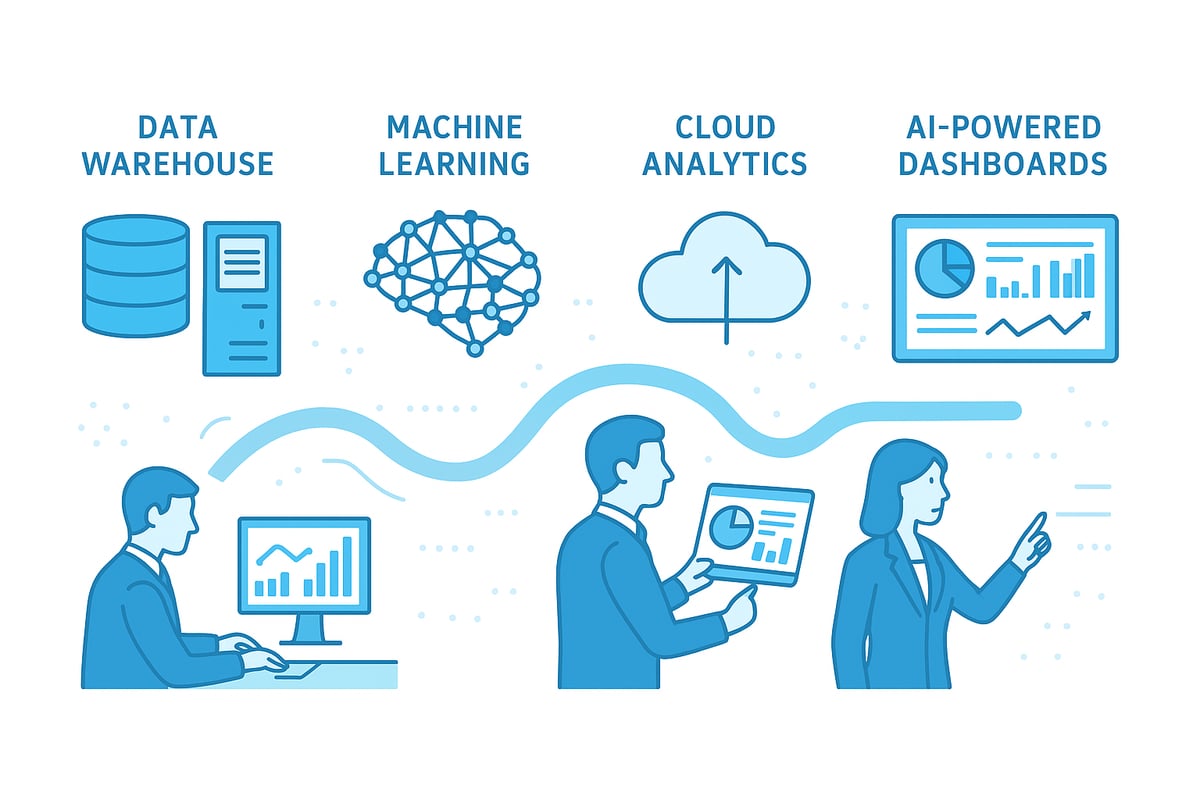
The story of business intelligence and artificial intelligence in enterprise settings began with basic reporting and rule-based decision systems. In the 1960s, companies used mainframes for simple data processing. By the 1980s, data warehousing enabled organisations to consolidate information, leading to the first BI platforms.
The 1990s and early 2000s saw the rise of online analytical processing and the introduction of machine learning algorithms. Over time, the focus shifted from descriptive analytics, which explained what happened, to predictive and prescriptive analytics that forecast outcomes and recommended actions. This historical shift set the stage for the deep integration seen today.
The Convergence of BI and AI
Today, the combination of business intelligence and artificial intelligence is revolutionising how companies extract value from their data. AI now enhances traditional BI tools through automation, natural language processing, and machine learning. These capabilities enable businesses to generate insights faster and with greater accuracy.
AI-driven dashboards automatically surface trends and anomalies, while automated reporting streamlines decision-making. For a deeper dive into how AI is transforming BI platforms, see Business Intelligence Using AI. Real-world examples include conversational analytics, where users can ask questions in natural language and receive instant, actionable insights.
Market Growth and Adoption Rates
The market for business intelligence and artificial intelligence is expanding rapidly. According to global reports, the BI market is projected to reach nearly $38 billion by 2026, with AI investments expected to surpass $2.5 trillion within the same period. Adoption rates are particularly high in finance, healthcare, and retail, where data-driven strategies are critical.
Several factors are driving this growth, including the need for faster decision-making, regulatory compliance, and competitive differentiation. As more organisations recognise the benefits, investment in these technologies continues to accelerate, underscoring their strategic importance.
Challenges and Opportunities in Integration
Integrating business intelligence and artificial intelligence presents both challenges and opportunities for enterprises. Common obstacles include fragmented data sources, reliance on legacy systems, and a shortage of skilled professionals. Addressing these issues often requires organisational change, technical upgrades, and targeted training programmes.
However, the rewards can be significant. Businesses that overcome integration hurdles typically realise improved decision quality, reduced operational costs, and a stronger competitive edge. For instance, a global manufacturer recently unified its BI and AI workflows, resulting in faster reporting cycles and enhanced product forecasting.
Key Technologies Powering BI and AI
Several core technologies underpin the success of business intelligence and artificial intelligence today. Cloud computing enables scalable storage and processing, while data lakes support the consolidation of structured and unstructured information. Advanced analytics and machine learning models unlock deeper insights from vast datasets.
Self-service BI tools empower users across the organisation to explore data independently. Leading platforms, such as Microsoft Power BI, Tableau, and Azure AI, offer integrated environments for building, deploying, and managing BI and AI solutions. These technologies are shaping the future of enterprise analytics.
Top Business Intelligence & Artificial Intelligence Trends for 2026
The landscape of business intelligence and artificial intelligence is evolving at unprecedented speed. As we look ahead to 2026, organisations will need to embrace emerging trends to stay competitive, innovative, and agile. Understanding these trends is crucial for harnessing the full potential of business intelligence and artificial intelligence in your enterprise.
Generative AI and Automated Insights
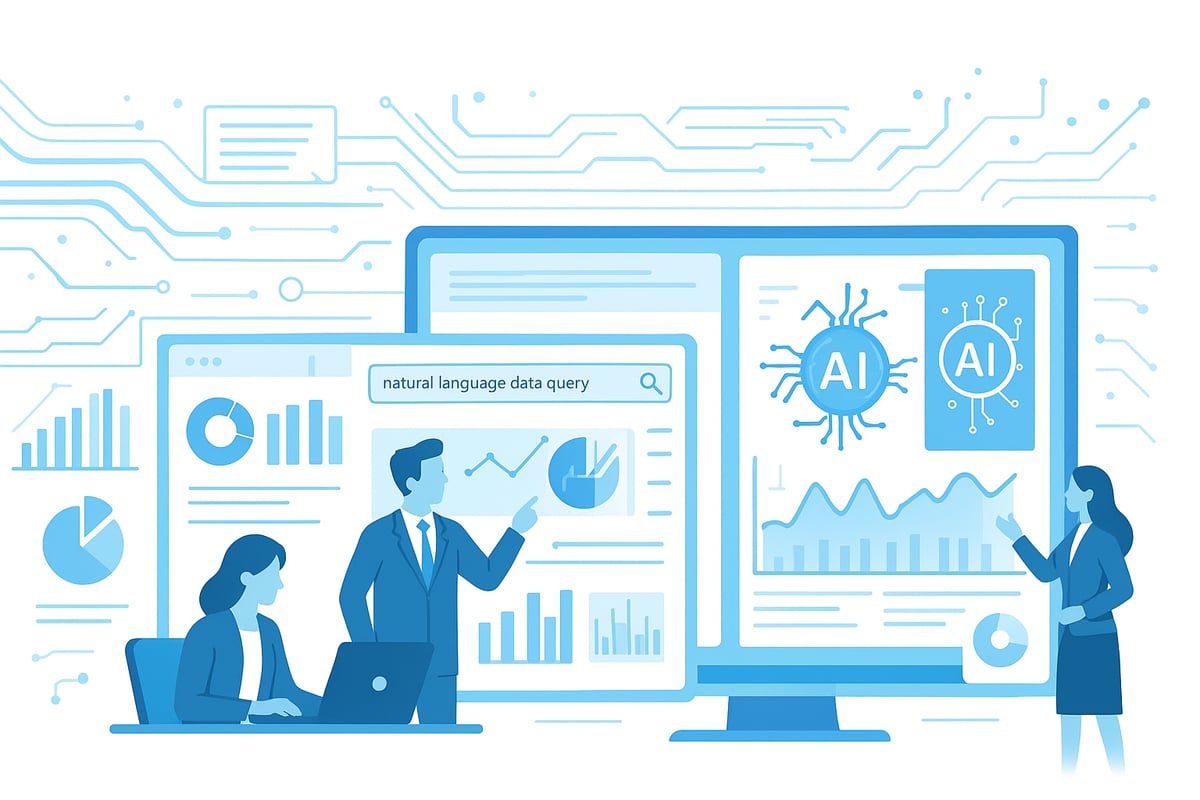
Generative AI is set to revolutionise business intelligence and artificial intelligence by automating complex data analysis and reporting tasks. In 2026, expect to see AI tools that can generate narratives, summaries, and actionable recommendations from vast datasets.
For example, automated text generation allows business users to receive instant reports in natural language, while AI-powered visualisations present insights in more interactive and meaningful ways. This trend increases productivity and accelerates decision-making, freeing up valuable human resources for higher-level strategic work.
Augmented Analytics and Natural Language Processing
Augmented analytics is democratising access to data by embedding AI into every step of the analytics process. Natural language processing (NLP) enables users to interact with business intelligence and artificial intelligence systems using everyday language, removing the need for technical expertise.
Organisations benefit from reduced reliance on data specialists, making analytics accessible across departments. As NLP matures, employees can ask questions, build reports, and extract insights conversationally, fostering a more data-driven culture and empowering non-technical users.
Predictive and Prescriptive Analytics
The evolution from descriptive analytics to predictive and prescriptive analytics is transforming how organisations use business intelligence and artificial intelligence. Predictive analytics leverages historical data to forecast trends, while prescriptive analytics recommends optimal actions.
Common use cases in 2026 include sales forecasting, risk assessment, and supply chain optimisation. Adoption rates are particularly high in sectors such as finance, retail, and logistics, where forward-looking insights provide significant competitive advantages and support proactive decision-making.
Data Governance, Privacy, and Ethical AI
As the adoption of business intelligence and artificial intelligence grows, so does the importance of data governance and ethical considerations. Regulatory frameworks like GDPR and the AI Act are shaping how data is collected, processed, and used.
Building trust requires explainable AI, transparent business intelligence practices, and robust data governance protocols. Organisations must prioritise data quality, establish clear ownership, and implement best practices to ensure compliance and maintain stakeholder confidence in 2026.
Embedded and Real-Time Analytics
The integration of analytics directly into business applications and workflows is a defining trend for 2026. Embedded analytics enables users to access business intelligence and artificial intelligence insights within their daily tools, streamlining operations and improving responsiveness.
Real-time dashboards provide instant visibility into key metrics, supporting rapid decision-making. For instance, retail businesses are leveraging real-time BI to optimise inventory levels and respond quickly to market changes. For a deeper dive into future trends, see 7 AI Trends Shaping 2026.
Integrating BI and AI: Strategies for Enterprise Success
To fully harness the power of business intelligence and artificial intelligence, enterprises require a structured approach. Effective integration demands not just technology, but also a reimagining of data, culture, and workflows. Here, we outline practical strategies to ensure your organisation is equipped for lasting success.
Building a Unified Data Architecture
A unified data architecture forms the foundation for successful business intelligence and artificial intelligence integration. Centralising data ensures that insights are consistent, accessible, and actionable across the organisation.
Enterprises should prioritise data lakes and cloud storage platforms, which offer scalability and real-time access. APIs play a key role in connecting disparate systems, enabling seamless data flow. By standardising formats and governance, organisations can break down silos and unlock the full value of their data.
An enterprise data fabric approach brings together all data assets, supporting both BI and AI workloads. This unified architecture enables rapid innovation and supports future-proof analytics strategies.
Selecting the Right BI and AI Tools
Choosing the optimal tools is crucial for business intelligence and artificial intelligence adoption. Enterprises must evaluate platforms based on scalability, interoperability, and usability.
Key criteria include:
- Integration with existing systems
- User-friendly interfaces for all skill levels
- Advanced analytics capabilities
- Strong security and compliance features
Popular platforms like Microsoft Power BI, Tableau, Qlik, and Azure AI offer a range of features suited to different industries. It’s vital to consider sector-specific requirements, such as regulatory compliance in finance or healthcare. Comparing tools in a structured way ensures alignment with business goals and future needs.
Talent, Training, and Organisational Culture
The successful integration of business intelligence and artificial intelligence relies on people as much as technology. Addressing the skills gap is essential through upskilling, targeted hiring, and ongoing training.
Fostering a data-driven culture empowers teams to make evidence-based decisions. Cross-functional BI and AI teams, with members from IT, business, and analytics, enhance collaboration and innovation. Regular workshops and learning programmes help employees stay ahead of evolving technologies.
A culture that values data and continuous improvement accelerates adoption, making BI and AI core to every business process and strategic initiative.
Change Management and Stakeholder Buy-In
Integrating business intelligence and artificial intelligence can disrupt traditional workflows. Effective change management is key to smooth adoption and long-term success.
Securing executive sponsorship ensures that initiatives receive the necessary resources and visibility. Clear communication about the benefits and expected outcomes helps manage expectations and reduce resistance.
Organisations should celebrate early wins and share success stories to build momentum. Lessons learned from global enterprises show that involving stakeholders early and providing ongoing support fosters a sense of ownership and drives sustainable transformation.
Measuring ROI and Business Impact
Demonstrating the value of business intelligence and artificial intelligence is fundamental for continued investment. Organisations must define clear metrics to track cost savings, revenue growth, and productivity gains.
Common KPIs include:
- Reduced operational costs
- Increased sales or customer retention
- Time saved through automation
- Improved decision accuracy
Setting benchmarks before implementation enables comparison and highlights progress. Real-world examples from finance, healthcare, and retail show that well-executed BI and AI initiatives deliver measurable, strategic benefits and support business growth.
Stellium Consulting: Empowering BI and AI Transformation
Stellium Consulting stands out as a trusted Microsoft Solutions Partner specialising in business intelligence and artificial intelligence integration. Their expertise in the Microsoft ecosystem, including Azure, Power Platform, and Copilot, ensures seamless deployment and innovation.
Recognised as Microsoft Country Partner of the Year 2025 in Switzerland, Stellium Consulting delivers tailored solutions with measurable outcomes. Their client-centric approach has earned the trust of organisations like Nestlé, Philip Morris International, and the Swiss National Bank.
Stellium also provides workshops and training, enabling enterprises to build, customise, and operationalise AI agents for productivity and competitive advantage.
Overcoming Common Integration Challenges
Integrating business intelligence and artificial intelligence often presents challenges such as data quality issues, interoperability barriers, and legacy infrastructure constraints. Security and compliance are also critical concerns.
Solutions include:
- Establishing robust data governance
- Incremental integration with legacy systems
- Ensuring secure data access and privacy compliance
A stepwise integration roadmap helps large organisations manage complexity and minimise risk. For a deeper dive into practical strategies, see Artificial Intelligence Automation Solutions, which details proven approaches to streamline BI and AI projects.
By addressing these challenges proactively, enterprises can accelerate adoption and realise the full potential of their data-driven transformation.
Industry Applications: BI and AI in Action
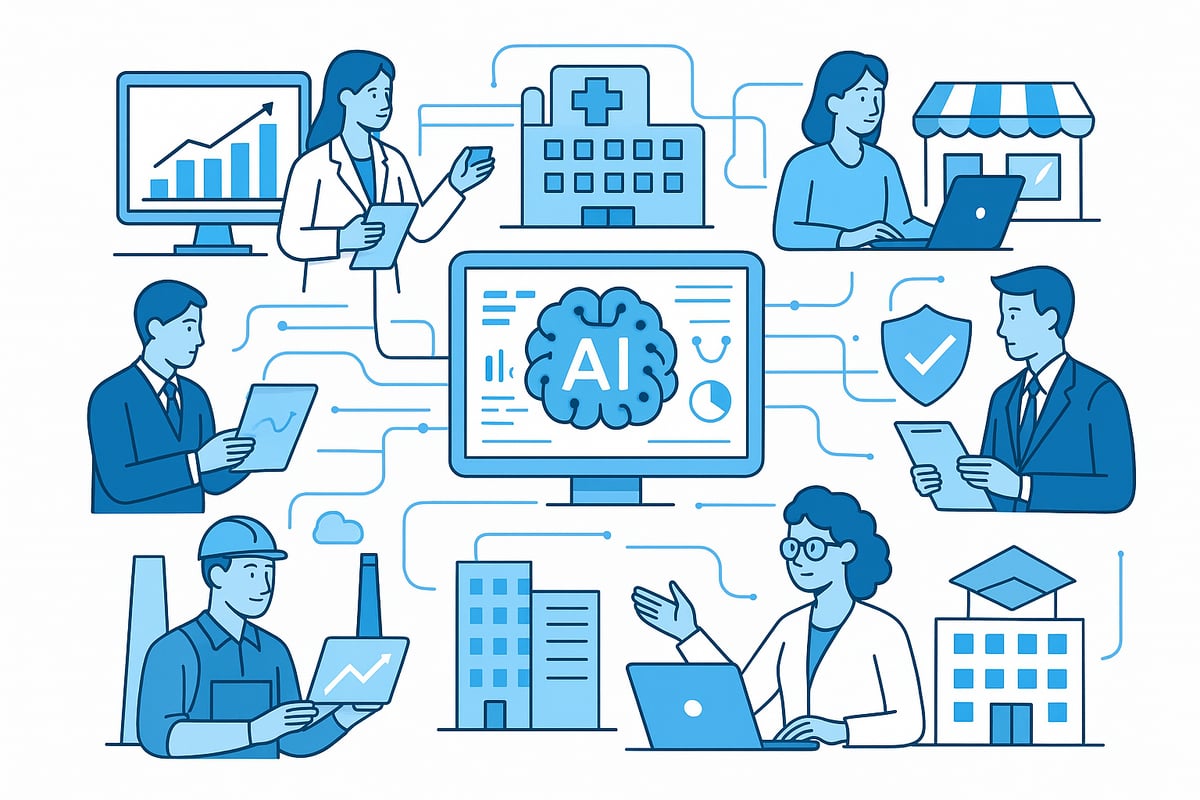
Business intelligence and artificial intelligence are reshaping industries, driving efficiency, and unlocking new opportunities. From finance to education, organisations are deploying these technologies to solve unique challenges and gain a competitive edge. Real-world applications demonstrate how business intelligence and artificial intelligence are transforming operations, improving decision-making, and revolutionising customer experiences.
Financial Services
Financial institutions are leveraging business intelligence and artificial intelligence to detect fraud in real time, assess risk more accurately, and deliver personalised customer analytics. AI models analyse transaction patterns, flag suspicious activity, and automate compliance reporting. Business intelligence and artificial intelligence also power predictive analytics for credit scoring, enabling banks to make informed lending decisions and improve operational efficiency.
Banks deploy AI-driven chatbots for customer support, streamlining communication and reducing costs. Real-time dashboards provide executives with up-to-the-minute insights, supporting agile responses to market changes. Across the sector, these technologies are critical for regulatory compliance and sustainable growth.
Healthcare and Life Sciences
In healthcare, business intelligence and artificial intelligence are accelerating diagnostics, enhancing patient outcomes, and optimising resources. AI-powered imaging tools assist clinicians in identifying anomalies and predicting disease progression. Business intelligence and artificial intelligence platforms analyse patient data to uncover trends in population health and support evidence-based treatment plans.
Hospitals use predictive analytics for resource planning, ensuring beds and staff are allocated efficiently. Case studies highlight how AI-assisted imaging reduces diagnostic errors and speeds up treatment. These innovations improve both operational efficiency and the quality of care delivered to patients.
Retail and E-commerce
Retailers are transforming customer experiences with business intelligence and artificial intelligence, delivering tailored product recommendations and optimising inventory. AI algorithms analyse purchasing patterns to predict demand, preventing stockouts and reducing waste. Business intelligence and artificial intelligence platforms segment customers for targeted marketing, increasing engagement and conversion rates.
Real-time dashboards empower managers to monitor sales and supply chain performance, adjusting strategies on the fly. Dynamic pricing models, powered by AI, enable retailers to respond quickly to market trends and competitor activity. This data-driven approach drives profitability and customer satisfaction.
Manufacturing and Supply Chain
Manufacturers are embracing business intelligence and artificial intelligence for predictive maintenance, demand forecasting, and process automation. Sensors and IoT devices collect real-time data, feeding into BI dashboards to monitor equipment health. Business intelligence and artificial intelligence predict potential failures, reducing downtime and maintenance costs.
Quality control processes are enhanced through AI-powered analytics, identifying defects early in production. Integration of IoT data with business intelligence and artificial intelligence platforms enables agile supply chain management, ensuring timely delivery and optimised inventory. These advances support resilience and operational excellence.
Public Sector and Education
Governments and educational institutions are deploying business intelligence and artificial intelligence to improve citizen services, allocate resources, and inform policy. AI-driven analytics power early-warning systems in education, identifying students at risk and enabling timely interventions. Business intelligence and artificial intelligence tools provide transparency through performance monitoring and data visualisation.
In the public sector, these technologies support evidence-based decision-making, from budgeting to resource distribution. Data-driven insights help agencies respond to emerging needs efficiently. Cross-sector collaboration is increasing, paving the way for more innovative public services.
Insurance and Risk Management
Insurance companies are transforming operations with business intelligence and artificial intelligence, automating claims processing, detecting fraud, and refining risk assessment. AI models analyse vast datasets to uncover suspicious patterns and expedite underwriting. Business intelligence and artificial intelligence support actuarial analysis, providing deeper customer insights and enabling more accurate pricing.
Automated underwriting powered by AI reduces manual effort and shortens approval times. Insurers use predictive analytics to forecast claims and manage portfolios proactively. For a broader perspective on transformation and future opportunities, explore AI and the Future of Business.
Step-by-Step Guide: Implementing BI and AI in Your Organisation
Implementing business intelligence and artificial intelligence is a journey that requires careful planning, strategic alignment, and a focus on measurable outcomes. This step-by-step guide will help you navigate each stage, ensuring your organisation builds a robust foundation for data-driven success.
Step 1: Assess Organisational Readiness
Begin by evaluating your current technology landscape, data infrastructure, and analytics maturity. Review if your systems can support scalable business intelligence and artificial intelligence initiatives. Consider existing data sources, integration capabilities, and security controls.
Conduct a skills assessment to identify gaps in data analytics and AI expertise. Engage stakeholders from IT, operations, and business units. Use structured readiness assessment tools to benchmark your starting point. As AI investment is set to hit $2.5 trillion in 2026 despite challenges, understanding your readiness is crucial for future-proofing your strategy.
Step 2: Define Business Objectives and Use Cases
Align your business intelligence and artificial intelligence programme with clear organisational goals. Identify and prioritise use cases that offer the highest value, such as improving customer experience, optimising operations, or driving new revenue streams.
Workshops with business leaders can help clarify priorities. Select use cases that are measurable and aligned with your strategic vision. For example, compare the potential impact of customer analytics against streamlining operational efficiency. This focus ensures resources are allocated where they make the most difference.
Step 3: Develop a Data Strategy and Governance Framework
Establish robust data ownership and governance policies to support business intelligence and artificial intelligence initiatives. Define quality standards, compliance protocols, and data stewardship roles. Implement a scalable, secure data architecture that supports current and future analytics needs.
Utilise data governance tools to automate compliance and monitor data quality. Ensure your framework addresses privacy regulations and industry standards. A strong foundation here reduces risk, increases trust in analytics, and enables seamless integration across your organisation.
Step 4: Choose and Integrate BI and AI Solutions
Select platforms that meet your requirements for scalability, interoperability, and usability. Evaluate options that support your industry and business intelligence and artificial intelligence use cases. Consider cloud-based solutions, integration with legacy systems, and ease of deployment.
Advanced platforms now feature AI-driven analytics, natural language querying, and automation. For example, research such as SiriusBI: Enhancing Business Intelligence with Large Language Models demonstrates how large language models are being embedded into BI tools for more sophisticated insights. Integration planning should include phased rollouts and robust training for end users.
Step 5: Roll Out, Monitor, and Optimise
Implement your business intelligence and artificial intelligence solutions in manageable phases. Begin with pilot projects, then scale up based on feedback and results. Onboard users with comprehensive training and support to drive adoption.
Set up monitoring systems and feedback loops to track progress against KPIs. Regularly review outcomes, gather user input, and refine processes for continuous improvement. Measuring success through cost savings, productivity gains, and business impact will ensure ongoing value from your investment.
The Future of Business Intelligence and Artificial Intelligence
The future of business intelligence and artificial intelligence is set to redefine how organisations operate, innovate, and compete. As digital transformation accelerates, these technologies will become even more interconnected, driving smarter decisions and enabling new business models. Staying ahead means understanding the emerging trends, evolving roles, and regulatory shifts that will shape the landscape in 2026 and beyond.
Emerging Technologies and Innovations
New technologies are rapidly expanding the possibilities for business intelligence and artificial intelligence. Edge AI will enable data processing closer to the source, reducing latency and improving real-time insight. Quantum computing promises exponential leaps in processing power, unlocking complex analytics tasks that were previously impossible.
Automation will become even more advanced, with AI-driven decision engines guiding critical business actions. These innovations are supported by a thriving market, with the Global AI market projected to reach $3.5 trillion by 2033, highlighting the growing importance of business intelligence and artificial intelligence for global enterprises.
The Evolving Role of Human Expertise
As business intelligence and artificial intelligence systems become more sophisticated, the human role will not disappear; it will evolve. Rather than replacing people, AI will augment human expertise, enabling professionals to focus on higher-value tasks.
New job titles will emerge, such as data translators, who bridge the gap between technical teams and business leaders. AI ethicists will ensure the responsible use of algorithms. Citizen data scientists will leverage intuitive tools to generate insights without deep technical knowledge. This evolution highlights the enduring value of human judgement in the age of business intelligence and artificial intelligence.
Data Democratisation and Self-Service BI
Empowering every employee to access and use data will become a defining feature of business intelligence and artificial intelligence strategies in 2026. Self-service BI platforms will continue to grow, allowing non-technical users to explore data, build reports, and uncover trends with minimal IT support.
Natural language query interfaces will make data analysis as simple as asking a question. Organisations will see a shift toward a data-driven culture, where everyone can contribute to business outcomes. The democratisation of analytics ensures that the benefits of business intelligence and artificial intelligence reach all levels of the organisation.
Cross-Industry Collaboration and Ecosystems
Collaboration will be central to the evolution of business intelligence and artificial intelligence. Enterprises, technology providers, and academic institutions will join forces to drive innovation and solve industry-wide challenges.
We will see the rise of open standards and data-sharing initiatives, making it easier for businesses to integrate solutions and benchmark performance. Industry consortia focused on AI benchmarking will foster transparency and trust. These collaborative ecosystems will accelerate the responsible adoption of business intelligence and artificial intelligence across sectors.
Regulatory and Ethical Considerations for 2026
The regulatory environment for business intelligence and artificial intelligence is becoming more complex. New laws, such as the AI Act and evolving GDPR frameworks, will require organisations to implement robust governance and transparency protocols.
Best practices will focus on building explainable AI models, ensuring data privacy, and maintaining accountability throughout the analytics lifecycle. Preparing for compliance will be an ongoing effort, as regulators and stakeholders demand ethical and responsible deployment of business intelligence and artificial intelligence solutions.
Predictions: BI and AI in 2026
Looking ahead, experts predict that business intelligence and artificial intelligence will be deeply embedded in daily operations across all industries. Sectors such as healthcare, finance, and retail are poised for significant disruption as data-driven decision-making becomes the norm.
The Business Intelligence market to grow at 8.4% CAGR through 2034 reflects the rising adoption of these tools. Organisations that invest in business intelligence and artificial intelligence now will be best positioned to innovate, adapt, and lead in the future.
As you’ve seen throughout this guide, bringing together business intelligence and artificial intelligence is no longer a future ambition—it’s an urgent priority for any organisation aiming to thrive in 2026 and beyond. By understanding the trends, overcoming integration challenges, and applying practical strategies, you can empower your teams and transform your business processes. If you’re ready to take the next step and see how AI-powered solutions can work in your unique environment, let’s continue the conversation.
Explore our Enterprise AI Solutions and start shaping your organisation’s future today.