Azure AI represents Microsoft’s comprehensive suite of artificial intelligence services, tools, and infrastructure designed to help enterprises build, deploy, and scale intelligent applications. As organisations navigate the complexities of digital transformation in 2026, understanding how to leverage these capabilities effectively has become a strategic imperative. From cognitive services and machine learning platforms to responsible AI governance frameworks, the ecosystem offers enterprises the building blocks needed to innovate whilst maintaining security, compliance, and operational excellence.
Understanding the Azure AI Ecosystem
The azure ai platform encompasses a broad spectrum of services that cater to different organisational needs and technical capabilities. At its core, the platform provides pre-built AI models through Azure Cognitive Services, custom machine learning capabilities via Azure Machine Learning, and conversational AI through Azure Bot Service and related offerings.
Core Service Categories
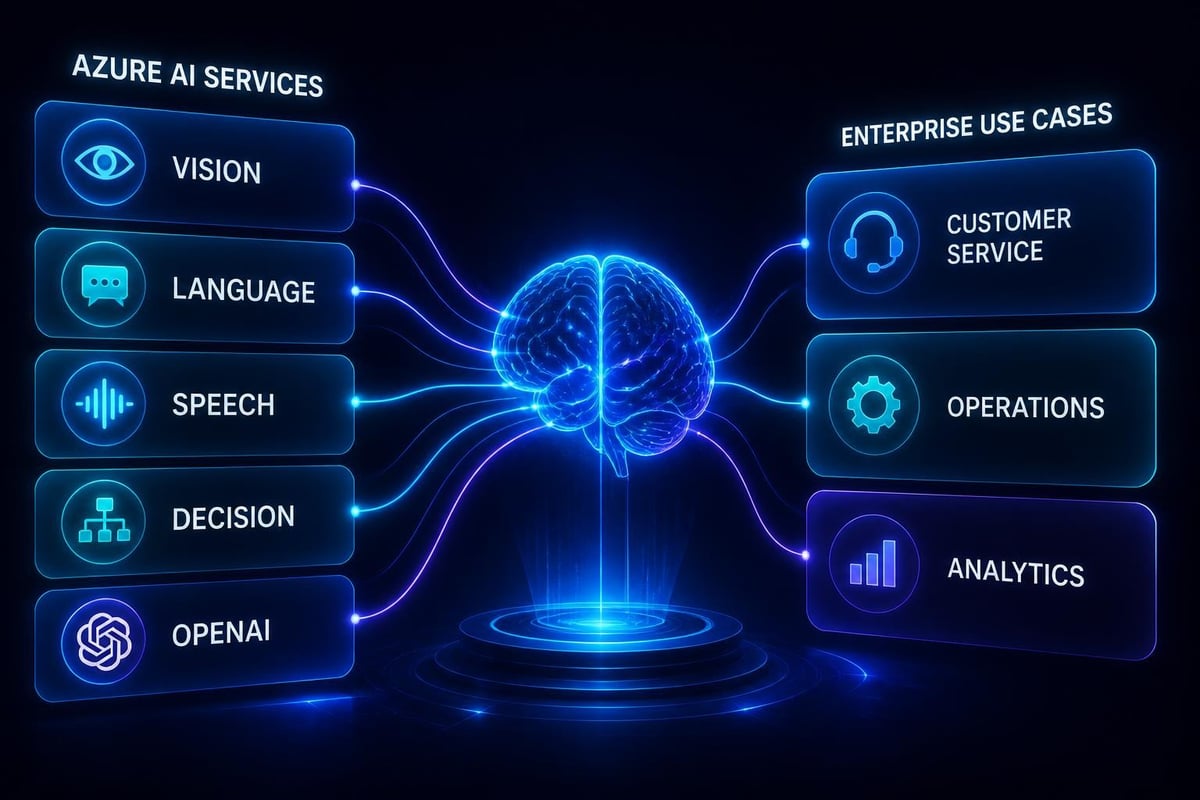
Azure AI services are organised into distinct categories, each addressing specific business requirements:
- Vision services enable image recognition, object detection, and visual content analysis
- Language capabilities power natural language processing, translation, and sentiment analysis
- Speech technologies facilitate voice recognition, synthesis, and real-time transcription
- Decision services support personalisation, anomaly detection, and content moderation
- OpenAI integration provides access to GPT-4, DALL-E, and other frontier models
The platform’s architecture follows a layered approach that accommodates both citizen developers and data science teams. Low-code interfaces sit alongside comprehensive APIs and SDKs, ensuring accessibility across skill levels whilst maintaining enterprise-grade security and governance.
Azure AI Studio and Foundry
Azure AI Studio serves as the unified development environment where teams can discover models, build applications, and manage the entire AI lifecycle. The platform integrates model catalogues, prompt engineering tools, and evaluation frameworks within a single interface. Microsoft’s developer essentials for agents and apps in Azure AI Foundry provide comprehensive guidance on building, testing, and governing agentic applications.
| Feature | Capability | Primary Benefit |
|---|---|---|
| Model Catalogue | Access to hundreds of pre-trained models | Accelerated development timelines |
| Prompt Flow | Visual prompt engineering and testing | Improved output quality and consistency |
| Evaluation Tools | Automated testing and benchmarking | Objective performance measurement |
| Deployment Options | Multiple hosting configurations | Flexibility across workload requirements |
The Foundry environment particularly excels at supporting artificial intelligence automation solutions that require orchestration across multiple AI services, data sources, and business systems.
Implementing Azure AI for Business Transformation
Successful azure ai implementations require strategic alignment between technical capabilities and business objectives. Organisations must consider not only what the technology can do, but how it integrates with existing processes, skills, and governance frameworks.
Empowering Employees Through AI
Azure AI enables workforce augmentation through intelligent assistants, automated workflows, and decision support systems. Custom copilots built on Azure OpenAI Service can be tailored to specific organisational knowledge bases, providing employees with contextual assistance that improves both productivity and accuracy.
Implementation typically follows this progression:
- Assessment phase to identify high-impact use cases and technical requirements
- Pilot deployment with a focused user group to validate assumptions and refine the solution
- Integration with existing systems including Microsoft 365, Dynamics 365, and custom applications
- Scaling across departments with appropriate governance and support structures
- Optimisation based on usage analytics, user feedback, and evolving business needs
The approach detailed in our AI productivity guidance emphasises measurable outcomes and continuous improvement rather than technology deployment for its own sake.
Enhancing Business Processes
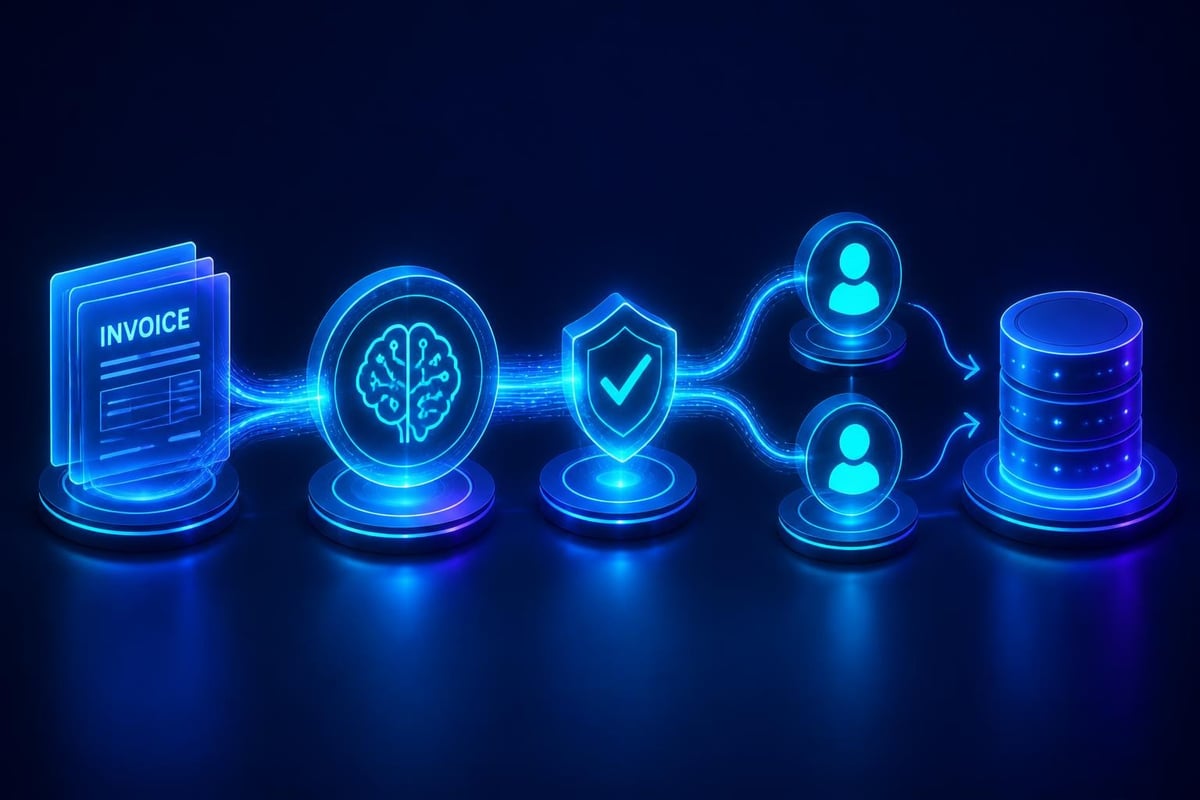
Process automation represents one of the most immediate value drivers for azure ai adoption. Intelligent document processing, for instance, combines optical character recognition with natural language understanding to extract structured data from unstructured sources.
Consider these typical enterprise scenarios:
- Invoice processing that automatically extracts vendor details, line items, and approval routing
- Customer enquiry classification that routes requests to appropriate teams based on content analysis
- Quality assurance using computer vision to identify defects in manufacturing processes
- Compliance monitoring through automated review of communications and transactions
Each scenario benefits from Azure AI’s ability to process information at scale whilst maintaining consistent accuracy. The platform’s integration with Power Platform extends these capabilities to business users through low-code automation builders.
Architectural Considerations for Enterprise AI
Building production-grade AI systems on azure ai requires careful attention to architecture, security, and operational concerns. The Azure Architecture Center overview for AI and machine learning workloads provides comprehensive patterns and guidance for designing scalable, secure solutions.
Infrastructure and Deployment Patterns
Azure AI supports multiple deployment models to accommodate different performance, security, and cost requirements:
| Deployment Model | Use Case | Key Considerations |
|---|---|---|
| Managed Services | Standard cognitive services with shared infrastructure | Cost-effective, minimal management overhead |
| Dedicated Endpoints | Workloads requiring consistent performance | Predictable latency, isolated compute resources |
| Containerised Models | Custom models with specific runtime requirements | Maximum control, platform flexibility |
| Edge Deployment | Low-latency scenarios or disconnected environments | Limited model complexity, local processing |
The choice between these options impacts not only technical performance but also cost structures, operational complexity, and governance capabilities. Most enterprises adopt a hybrid approach, using managed services for standard capabilities whilst deploying custom models where differentiation matters.
Security and Compliance
Azure AI incorporates security controls at multiple layers, from network isolation and identity management to data encryption and audit logging. Microsoft’s guidance on Responsible AI in Azure workloads establishes practical frameworks for governance, fairness, and transparency.
Critical security considerations include:
- Data residency to meet regulatory requirements across geographies
- Private endpoints that restrict network access to approved sources
- Managed identities eliminating the need for credential management
- Customer-managed keys providing additional control over encryption
- Compliance certifications spanning ISO 27001, SOC 2, GDPR, and industry-specific standards
For organisations in regulated industries, these controls enable AI adoption whilst maintaining compliance postures. The platform’s built-in audit capabilities provide the evidence trail required for regulatory reporting and internal governance.
Model Selection and Evaluation
Choosing appropriate models represents a critical success factor for azure ai projects. The platform offers access to both Microsoft’s proprietary models and a growing catalogue of open-source alternatives through partnerships with providers like Hugging Face and Meta.
Pre-built Versus Custom Models
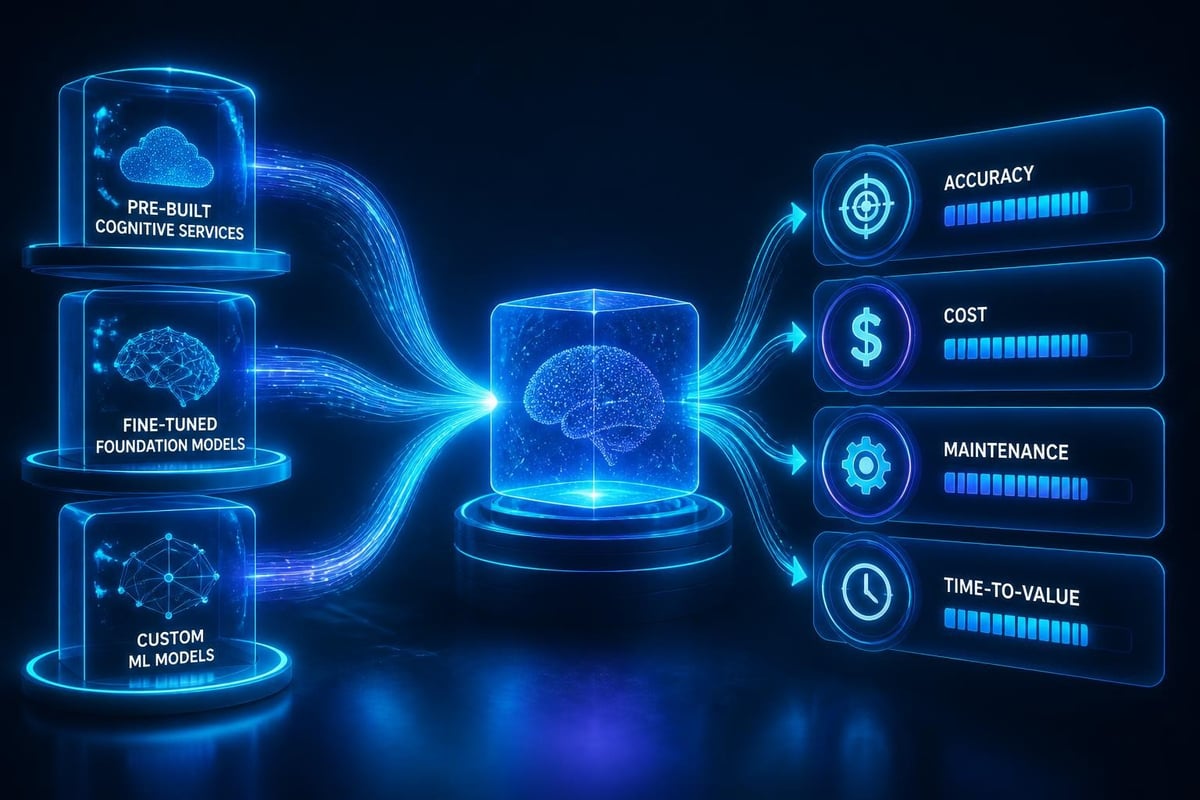
The decision between pre-built cognitive services and custom machine learning models depends on several factors:
Pre-built models excel when:
- Industry-standard capabilities meet requirements (translation, OCR, basic classification)
- Time to market is critical
- Internal data science expertise is limited
- Maintenance overhead must be minimised
Custom models become necessary when:
- Domain-specific knowledge cannot be captured by general-purpose models
- Performance requirements exceed pre-built capabilities
- Proprietary data provides competitive advantage
- Unique business logic must be embedded in model behaviour
The systematic approach to evaluating large language models provides methodologies applicable across model types, ensuring objective comparison of alternatives.
Fine-tuning and Prompt Engineering
Azure OpenAI Service enables both fine-tuning and prompt engineering to adapt foundation models to specific contexts. Fine-tuning adjusts model weights through additional training on domain-specific data, whilst prompt engineering optimises inputs to elicit desired outputs without modifying the underlying model.
Recent advances in Large Language Models have significantly improved few-shot learning capabilities, reducing the need for extensive fine-tuning in many scenarios. For enterprise applications, prompt engineering often delivers sufficient customisation with lower cost and complexity.
Integration Patterns and System Architecture
Azure ai delivers maximum value when integrated thoughtfully with existing enterprise systems. The platform provides native connectors for Microsoft ecosystem products whilst supporting industry-standard APIs and protocols for third-party integration.
Microsoft Ecosystem Integration
Organisations already invested in Microsoft technologies benefit from pre-built integration points:
- Microsoft 365 through Copilot extensibility and custom plugins
- Dynamics 365 via AI Builder and custom model deployment
- Power Platform enabling citizen developers to incorporate AI into workflows
- Azure Synapse for data engineering pipelines feeding model training
- Azure DevOps supporting MLOps practices and continuous deployment
These integrations reduce implementation complexity whilst leveraging existing identity, security, and governance frameworks. The approach to artificial intelligence integration services emphasises cohesive architectures over point solutions.
Data Pipeline Architecture
Effective AI systems require robust data pipelines that ensure quality, consistency, and timeliness. Azure AI integrates with Azure Data Factory, Event Hubs, and Stream Analytics to support both batch and real-time processing patterns.
Typical architecture includes these components:
- Data ingestion from operational systems, external APIs, and file-based sources
- Transformation applying business rules, cleansing, and feature engineering
- Storage in appropriate formats (relational, document, object) based on access patterns
- Model serving through endpoints that provide low-latency inference
- Monitoring to detect drift, performance degradation, and anomalous behaviour
This layered approach enables teams to evolve individual components independently whilst maintaining system stability. The AI and Microsoft ecosystem overview explores how these pieces fit together within broader transformation initiatives.
Governance and Responsible AI
As AI systems increasingly influence business decisions, establishing appropriate governance becomes essential. Azure ai provides tools and frameworks for monitoring model behaviour, detecting bias, and maintaining transparency.
Operational Controls
Microsoft’s responsible AI framework translates ethical principles into operational practices:
- Fairness assessments identifying and mitigating bias across demographic groups
- Transparency documentation recording model provenance, training data, and limitations
- Privacy controls implementing differential privacy and data minimisation
- Security testing validating resilience against adversarial attacks
- Human oversight maintaining appropriate human involvement in critical decisions
Research published in Nature Machine Intelligence highlights risks around hallucination and dataset attribution that governance frameworks must address. These concerns are particularly acute in regulated industries where AI-generated outputs may have compliance implications.
Monitoring and Drift Detection
Production AI systems require continuous monitoring to ensure performance remains within acceptable boundaries. Azure Machine Learning provides built-in capabilities for detecting data drift, concept drift, and model degradation.
| Metric Type | What It Measures | Typical Threshold |
|---|---|---|
| Data Drift | Statistical changes in input distributions | 10-15% deviation from baseline |
| Prediction Drift | Shifts in model output patterns | Context-dependent |
| Performance Metrics | Accuracy, precision, recall degradation | 5% below baseline performance |
| Latency | Response time increases | 95th percentile SLA violations |
When drift exceeds established thresholds, automated workflows can trigger retraining, human review, or service degradation alerts. This proactive approach prevents silent failures that erode user trust and business value.
Cost Optimisation and Resource Management
Azure ai pricing varies significantly across services, deployment models, and usage patterns. Understanding cost drivers enables organisations to optimise spend whilst maintaining performance requirements.
Pricing Models
Azure AI services employ several pricing structures:
- Transaction-based charging per API call (typical for cognitive services)
- Compute-based billing for underlying infrastructure (Azure Machine Learning)
- Token-based metering for language models (Azure OpenAI Service)
- Commitment-based offering discounts for reserved capacity
Hybrid architectures that combine these models can significantly reduce costs. For instance, using Azure Cognitive Services for standard scenarios whilst reserving Azure OpenAI Service for complex reasoning tasks optimises the cost-performance trade-off.
Resource Optimisation Strategies
Practical approaches to controlling azure ai costs include:
- Right-sizing compute resources based on actual workload requirements
- Implementing caching layers to reduce redundant API calls
- Using batch processing for non-real-time workloads
- Monitoring usage patterns to identify optimisation opportunities
- Establishing budget alerts and spending governance
The AI managed services model provides predictable costs whilst ensuring resources scale appropriately with demand. This approach particularly benefits organisations lacking internal AI operations expertise.
Looking Ahead: Azure AI in 2026 and Beyond
The azure ai platform continues evolving rapidly, with significant developments expected throughout 2026. Understanding these trends helps organisations plan implementations that remain relevant as capabilities mature.
Current developments worth monitoring include:
- Smaller, more efficient models delivering GPT-4 level performance with reduced computational requirements
- Multi-modal capabilities seamlessly combining text, image, and voice processing
- Agentic workflows enabling AI systems to decompose tasks and orchestrate multiple tools
- Enhanced reasoning through techniques like chain-of-thought and tree-of-thoughts prompting
- Improved explainability making model decisions more transparent and auditable
The 2026 AI trends analysis explores how these technical advances translate into business opportunities across industries. Organisations that establish solid foundations now position themselves to adopt emerging capabilities as they mature.
Skills and Organisational Change
Technology represents only one dimension of successful azure ai adoption. Organisations must also develop skills, adjust processes, and evolve culture to fully realise potential benefits. This includes training data engineers on MLOps practices, educating business users on AI capabilities and limitations, and establishing cross-functional teams that combine domain expertise with technical skills.
The journey from pilot to production requires sustained commitment across multiple organisational levels. Executive sponsorship ensures resources and attention remain focused through inevitable challenges, whilst grassroots enthusiasm drives adoption and identifies new use cases. Balancing these forces creates momentum that extends beyond initial implementations.
Azure AI provides enterprises with comprehensive capabilities for building, deploying, and scaling intelligent applications across diverse business scenarios. Success requires thoughtful integration of technology, governance, and organisational change rather than merely deploying services. Stellium Consulting partners with enterprises to design and implement AI solutions that deliver measurable business value whilst maintaining security, compliance, and operational excellence. Our expertise as a Microsoft Solutions Partner ensures your organisation maximises Azure AI investments through proven methodologies and continuous support.