
Artificial intelligence has evolved from a theoretical concept into the backbone of modern enterprise operations. Today’s AI processes represent sophisticated systems that combine machine learning, automation, and intelligent decision-making to transform how organisations operate. These processes are no longer confined to technology departments but permeate every aspect of business, from customer service to supply chain management, fundamentally changing how work gets done.
Understanding AI Processes in Modern Enterprises
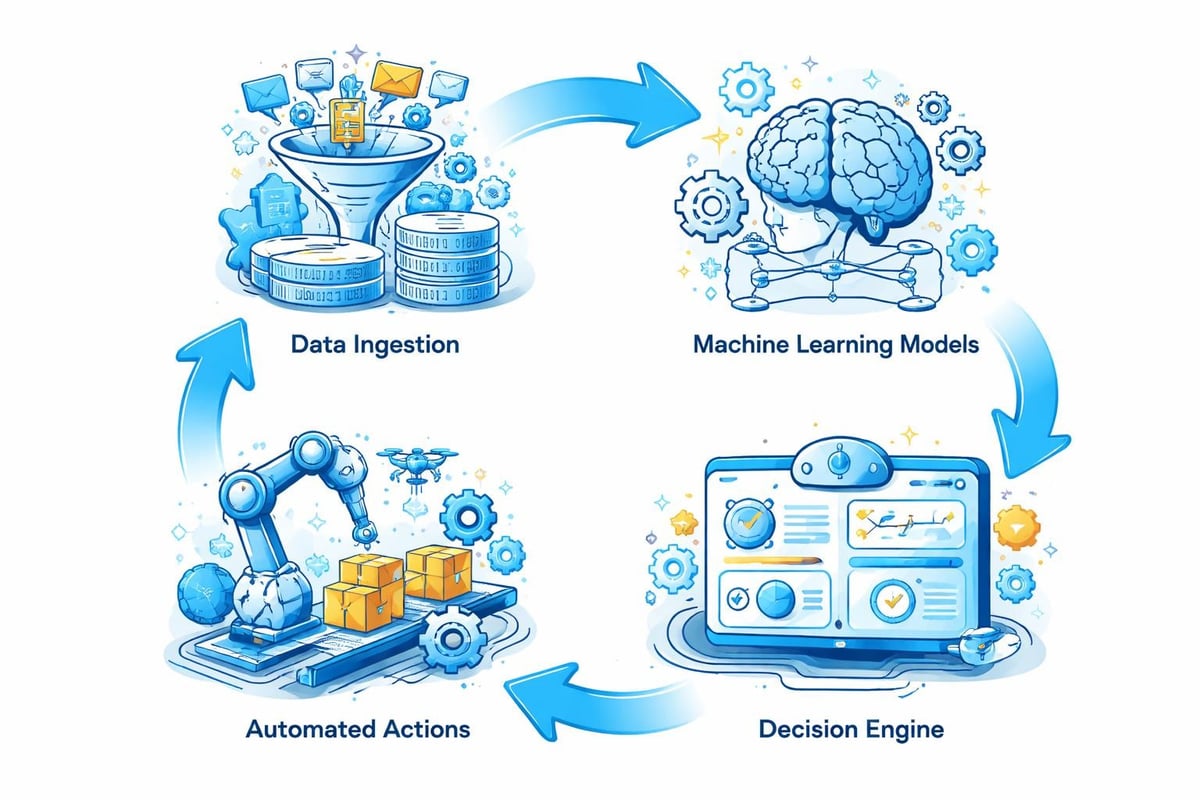
AI processes encompass the systematic application of artificial intelligence technologies to automate, enhance, and optimise business operations. Unlike traditional automation, which follows predetermined rules, AI processes learn from data, adapt to changing conditions, and make intelligent decisions with minimal human intervention.
The Core Components of AI Processes
Modern AI processes are built on several foundational technologies that work together to create intelligent systems. These components include:
- Machine learning algorithms that identify patterns and make predictions from historical data
- Natural language processing that enables systems to understand and generate human language
- Computer vision for interpreting visual information and making decisions based on images
- Robotic process automation that executes repetitive tasks with precision
- Predictive analytics that forecast future outcomes based on current and historical data
The integration of these technologies creates powerful systems capable of handling complex workflows. When properly implemented, AI processes can analyse millions of data points, identify anomalies, and recommend actions faster than any human team.
How AI Processes Differ from Traditional Automation
Traditional automation excels at repetitive, rule-based tasks but struggles with variability and complexity. AI processes, by contrast, thrive in dynamic environments where conditions constantly change. They use intelligent automation techniques to adapt their behaviour based on new information, making them suitable for complex business scenarios.
| Traditional Automation | AI Processes |
|---|---|
| Rule-based logic | Learning-based algorithms |
| Fixed workflows | Adaptive workflows |
| Requires explicit programming | Learns from data |
| Limited decision-making | Autonomous decision-making |
| Struggles with exceptions | Handles exceptions intelligently |
Implementing AI Processes Across Business Functions
The versatility of AI processes makes them applicable across virtually every business function. Their implementation varies based on specific departmental needs and desired outcomes.
Customer Service and Support
AI processes have revolutionised customer service by enabling organisations to provide instant, personalised support at scale. AI agents can handle routine enquiries, analyse customer sentiment, and escalate complex issues to human agents seamlessly. These systems learn from each interaction, continuously improving their ability to resolve customer issues effectively.
Modern customer service AI processes can:
- Analyse incoming requests and route them to the appropriate department
- Provide instant responses to frequently asked questions
- Detect frustrated customers and prioritise their cases
- Suggest solutions based on similar historical cases
- Generate follow-up communications automatically
Financial Operations and Analytics
Financial departments benefit enormously from AI processes that can analyse vast amounts of transactional data, identify patterns, and flag anomalies. These systems excel at fraud detection, risk assessment, and financial forecasting. The speed and accuracy of AI-driven financial processes far exceed manual methods, reducing errors whilst freeing finance professionals to focus on strategic activities.
AI processes in finance automate invoice processing, reconciliations, and compliance checks. They can predict cash flow trends, identify cost-saving opportunities, and alert managers to potential financial risks before they materialise.
Supply Chain and Logistics
Supply chain management represents one of the most complex applications of AI processes. These systems must coordinate numerous variables: inventory levels, shipping routes, demand forecasts, supplier performance, and market conditions. AI processes excel at optimising these interconnected factors, reducing costs whilst improving service levels.
Advanced AI processes in logistics can predict demand fluctuations, optimise warehouse layouts, and dynamically adjust shipping routes based on real-time conditions. They continuously monitor supplier performance and can automatically switch to alternative suppliers when issues arise.
Building Effective AI Workflows
Creating successful AI workflows requires careful planning, appropriate technology selection, and ongoing refinement. Organisations must approach AI process implementation strategically rather than tactically.
Identifying High-Value Use Cases
Not every process benefits equally from AI implementation. The most successful AI processes typically share several characteristics:
- High volume: Processes handling thousands or millions of transactions
- Pattern-based: Activities where historical data can inform future decisions
- Time-sensitive: Operations requiring rapid response to changing conditions
- Complex: Tasks involving multiple variables and decision points
- Resource-intensive: Processes consuming significant human labour
Organisations should prioritise use cases that offer clear ROI and align with strategic objectives. Starting with focused, manageable projects builds momentum and demonstrates value before scaling to more complex implementations.
Data Quality and Preparation
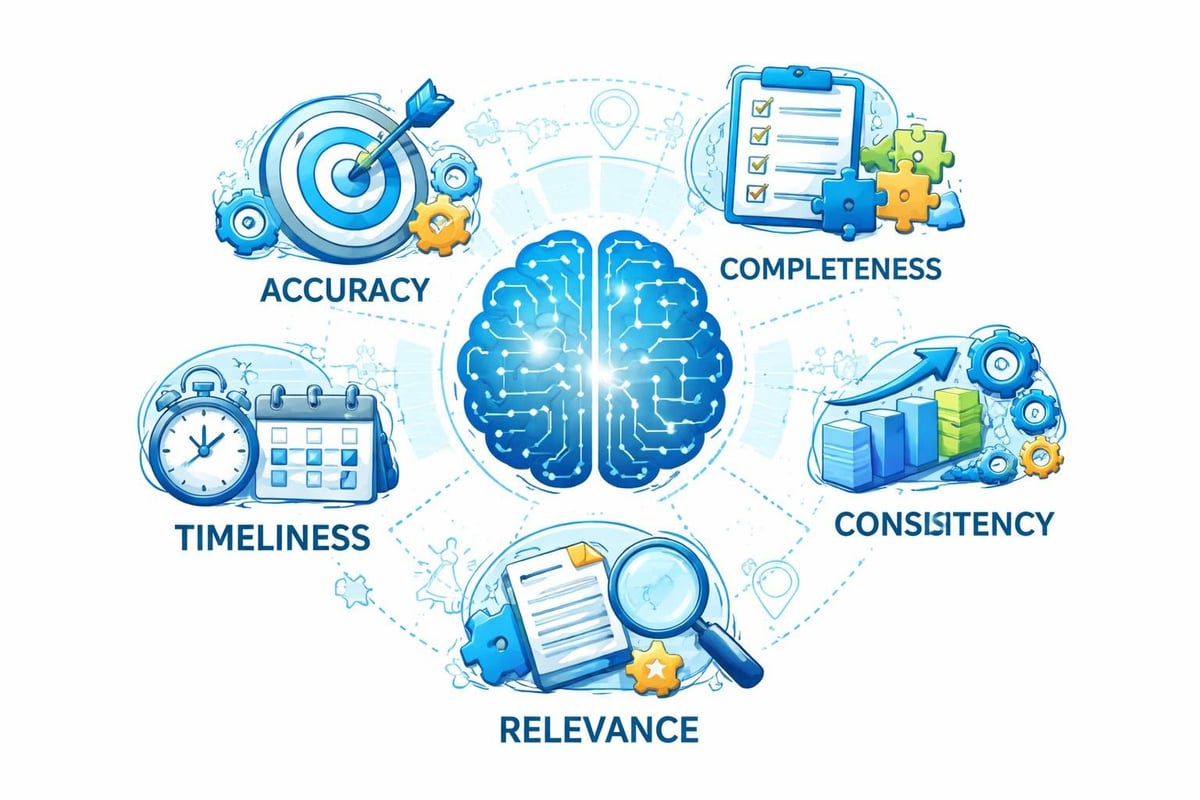
The effectiveness of AI processes depends entirely on data quality. Poor data leads to inaccurate predictions and unreliable decisions. Organisations must invest in data governance, ensuring information is accurate, complete, and appropriately structured.
| Data Quality Dimension | Impact on AI Processes | Mitigation Strategy |
|---|---|---|
| Accuracy | Incorrect predictions | Implement validation rules |
| Completeness | Missing insights | Fill gaps through integration |
| Consistency | Unreliable outputs | Standardise formats |
| Timeliness | Outdated decisions | Automate data refresh |
| Relevance | Noise in models | Curate data carefully |
Advanced Applications of AI Processes
As organisations mature in their AI adoption, they move beyond basic automation to more sophisticated applications that create competitive advantages.
Predictive and Prescriptive Analytics
Modern AI processes don’t just react to current conditions; they anticipate future scenarios and recommend optimal actions. Predictive analytics forecast outcomes based on historical patterns, whilst prescriptive analytics suggest specific actions to achieve desired results.
These advanced AI processes analyse countless variables to identify opportunities and risks that human analysts might miss. In manufacturing, they predict equipment failures before they occur. In retail, they forecast demand with remarkable accuracy. In healthcare, they identify patients at risk of complications.
AIOps for IT Management
AIOps represents the application of AI processes to IT operations management. These systems monitor infrastructure health, detect anomalies, and often resolve issues automatically. AIOps platforms correlate events across distributed systems, identifying root causes faster than traditional monitoring tools.
The benefits of AIOps extend beyond faster incident resolution. These AI processes learn normal behaviour patterns and can predict capacity needs, optimise resource allocation, and prevent outages. For enterprises managing complex IT environments, AIOps has become essential for maintaining reliability whilst controlling costs.
AI-Driven Design and Development
AI-driven design automation accelerates product development by automating aspects of the design process. These AI processes can generate design alternatives, optimise configurations, and test scenarios far faster than manual methods. The technology has proven particularly valuable in electronics design, where complexity has outpaced human ability to manage all variables effectively.
Development teams increasingly rely on AI processes to write code, identify bugs, and suggest optimisations. Organisations like Big House Technologies leverage AI-powered platforms alongside no-code tools to accelerate software development whilst maintaining quality standards. This combination of AI processes and modern development approaches enables faster time-to-market and more innovative solutions.
Overcoming Implementation Challenges
Despite their enormous potential, AI processes present significant implementation challenges that organisations must address proactively.
Technical Infrastructure Requirements
AI processes demand substantial computing resources to train models and process data in real-time. Organisations must ensure their infrastructure can support these requirements without compromising performance or escalating costs unsustainably.
Cloud platforms offer scalable solutions, but organisations must carefully architect their AI processes to optimise resource utilisation. Edge computing increasingly complements cloud infrastructure, enabling AI processes to run closer to data sources for faster response times.
Skills and Organisational Change
Implementing AI processes requires both technical expertise and change management capabilities. Data scientists, ML engineers, and AI specialists remain in high demand, but organisations also need business analysts who can identify opportunities and translate requirements into technical specifications.
The human element extends beyond technical skills. Employees may resist AI processes they perceive as threats to their roles. Successful implementations involve employees early, demonstrating how AI processes eliminate tedious work and enable them to focus on higher-value activities.
Governance and Ethics
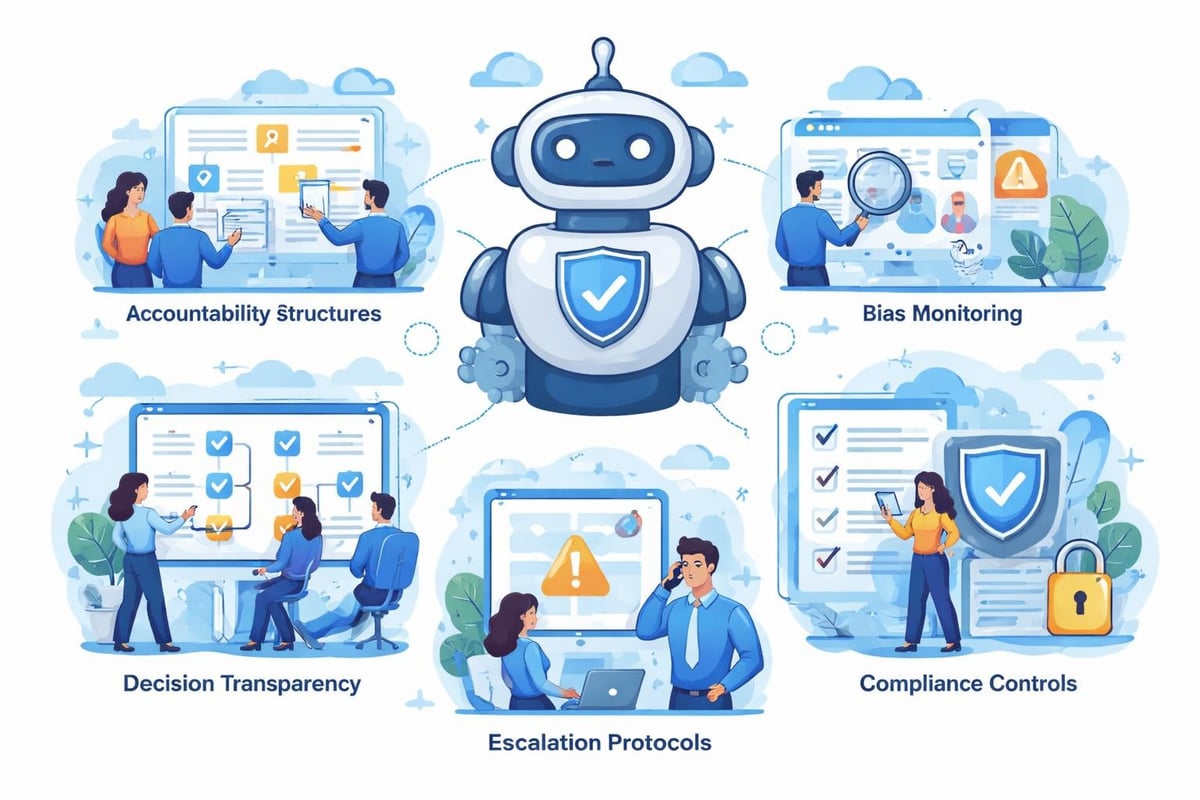
AI processes make decisions that affect customers, employees, and business outcomes. Organisations must establish governance frameworks that ensure these systems operate ethically, transparently, and in compliance with regulations.
Key governance considerations include:
- Establishing clear accountability for AI process decisions
- Implementing bias detection and mitigation strategies
- Ensuring transparency in how AI processes reach decisions
- Creating audit trails for regulatory compliance
- Defining escalation paths when AI processes encounter edge cases
Measuring AI Process Performance
Quantifying the impact of AI processes requires carefully selected metrics that align with business objectives. Organisations must look beyond technical metrics to measure business value.
Key Performance Indicators
Effective measurement frameworks combine technical and business metrics. Technical metrics assess the AI process itself: accuracy, processing speed, uptime, and error rates. Business metrics evaluate outcomes: cost savings, revenue impact, customer satisfaction, and efficiency gains.
| Metric Category | Example Metrics | Purpose |
|---|---|---|
| Accuracy | Precision, recall, F1 score | Model performance |
| Efficiency | Processing time, throughput | Operational speed |
| Business Impact | Cost reduction, revenue growth | ROI justification |
| User Adoption | Usage rates, satisfaction scores | Acceptance measurement |
| Quality | Error rates, rework percentage | Output reliability |
Continuous Improvement Cycles
AI processes should never be considered “finished.” The most successful implementations include ongoing monitoring and refinement. Models degrade over time as conditions change, requiring regular retraining with fresh data. User feedback identifies opportunities for enhancement that weren’t apparent during initial development.
Organisations should establish feedback loops that capture performance data, user experiences, and business outcomes. Regular reviews identify areas for improvement and ensure AI processes continue delivering value as business needs evolve.
The Future of AI Processes
AI process capabilities continue advancing rapidly. Emerging trends promise even greater impact in coming years.
Autonomous Process Orchestration
Future AI processes will coordinate complex workflows with minimal human intervention. These systems will understand organisational objectives, analyse available resources, and orchestrate activities across multiple departments to achieve desired outcomes. The evolution from automating individual tasks to orchestrating entire processes represents a fundamental shift in how organisations operate.
Integration with Business Intelligence
AI processes increasingly integrate with business intelligence platforms, creating closed-loop systems that analyse performance, identify opportunities, and implement improvements automatically. This convergence enables organisations to respond to market changes at unprecedented speed.
Research from IBM on AI for business processes demonstrates how unified observability across business and IT operations enables AI processes to reduce disruption impact and optimise performance continuously. These integrated approaches will become standard practice as organisations seek competitive advantages through operational excellence.
Democratisation of AI Process Development
Low-code and no-code platforms are making AI process development accessible to business users without extensive technical backgrounds. This democratisation accelerates innovation by enabling those closest to business problems to create AI-powered solutions without waiting for scarce technical resources.
The trend towards citizen developers extends AI process benefits across organisations whilst reducing development bottlenecks. Proper governance ensures these user-created AI processes maintain quality and security standards whilst fostering innovation.
AI processes have fundamentally transformed how modern enterprises operate, delivering unprecedented efficiency, accuracy, and insight across every business function. Successfully implementing these technologies requires strategic planning, quality data, appropriate infrastructure, and ongoing commitment to refinement and improvement. Stellium Consulting partners with organisations to design, implement, and optimise AI-powered solutions that empower employees, enhance processes, and drive meaningful business transformation through Microsoft technologies and innovative AI tools.