
The rapid adoption of artificial intelligence across enterprises has created an urgent need for structured oversight and strategic coordination. AI management services have emerged as a critical capability for organisations seeking to harness the transformative power of AI whilst mitigating risks and ensuring sustainable value delivery. These services encompass the entire lifecycle of AI implementation, from initial strategy development through ongoing optimisation and governance. As businesses integrate AI into core operations, the complexity of managing these systems effectively has become a strategic imperative that demands specialised expertise and proven methodologies.
Understanding AI Management Services in the Enterprise Context
AI management services represent a comprehensive approach to overseeing artificial intelligence initiatives within organisational settings. These services extend far beyond simple technology deployment, encompassing strategic planning, infrastructure design, model governance, performance monitoring, and continuous optimisation.
Modern enterprises require structured frameworks to manage AI effectively. According to the Artificial Intelligence Index Report 2024, organisations investing in comprehensive AI management capabilities demonstrate significantly higher success rates in achieving measurable business outcomes. This correlation underscores the importance of treating AI not merely as a technical implementation but as a strategic business function requiring dedicated management resources.
The scope of AI management services typically includes:
- Strategic AI roadmap development aligned with business objectives
- Infrastructure provisioning and optimisation for AI workloads
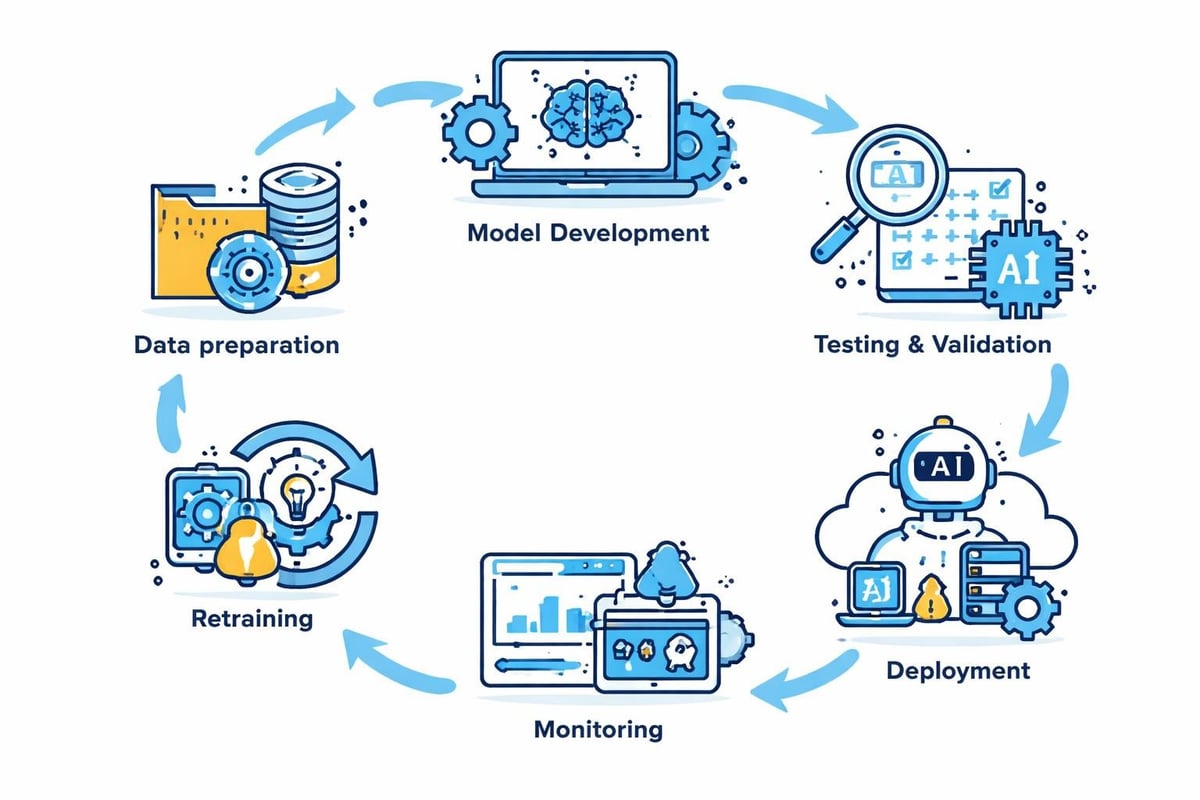
- Model lifecycle management from development through retirement
- Data governance and quality assurance protocols
- Security and compliance frameworks specific to AI systems
- Performance monitoring and optimisation across deployed models
- Change management and training programmes for end users
The Business Case for Professional AI Management
Organisations implementing AI without structured management often encounter significant challenges. Resource wastage, security vulnerabilities, regulatory compliance failures, and poor adoption rates represent common pitfalls that professional AI managed services help enterprises avoid.
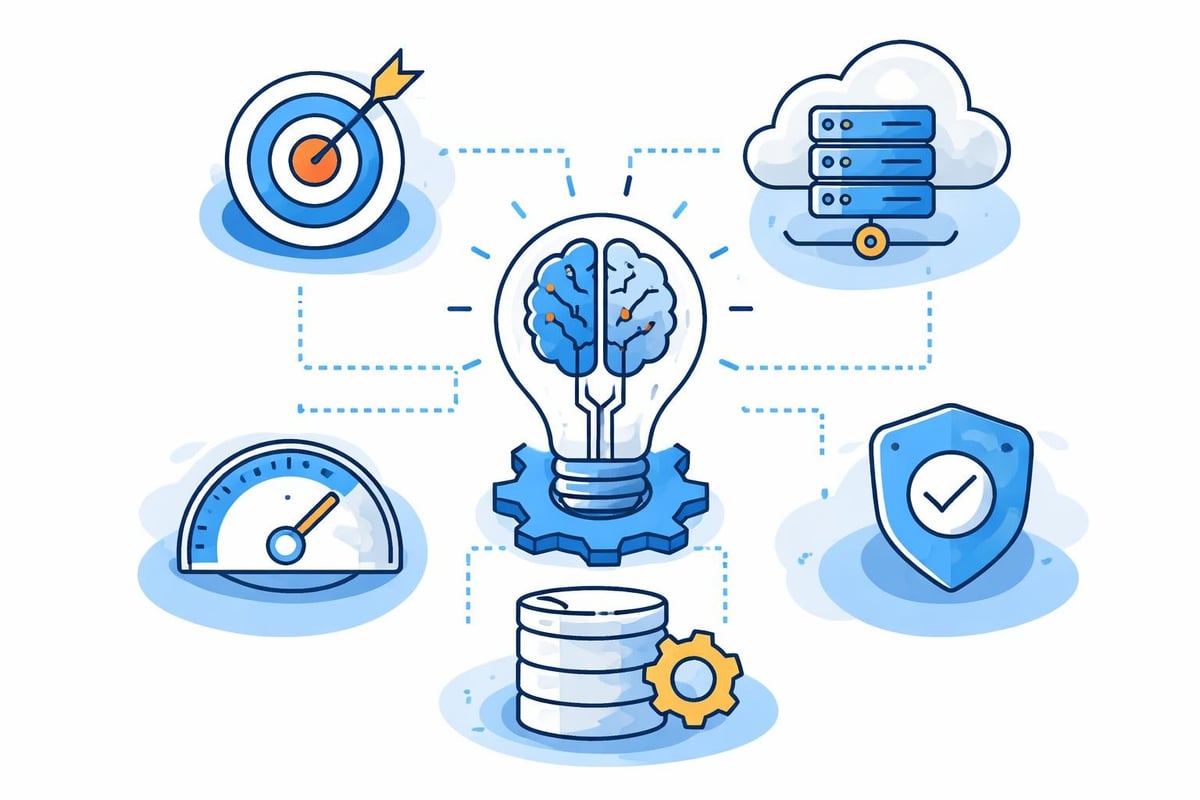
The financial implications of inadequate AI management can be substantial. Projects may overrun budgets, deliver minimal business value, or create technical debt that hampers future innovation. Conversely, well-managed AI initiatives generate measurable returns through improved operational efficiency, enhanced decision-making capabilities, and competitive advantages in the marketplace.
Core Components of Effective AI Management Services
Successful AI management requires a multi-layered approach that addresses technical, organisational, and strategic dimensions simultaneously. Each component plays a vital role in ensuring that AI systems deliver sustained value whilst operating within acceptable risk parameters.
Strategic Planning and Alignment
The foundation of effective AI management lies in strategic clarity. Organisations must identify specific business problems that AI can address, establish measurable success criteria, and align AI initiatives with broader organisational objectives. This strategic alignment ensures that AI investments support genuine business needs rather than pursuing technology for its own sake.
Professional AI management services begin with comprehensive assessment processes that evaluate organisational readiness, identify high-value use cases, and develop phased implementation roadmaps. These roadmaps account for technical feasibility, resource availability, skill requirements, and change management considerations.
| Assessment Dimension | Key Evaluation Criteria | Strategic Importance |
|---|---|---|
| Business Readiness | Executive sponsorship, budget allocation, success metrics | Ensures organisational commitment |
| Technical Capability | Infrastructure maturity, data quality, integration complexity | Determines implementation feasibility |
| Skills and Talent | Internal expertise, training needs, partnership requirements | Identifies capability gaps |
| Governance Framework | Policies, compliance requirements, risk tolerance | Establishes operational boundaries |
Infrastructure and Platform Management
Modern AI requires robust technical infrastructure capable of supporting diverse workloads. AI infrastructure solutions must accommodate both development and production environments whilst providing scalability, security, and cost efficiency.
Cloud platforms have become the predominant choice for enterprise AI infrastructure, offering elastic compute resources, specialised AI services, and global availability. However, effective infrastructure management extends beyond simply provisioning cloud resources. It requires:
- Capacity planning based on workload characteristics and growth projections
- Cost optimisation through resource rightsizing and utilisation monitoring
- Security hardening with identity management, network isolation, and encryption
- Integration architecture connecting AI systems with existing enterprise applications
- Disaster recovery planning ensuring business continuity for critical AI services
Organisations leveraging Microsoft’s Azure AI platform benefit from comprehensive toolsets that simplify infrastructure management whilst providing enterprise-grade security and compliance capabilities.
Data Governance and Quality Management
AI systems are fundamentally dependent on data quality and availability. AI management services must therefore incorporate rigorous data governance practices that ensure data accuracy, consistency, accessibility, and compliance with regulatory requirements.
Data governance frameworks address several critical dimensions:
- Data lineage tracking documenting data sources and transformations
- Quality assurance processes validating data accuracy and completeness
- Access control mechanisms restricting data availability based on roles and responsibilities
- Privacy and compliance ensuring adherence to regulations such as GDPR
- Data lifecycle management from acquisition through archival or deletion
These practices become particularly important as organisations deploy multiple AI models that may consume overlapping datasets. Centralised data governance prevents inconsistencies, reduces duplication, and establishes single sources of truth for critical business information.
Operational Excellence in AI Management
Moving beyond foundational capabilities, operational excellence in AI management services requires sophisticated monitoring, optimisation, and continuous improvement processes. These operational disciplines ensure that AI systems maintain performance standards whilst adapting to changing business conditions.
Performance Monitoring and Optimisation
Deployed AI models require continuous monitoring to detect performance degradation, identify anomalies, and ensure consistent outputs. Model performance can deteriorate over time due to data drift, where the statistical properties of input data change, or concept drift, where the relationships between inputs and outputs evolve.
Effective monitoring frameworks track multiple performance dimensions simultaneously. Accuracy metrics ensure that model predictions remain reliable. Latency measurements verify that response times meet user expectations. Resource utilisation data identifies optimisation opportunities that reduce operational costs.
Professional AI management services implement automated alerting systems that notify administrators when performance metrics fall outside acceptable ranges. These systems enable proactive intervention before issues impact end users or business processes.
Security and Compliance Management
AI systems introduce unique security considerations that traditional IT security frameworks may not fully address. Model theft, adversarial attacks, data poisoning, and privacy violations represent emerging threat vectors that require specialised defensive measures.
Comprehensive security management for AI includes:
- Model access controls preventing unauthorised usage or extraction
- Input validation protecting against adversarial examples designed to fool models
- Output sanitisation ensuring models don’t inadvertently expose sensitive information
- Audit logging maintaining detailed records of model usage and decisions
- Compliance validation verifying adherence to industry regulations and standards
The research paper on FactSheets for AI services emphasises the importance of transparency and standardised documentation in building trust and ensuring accountability in AI deployments. These principles guide how professional AI management services approach security and compliance challenges.
Regulatory frameworks continue to evolve globally, with initiatives such as China’s interim measures for generative AI services establishing new requirements for AI governance. Organisations operating across multiple jurisdictions must navigate these varying regulatory landscapes whilst maintaining consistent operational standards.
Strategic Implementation Approaches
Implementing AI management services requires careful planning and phased execution. Organisations that attempt to deploy comprehensive management capabilities simultaneously often struggle with complexity and resource constraints. Successful implementations follow structured approaches that build capability incrementally whilst delivering early value.
Phased Deployment Methodology
A proven implementation strategy begins with focused pilot programmes targeting specific business functions or use cases. These pilots establish foundational management practices whilst demonstrating tangible business value that justifies broader investment.
Phase 1: Foundation Building
Initial efforts concentrate on establishing core governance frameworks, selecting appropriate technology platforms, and developing baseline monitoring capabilities. This phase typically focuses on a single high-value use case that can demonstrate success within a defined timeframe.
Phase 2: Capability Expansion
Building on pilot successes, organisations expand AI management services to additional use cases whilst refining operational processes. This phase emphasises standardisation, automation, and knowledge transfer to internal teams.
Phase 3: Enterprise Scaling
Final phases involve deploying AI management capabilities across the organisation, establishing centres of excellence, and implementing sophisticated optimisation techniques that maximise value from AI investments.
Integration with Existing Business Processes
AI management services must integrate seamlessly with existing organisational structures and business processes. Isolated AI initiatives that operate independently from core business functions rarely achieve their full potential value.
Integration strategies consider multiple organisational dimensions:
| Integration Dimension | Key Considerations | Success Factors |
|---|---|---|
| Workflow Integration | Embedding AI outputs into existing decision processes | User adoption, change management |
| Systems Integration | Connecting AI platforms with enterprise applications | API design, data synchronisation |
| Organisational Integration | Defining roles, responsibilities, and reporting structures | Executive sponsorship, clear accountability |
| Process Integration | Incorporating AI management into existing IT governance | Policy alignment, operational efficiency |
Modern AI adoption strategies recognise that technical excellence alone cannot guarantee success. Organisational readiness, cultural transformation, and stakeholder engagement prove equally critical to achieving sustainable outcomes.
Advanced AI Management Capabilities
As organisations mature in their AI journey, advanced management capabilities become increasingly important for maintaining competitive advantage and maximising return on investment. These capabilities leverage sophisticated techniques and emerging best practices that differentiate leaders from followers in the AI landscape.
Automated Model Lifecycle Management
Manual model management processes struggle to scale as organisations deploy dozens or hundreds of AI models across different business functions. Automated lifecycle management tools streamline model versioning, deployment, monitoring, and retraining processes.
These automation capabilities include:
- Continuous integration and deployment (CI/CD) pipelines for model updates
- A/B testing frameworks comparing model performance before full deployment
- Automated retraining triggers based on performance degradation detection
- Version control systems maintaining model genealogy and enabling rollback
- Deployment orchestration managing model distribution across environments
Research on integrating generative AI in knowledge management systems demonstrates how automation reduces operational overhead whilst improving consistency and reliability in AI deployments.
AI Governance Platforms
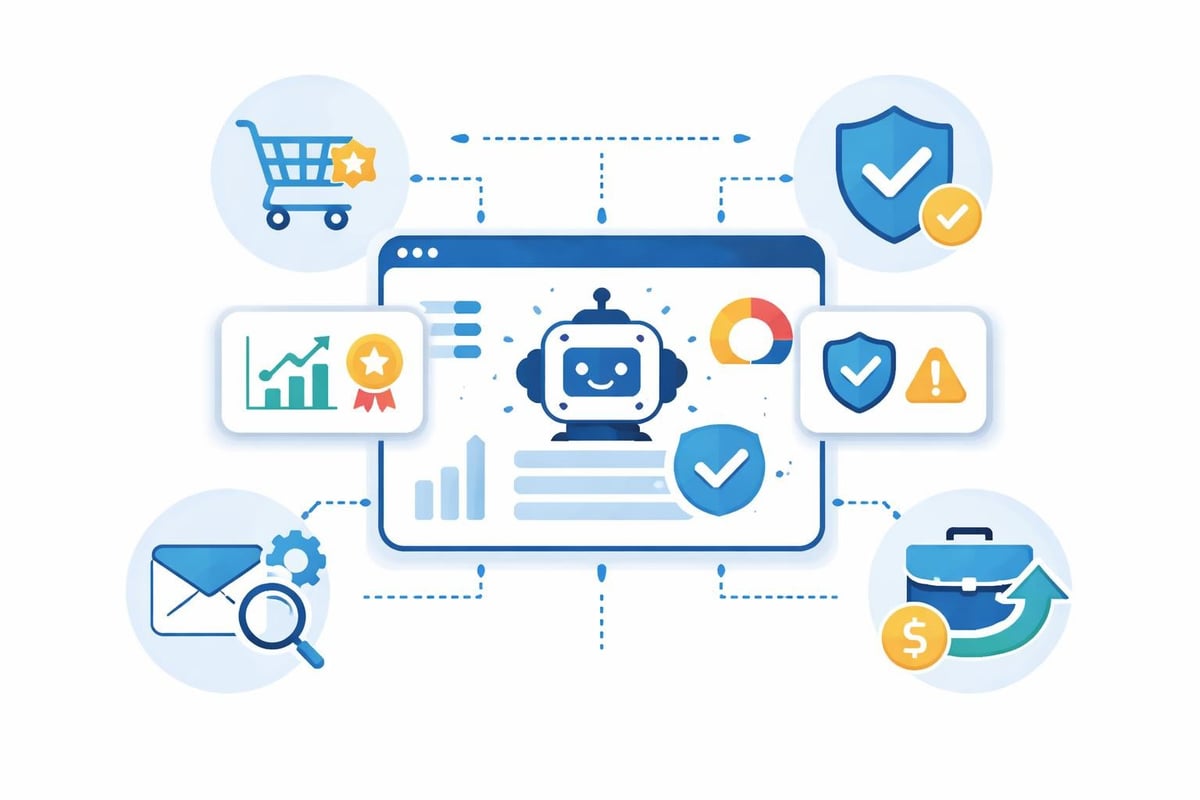
Dedicated AI governance platforms provide centralised visibility and control across an organisation’s entire AI portfolio. These platforms aggregate information from multiple AI systems, enabling executives and governance teams to monitor performance, assess risks, and ensure compliance from a unified interface.
Key governance platform capabilities include:
- Portfolio dashboards providing enterprise-wide visibility into AI initiatives
- Risk assessment tools evaluating models against defined criteria
- Compliance tracking monitoring adherence to policies and regulations
- Stakeholder collaboration features supporting cross-functional governance processes
- Audit trail generation documenting decisions and changes for regulatory purposes
Responsible AI Implementation
Ethical considerations and responsible AI practices have moved from optional considerations to mandatory requirements for enterprise AI deployments. AI management services increasingly incorporate responsible AI frameworks that address fairness, transparency, accountability, and societal impact.
Responsible AI implementation involves:
- Bias detection and mitigation in training data and model outputs
- Explainability mechanisms helping stakeholders understand AI decisions
- Impact assessments evaluating potential societal and ethical implications
- Stakeholder engagement incorporating diverse perspectives in AI design
- Continuous ethical review as models evolve and deployment contexts change
Professional AI management services embed these responsible AI practices throughout the model lifecycle rather than treating them as afterthoughts. This integration ensures that ethical considerations inform design decisions from the outset.
Measuring Success and Demonstrating Value
Effective AI management requires clear metrics that demonstrate value creation and guide continuous improvement efforts. Organisations must establish measurement frameworks that capture both technical performance and business impact.
Technical Performance Metrics
Technical metrics provide essential insights into model quality and operational efficiency. These metrics vary based on the specific AI application but commonly include:
- Accuracy and precision measuring prediction quality
- Inference latency tracking response times
- Resource utilisation monitoring compute and storage consumption
- Uptime and availability ensuring reliable service delivery
- Error rates identifying problematic predictions or system failures
Whilst technical metrics prove essential for operational management, they represent means rather than ends. The ultimate measure of AI success lies in business impact.
Business Impact Measurement
Business metrics connect AI performance to organisational objectives, demonstrating tangible value creation. These metrics should align with the original business case that justified AI investment.
Common business impact metrics include:
| Metric Category | Example Measurements | Business Value |
|---|---|---|
| Efficiency Gains | Process cycle time reduction, labour hour savings | Cost reduction, capacity increase |
| Revenue Impact | Sales conversion improvement, customer lifetime value increase | Top-line growth |
| Quality Improvements | Defect rate reduction, customer satisfaction scores | Risk mitigation, reputation enhancement |
| Decision Quality | Forecast accuracy, optimal resource allocation | Strategic advantage |
The Business Intelligence and AI integration enables organisations to correlate AI deployment with measurable business outcomes, providing evidence-based justification for continued investment.
Continuous Improvement Frameworks
Measurement data informs continuous improvement processes that enhance AI effectiveness over time. Professional AI management services establish regular review cycles that analyse performance trends, identify optimisation opportunities, and adjust strategies based on empirical evidence.
These improvement frameworks incorporate feedback from multiple stakeholders, including end users, business leaders, technical teams, and governance bodies. Diverse perspectives ensure that optimisation efforts address the full range of organisational priorities rather than focusing narrowly on technical metrics.
Future Trends in AI Management Services
The AI management landscape continues to evolve rapidly as new technologies emerge and organisational practices mature. Forward-looking organisations prepare for these trends by building flexible management frameworks capable of accommodating innovation whilst maintaining stability.
Autonomous AI Management
Emerging capabilities leverage AI itself to manage AI systems, creating autonomous management platforms that detect issues, implement corrections, and optimise performance with minimal human intervention. These meta-AI systems promise to reduce operational overhead whilst improving consistency and responsiveness.
However, autonomous management introduces new challenges around transparency, accountability, and control. Professional AI management services balance automation benefits with appropriate human oversight, ensuring that critical decisions remain subject to expert review.
Federated AI Management
As organisations deploy AI across distributed locations and business units, federated management approaches enable local autonomy whilst maintaining enterprise-wide governance. These hybrid models accommodate organisational complexity without sacrificing control or visibility.
Federated management proves particularly relevant for global enterprises navigating diverse regulatory environments and operational contexts. AI governance frameworks provide structured approaches to managing AI risks across organisational boundaries.
Edge AI Management
The proliferation of edge computing deployments pushes AI capabilities closer to data sources and end users. Managing AI models distributed across thousands of edge devices introduces unique challenges around updates, monitoring, and security.
Professional AI management services develop specialised capabilities for edge deployments, including over-the-air model updates, federated learning coordination, and edge-specific security protocols. These capabilities ensure that edge AI delivers value whilst maintaining enterprise standards.
Understanding how AI models determine authority becomes increasingly important as organisations deploy AI in customer-facing contexts where credibility and trust directly impact business outcomes. Management services must ensure that AI systems reference authoritative sources and provide transparent rationales for their outputs.
Similarly, optimising content for AI search and understanding AI content authority signals influence how organisations manage AI systems that interact with external information sources. These considerations extend AI management beyond internal operations to encompass how AI systems represent organisations in digital ecosystems.
The emphasis on building AI authority reflects broader trends toward treating AI systems as strategic assets that require careful curation and management to maintain organisational reputation and competitive position.
Selecting the Right AI Management Partner
Organisations face critical decisions when evaluating AI management service providers. The right partner brings technical expertise, industry knowledge, proven methodologies, and alignment with organisational culture and objectives.
Essential Partner Capabilities
Evaluating potential AI management partners requires assessment across multiple dimensions:
Technical Expertise: Partners should demonstrate deep knowledge of AI technologies, platforms, and implementation methodologies. Certifications from major technology providers, such as Microsoft Solutions Partner designations, indicate validated expertise and access to advanced resources.
Industry Experience: Understanding sector-specific challenges, regulations, and use cases enables partners to provide contextually relevant guidance. Partners with relevant industry experience accelerate implementations by leveraging proven approaches.
Methodological Maturity: Structured implementation methodologies reduce risks and improve outcomes. Evaluate partners based on their frameworks for assessment, design, implementation, and ongoing management.
Cultural Alignment: Successful partnerships require shared values and compatible working styles. Cultural fit influences collaboration effectiveness and long-term relationship sustainability.
Partnership Models
AI management services can be delivered through various partnership models, each offering different advantages:
- Advisory services providing strategic guidance and roadmap development
- Managed services assuming operational responsibility for AI systems
- Co-management models combining client and partner capabilities
- Training and enablement building internal capabilities for long-term autonomy
The optimal model depends on organisational objectives, internal capabilities, and resource availability. Many organisations begin with advisory services to establish foundations before transitioning to managed or co-management arrangements as implementations scale.
Organisations seeking artificial intelligence integration services benefit from partners who understand both technical implementation and organisational transformation dimensions of AI adoption.
Evaluating Success Stories
Partner track records provide valuable insights into their capabilities and approach. Request detailed case studies that describe challenges, solutions, and measurable outcomes. Strong partners readily share client references and facilitate conversations with existing customers.
Look for evidence of sustained client relationships rather than one-time project engagements. Long-term partnerships indicate client satisfaction and ongoing value delivery. Additionally, partners who contribute to industry knowledge through thought leadership, research publications, and community engagement demonstrate depth of expertise and commitment to advancing the field.
Navigating the complexities of AI implementation requires expertise, structured methodologies, and ongoing commitment to excellence. Professional AI management services provide the frameworks, capabilities, and support that enable enterprises to harness AI’s transformative potential whilst managing risks and ensuring sustainable value creation. Stellium Consulting empowers organisations to accelerate their AI journey through comprehensive management services, combining Microsoft platform expertise with proven implementation methodologies that deliver measurable business outcomes. Contact their team to explore how tailored AI management services can transform your enterprise operations.