
The integration of AI in businesses has evolved from experimental pilot projects to mission-critical infrastructure that defines competitive advantage. Throughout 2026, organisations across industries are discovering that artificial intelligence is no longer a futuristic concept but an operational necessity. Enterprises that embrace AI-powered solutions are fundamentally reimagining how they serve customers, empower employees, and streamline complex processes. This transformation requires more than simply purchasing software; it demands strategic vision, robust governance frameworks, and a commitment to responsible implementation that balances innovation with risk management.
The Current State of AI Adoption Across Enterprises
Enterprise adoption of AI in businesses has reached an inflection point. Research indicates that organisations are moving beyond departmental experiments toward enterprise-wide implementations that touch every aspect of operations. This shift reflects growing confidence in AI technologies and increased pressure to maintain competitiveness in rapidly evolving markets.
Key Adoption Patterns in 2026
The landscape of AI implementation has matured significantly, with distinct patterns emerging across successful deployments:
- Horizontal integration across business units rather than isolated departmental solutions
- Employee-centric approaches that augment human capabilities instead of replacing workforce
- Hybrid AI architectures combining cloud-based and on-premises infrastructure
- Governance-first strategies addressing compliance, ethics, and risk before deployment
- Continuous learning models that evolve with organisational needs and market changes
Modern enterprises are discovering that AI transformation extends beyond technology deployment. It encompasses cultural change, skill development, and organisational redesign. Companies investing in comprehensive change management programmes report significantly higher ROI from their AI initiatives compared to those focusing solely on technical implementation.

| Implementation Stage | Timeline | Resource Intensity | Risk Level | Expected ROI |
|---|---|---|---|---|
| Pilot Projects | 3-6 months | Low | Low | Variable |
| Departmental Deployment | 6-12 months | Medium | Medium | 15-30% |
| Enterprise Integration | 12-24 months | High | Medium-High | 40-60% |
| Continuous Optimisation | Ongoing | Medium | Low | 60-100%+ |
Strategic Applications Driving Business Value
AI in businesses manifests across numerous strategic applications, each delivering measurable improvements in efficiency, accuracy, and innovation. Understanding which applications align with specific business objectives is crucial for successful implementation.
Intelligent Process Automation
Process automation represents one of the most immediate value drivers. Unlike traditional robotic process automation, AI-powered solutions handle complex, unstructured tasks requiring decision-making and contextual understanding. These systems learn from patterns, adapt to exceptions, and continuously improve performance.
Financial institutions leverage intelligent automation for fraud detection, risk assessment, and regulatory compliance. Manufacturing organisations deploy predictive maintenance systems that anticipate equipment failures before they occur. Healthcare providers utilise AI-driven diagnostic tools that enhance clinical decision-making whilst reducing administrative burden.
The business intelligence using AI approach transforms how organisations extract insights from data. Advanced analytics platforms now process structured and unstructured information simultaneously, revealing correlations and opportunities that traditional business intelligence tools miss entirely.
Workforce Augmentation and Productivity Enhancement
Rather than replacing human workers, sophisticated AI implementations augment employee capabilities. Knowledge workers equipped with AI assistants complete research tasks 40% faster whilst maintaining higher accuracy rates. Customer service representatives supported by real-time AI recommendations resolve complex queries more effectively than either humans or automation alone.
The Harvard Business Review’s analysis of generative AI adoption highlights how organisations successfully integrating these tools focus on collaboration between humans and AI systems. Employees report increased job satisfaction when AI handles repetitive tasks, allowing them to focus on creative problem-solving and relationship-building activities.
Key productivity gains observed across industries:
- Content creation and communication – 35-50% time reduction in drafting reports, emails, and documentation
- Data analysis and reporting – 60-70% faster insight generation from complex datasets
- Customer interaction management – 40-55% improvement in response times and resolution rates
- Strategic planning and forecasting – 30-45% increased accuracy in predictions and scenario modelling
- Technical troubleshooting – 50-65% reduction in mean time to resolution for IT issues
Building Robust AI Infrastructure
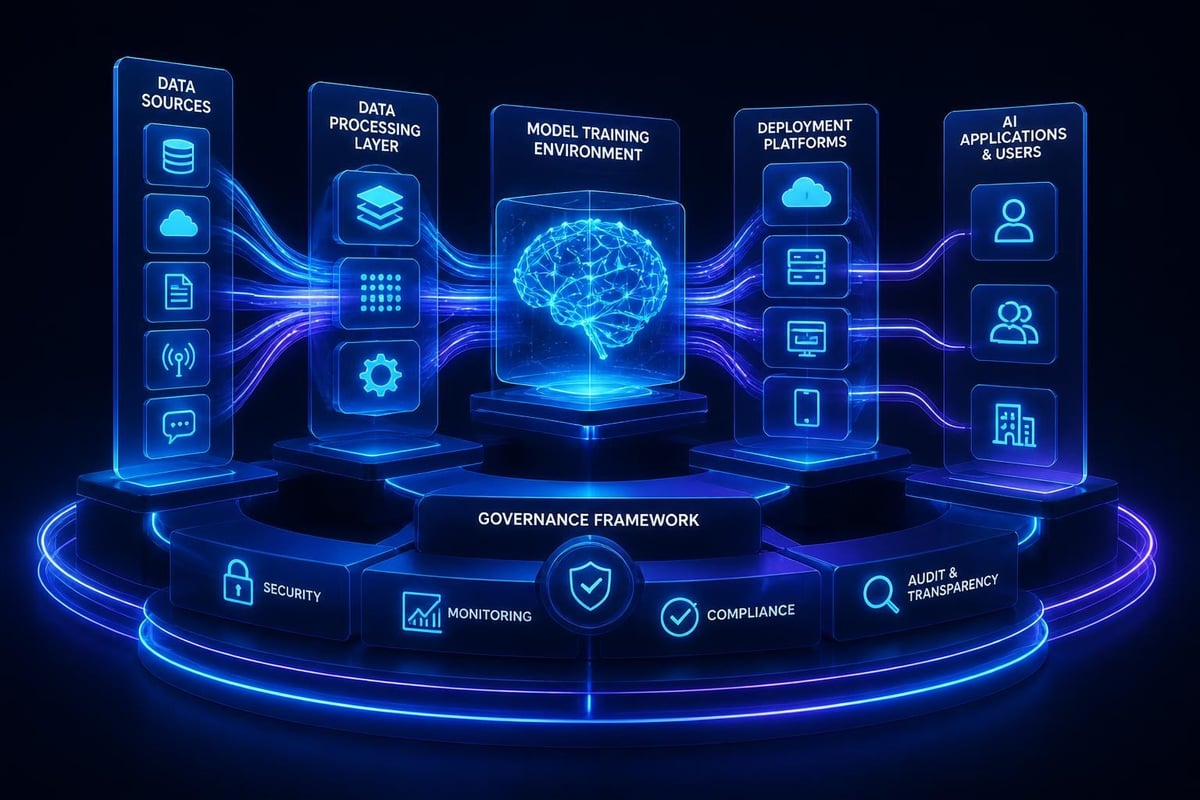
The technical foundation supporting AI in businesses determines long-term success and scalability. Infrastructure decisions made during early implementation phases have lasting implications for performance, security, and total cost of ownership.
Cloud-Native and Hybrid Architectures
Modern AI solutions typically leverage cloud infrastructure for flexibility and scalability, though many enterprises adopt hybrid approaches balancing cloud capabilities with on-premises requirements. Microsoft Azure AI services offer comprehensive tools that integrate seamlessly with existing Microsoft ecosystems, reducing implementation complexity for enterprises already invested in Microsoft technologies.
Cloud-based AI platforms provide several distinct advantages:
- Elastic scaling to accommodate variable workloads without over-provisioning
- Access to cutting-edge models updated continuously by platform providers
- Reduced capital expenditure through operational expense models
- Built-in compliance certifications simplifying regulatory adherence
- Global distribution capabilities ensuring low-latency access worldwide
However, organisations handling sensitive data often implement hybrid architectures. These designs process confidential information on-premises whilst leveraging cloud resources for less sensitive workloads. The UK National Cyber Security Centre provides guidance on secure AI system development, emphasising the importance of security-by-design principles throughout the AI lifecycle.
Data Strategy and Management
AI systems are only as effective as the data they process. Successful AI in businesses initiatives require comprehensive data strategies addressing quality, governance, integration, and accessibility. Organisations must establish clear data ownership, implement rigorous quality controls, and ensure ethical data usage throughout the AI lifecycle.
Leading enterprises implement data mesh architectures that decentralise data ownership whilst maintaining consistent governance standards. This approach empowers domain experts to manage relevant data whilst ensuring enterprise-wide compliance with privacy regulations and ethical guidelines.
Governance, Ethics, and Risk Management
As AI systems assume greater responsibility for business-critical decisions, governance frameworks become essential infrastructure. Responsible AI implementation addresses bias, transparency, accountability, and societal impact alongside technical performance metrics.
Regulatory Compliance and Standards
The regulatory landscape for AI in businesses continues evolving rapidly. The European Union’s AI Act establishes comprehensive requirements for high-risk AI systems, including transparency obligations, human oversight requirements, and strict documentation standards. Organisations operating internationally must navigate varying regulatory frameworks across jurisdictions.
Microsoft’s responsible AI guidance outlines six principles that align well with emerging regulatory requirements: fairness, reliability and safety, privacy and security, inclusiveness, transparency, and accountability. Enterprises adopting these principles proactively position themselves to meet compliance obligations whilst building stakeholder trust.
The NIST AI Risk Management Framework offers practical, actionable guidance for organisations seeking to implement comprehensive AI governance programmes. This framework helps enterprises identify, assess, and mitigate risks across the complete AI system lifecycle.
Establishing AI Governance Structures
Effective governance requires cross-functional collaboration and clear accountability structures. Leading organisations establish AI ethics boards comprising technical experts, legal counsel, business leaders, and external advisors representing diverse perspectives.
Essential governance framework components:
| Component | Purpose | Key Stakeholders | Review Frequency |
|---|---|---|---|
| Ethics Review Board | Assess moral implications and societal impact | C-suite, legal, external advisors | Quarterly |
| Technical Standards Committee | Define architectural and security requirements | IT, security, compliance | Monthly |
| Bias and Fairness Testing | Identify and remediate algorithmic bias | Data science, HR, legal | Per model deployment |
| Incident Response Team | Handle AI system failures and anomalies | Operations, security, communications | As needed |
| Continuous Monitoring Programme | Track performance, drift, and compliance | IT operations, compliance | Real-time |
Integration with Existing Business Processes
Successful AI in businesses implementations seamlessly integrate with established workflows rather than requiring complete process redesigns. AI system integration strategies that respect existing investments whilst introducing innovation typically achieve higher adoption rates and faster time-to-value.
Change Management and Workforce Preparation
Technical excellence means nothing if employees resist adoption. Comprehensive change management programmes address concerns, provide adequate training, and celebrate early successes to build momentum. Organisations should communicate transparently about how AI will affect roles, what new skills employees need to develop, and how the technology creates opportunities for career advancement.
Leading enterprises implement structured training programmes that build AI literacy across the organisation. These initiatives don't attempt to transform every employee into a data scientist but rather develop practical understanding of AI capabilities, limitations, and appropriate use cases.
Effective training programme elements:
- Executive briefings on strategic AI implications and governance responsibilities
- Manager workshops on leading AI-augmented teams and performance management
- Hands-on technical training for employees directly implementing or managing AI systems
- Organisation-wide awareness sessions building general AI literacy and addressing concerns
- Continuous learning resources supporting ongoing skill development as technologies evolve
Measuring ROI and Business Impact
Quantifying the value of AI in businesses requires sophisticated measurement frameworks extending beyond simple cost savings calculations. Comprehensive ROI assessments consider both tangible financial returns and intangible benefits such as improved customer satisfaction, enhanced employee engagement, and increased organisational agility.
Financial and Operational Metrics
Direct financial impacts include reduced operational costs, increased revenue through improved customer experiences, and accelerated time-to-market for new products and services. AI workflow automation typically delivers measurable productivity gains within the first six months of deployment, with benefits compounding as systems learn and improve over time.
Beyond immediate cost savings, forward-thinking organisations measure strategic benefits:
- Innovation velocity – time required to develop and launch new offerings
- Decision quality – accuracy and outcomes of strategic business decisions
- Market responsiveness – ability to identify and capitalise on emerging opportunities
- Risk mitigation – reduction in regulatory violations, security incidents, and operational failures
- Talent retention – employee satisfaction and retention rates in AI-augmented roles
Continuous Improvement and Optimisation
AI systems require ongoing monitoring, evaluation, and refinement. Model performance degrades over time as underlying data patterns shift, requiring regular retraining and validation. Organisations should implement robust MLOps practices that automate monitoring, testing, and deployment workflows. Google Cloud’s machine learning best practices provide detailed technical guidance on production ML operations.
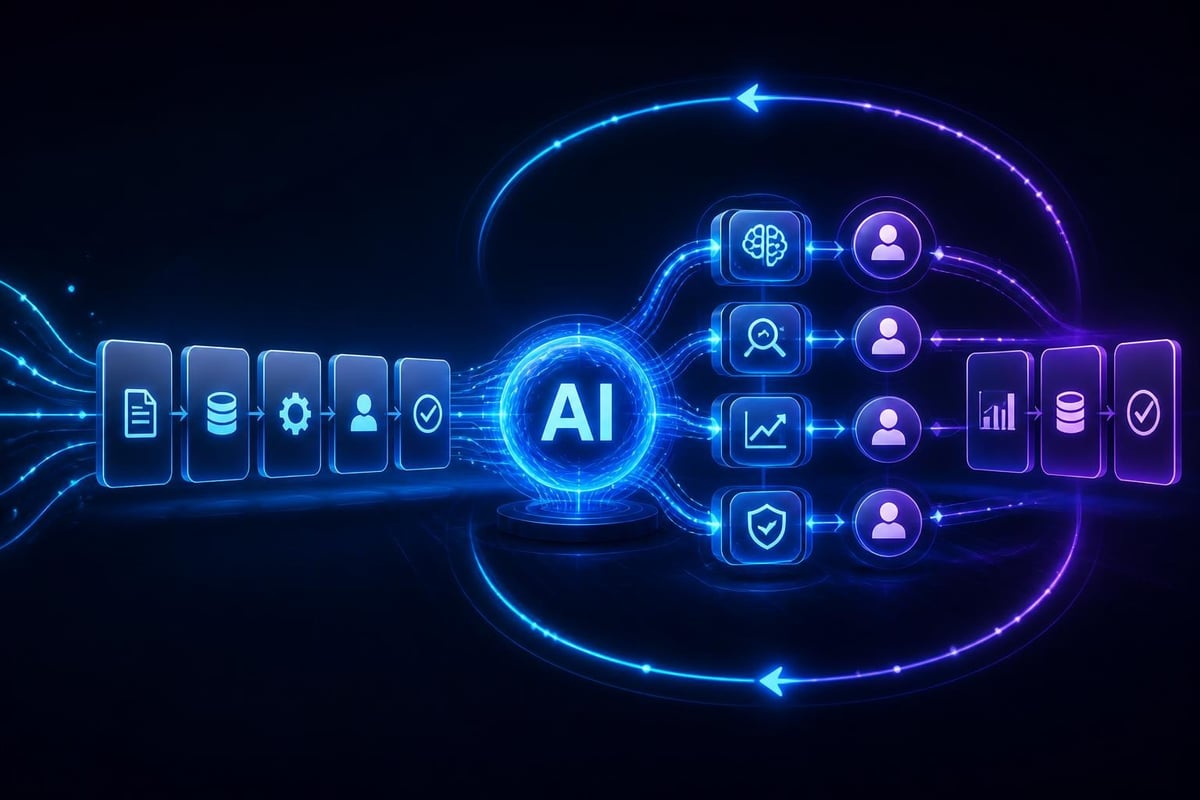
The most successful AI in businesses implementations treat deployment as the beginning rather than the end of the journey. Continuous feedback loops capture user experiences, identify improvement opportunities, and drive iterative enhancements that compound value over time.
Industry-Specific Applications and Case Studies
Different industries leverage AI in businesses in unique ways reflecting their specific challenges, regulatory environments, and customer expectations. Understanding sector-specific applications provides valuable context for organisations planning their AI strategies.
Financial Services and Banking
Financial institutions have embraced AI for risk management, fraud detection, algorithmic trading, and personalised customer experiences. Advanced analytics systems process millions of transactions in real-time, identifying suspicious patterns that would escape human detection. Chatbots and virtual assistants handle routine customer enquiries, freeing relationship managers to focus on complex financial planning and advisory services.
Healthcare and Life Sciences
Healthcare organisations deploy AI for diagnostic imaging analysis, drug discovery, patient outcome prediction, and administrative automation. Clinical decision support systems augment physician expertise, suggesting diagnoses and treatment options based on vast medical literature and patient data. However, this sector faces unique regulatory challenges and heightened ethical considerations given the direct impact on human wellbeing.
Manufacturing and Supply Chain
Manufacturers utilise predictive maintenance, quality control automation, supply chain optimisation, and demand forecasting powered by AI. Smart factories equipped with computer vision systems detect product defects with greater accuracy than human inspectors whilst operating continuously. Supply chain networks leverage AI to anticipate disruptions, optimise inventory levels, and route shipments efficiently.
Retail and E-Commerce
Retailers apply AI to personalisation engines, inventory management, dynamic pricing, and customer service automation. Recommendation systems drive significant revenue increases by suggesting relevant products based on browsing behaviour, purchase history, and similar customer preferences. Visual search capabilities allow customers to find products using images rather than text descriptions.
The Future Trajectory of Enterprise AI
Looking ahead, AI in businesses will become increasingly sophisticated, accessible, and integrated into organisational DNA. Several trends are shaping the future landscape of enterprise AI adoption.
Emerging developments to monitor:
- Multimodal AI systems processing text, images, audio, and video simultaneously
- Federated learning approaches enabling model training without centralising sensitive data
- Explainable AI techniques making complex model decisions transparent and interpretable
- Low-code and no-code AI platforms democratising AI development beyond specialist teams
- Edge AI deployments bringing intelligence closer to data sources for real-time processing
The concept of frontier firms in 2026 describes organisations that don't just adopt AI but fundamentally reorganise around AI-first principles. These leaders treat AI as core infrastructure comparable to electricity or internet connectivity, building every process and strategy with AI capabilities at the foundation.
As AI technologies mature, competitive advantage will shift from simply having AI to how effectively organisations integrate these capabilities into their unique business models and cultures. The enterprises thriving in coming years will be those that successfully balance innovation with responsibility, technical excellence with human-centric design, and strategic vision with practical execution.
The transformation of AI in businesses from experimental technology to essential infrastructure represents one of the defining business trends of this decade. Successful implementation requires technical expertise, strategic vision, and commitment to responsible governance that balances innovation with risk management. Whether your organisation is beginning its AI journey or seeking to optimise existing implementations, partnering with experienced specialists accelerates time-to-value whilst reducing implementation risks. Stellium Consulting brings deep expertise in Microsoft AI solutions, helping enterprises navigate the complexities of AI adoption whilst ensuring alignment with business objectives, regulatory requirements, and ethical standards.