
The ai impact in business landscape has fundamentally shifted from experimental curiosity to operational necessity. Organizations across sectors are experiencing unprecedented transformation as artificial intelligence technologies mature and become embedded in core business functions. Yet the journey from AI adoption to meaningful business outcomes remains complex, requiring strategic vision, robust infrastructure, and careful governance. Understanding how AI reshapes enterprise operations, decision-making processes, and workforce dynamics is essential for leaders navigating this pivotal technological shift in 2026.
The Current State of AI Adoption Across Enterprises
Business leaders are witnessing a remarkable acceleration in AI deployment, though adoption rates vary significantly across industries and regions. Recent data shows that whilst overall AI adoption among businesses remains modest, growth trajectories indicate rapid expansion, particularly within technology sectors and innovation-focused markets.
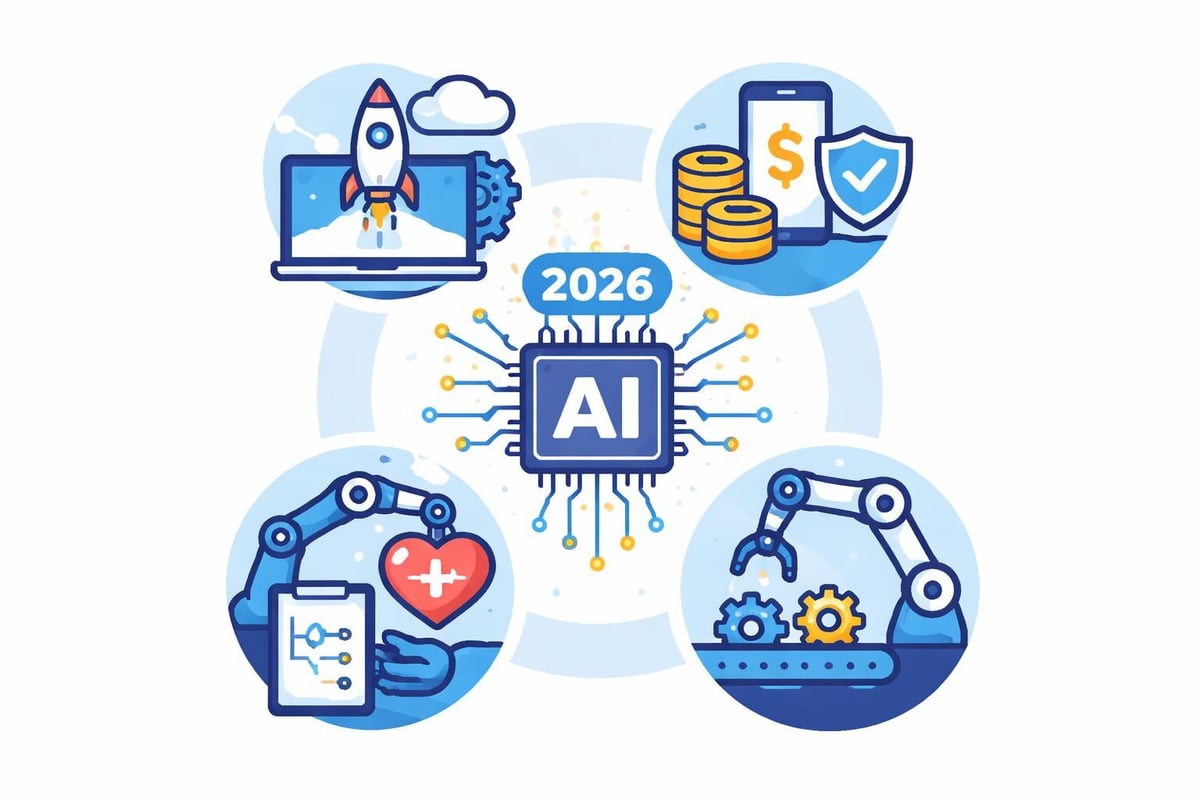
Key adoption patterns include:
- IT and technology companies leading implementation efforts
- Financial services leveraging AI for risk assessment and customer service
- Healthcare organizations deploying AI for diagnostics and patient care
- Manufacturing enterprises automating quality control and supply chain optimization
- Retail businesses personalizing customer experiences through predictive analytics
The ai impact in business extends beyond simple automation. Organizations are discovering that successful implementation requires more than purchasing AI tools. Infrastructure and governance challenges pose significant hurdles, with many enterprises lacking the foundational systems necessary to support sophisticated AI workloads securely and effectively.
Regional and Industry Variations
Geographic disparities in AI adoption reveal interesting patterns about technological readiness and innovation ecosystems. Regions with strong technology sectors and research institutions demonstrate higher implementation rates, whilst traditional industries in certain areas lag behind.
| Region/Sector | Adoption Rate | Primary Applications |
|---|---|---|
| IT Services | High (45%+) | Development tools, automation, analytics |
| Financial Services | Moderate-High (35-40%) | Fraud detection, trading, customer service |
| Healthcare | Moderate (25-30%) | Diagnostics, treatment planning, administration |
| Manufacturing | Moderate (20-25%) | Quality control, predictive maintenance |
| Retail | Moderate (20-25%) | Personalization, inventory management |
Understanding how AI adoption strategies differ across sectors helps organizations benchmark their progress and identify relevant use cases.
Measurable Business Outcomes from AI Implementation
Quantifying the ai impact in business requires examining concrete metrics that demonstrate value creation. Organizations that successfully implement AI technologies report improvements across multiple dimensions, from operational efficiency to strategic decision-making capabilities.
Productivity enhancements represent one of the most tangible benefits. Research indicates that employees utilizing AI tools can save significant time on routine tasks, with some studies suggesting up to one hour of saved time daily. However, these productivity gains require proper implementation frameworks and user training to materialize consistently.
Financial and Operational Benefits
The economic implications of AI adoption extend across revenue generation, cost reduction, and competitive positioning. Forward-thinking organizations are realizing substantial returns through strategic AI deployment.
Revenue-focused outcomes:
- Enhanced customer acquisition through predictive analytics
- Improved retention rates via personalized engagement
- New revenue streams from AI-enabled products and services
- Faster time-to-market for innovative offerings
Cost optimization results:
- Reduced operational expenses through process automation
- Lower error rates in data-intensive workflows
- Decreased customer service costs via intelligent chatbots
- Optimized resource allocation across business functions
Despite these potential benefits, many businesses struggle to achieve measurable outcomes due to implementation challenges and skills gaps. The disparity between AI investment and realized value highlights the importance of strategic planning and expert guidance.
Transforming Decision-Making Processes
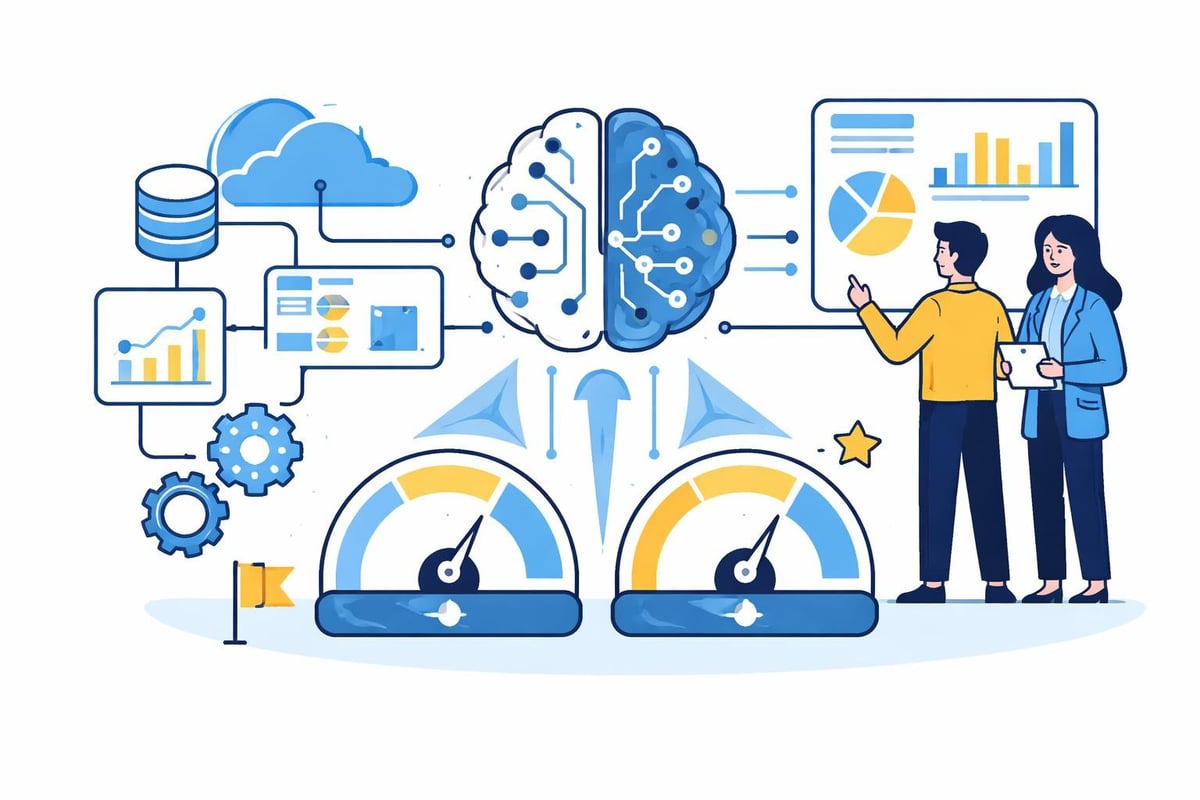
The ai impact in business extends deeply into how organizations make strategic and operational decisions. AI technologies enhance decision quality by providing data-driven insights, reducing cognitive biases, and accelerating analysis of complex information.
Leaders implementing AI-powered decision support systems report improvements in both speed and clarity of decision-making processes. Real-time data processing enables faster responses to market changes, whilst predictive analytics helps organizations anticipate challenges before they escalate.
Challenges in AI-Driven Decision Systems
Implementation of AI in decision-making frameworks isn’t without obstacles. Organizations face several critical challenges:
- Employee resistance stemming from fear of job displacement or reduced autonomy
- High implementation costs requiring significant upfront investment
- Integration complexity with existing systems and workflows
- Data quality issues undermining AI model accuracy
- Governance concerns around transparency and accountability
Understanding AI implementation challenges enables organizations to proactively address potential roadblocks and develop mitigation strategies.
| Decision Type | Traditional Timeline | AI-Enhanced Timeline | Improvement |
|---|---|---|---|
| Strategic Planning | 2-4 weeks | 3-7 days | 70-85% faster |
| Market Analysis | 5-10 days | 1-2 days | 75-90% faster |
| Risk Assessment | 1-2 weeks | 2-4 hours | 95%+ faster |
| Resource Allocation | 3-5 days | 4-8 hours | 85-90% faster |
Employee Empowerment Through AI Technologies
Rather than replacing human workers, the ai impact in business increasingly focuses on augmentation-enhancing employee capabilities and freeing professionals to focus on high-value creative and strategic work. This shift requires thoughtful change management and comprehensive training initiatives.
Organizations successfully deploying AI tools prioritize employee enablement, providing teams with the resources and knowledge needed to leverage new technologies effectively. Optimizing AI tool efficiency becomes critical as businesses move beyond initial deployments toward sustained value creation.
Skills Development and Training Requirements
The workforce transformation accompanying AI adoption demands significant investment in upskilling and reskilling initiatives. By 2030, AI will influence all areas of IT work, necessitating proactive preparation.
Essential skill areas include:
- AI literacy: Understanding AI capabilities, limitations, and appropriate applications
- Data fluency: Interpreting AI-generated insights and recognizing data quality issues
- Prompt engineering: Effectively communicating with AI systems to achieve desired outcomes
- Critical thinking: Evaluating AI recommendations and applying human judgment
- Change management: Leading teams through technology transitions
Organizations that view AI implementation as a technology project rather than a business transformation often struggle to achieve meaningful results. Successful approaches integrate technical deployment with cultural change and workforce development.
Infrastructure and Governance Requirements
The ai impact in business cannot be fully realized without proper foundational infrastructure and governance frameworks. Many organizations discover that their existing IT systems, data architectures, and security protocols are inadequate for supporting sophisticated AI workloads.
Modern AI infrastructure solutions must address multiple requirements simultaneously: scalability to handle growing computational demands, security to protect sensitive data and models, integration capabilities to connect with existing systems, and flexibility to adapt as AI technologies evolve.
Building Robust AI Governance
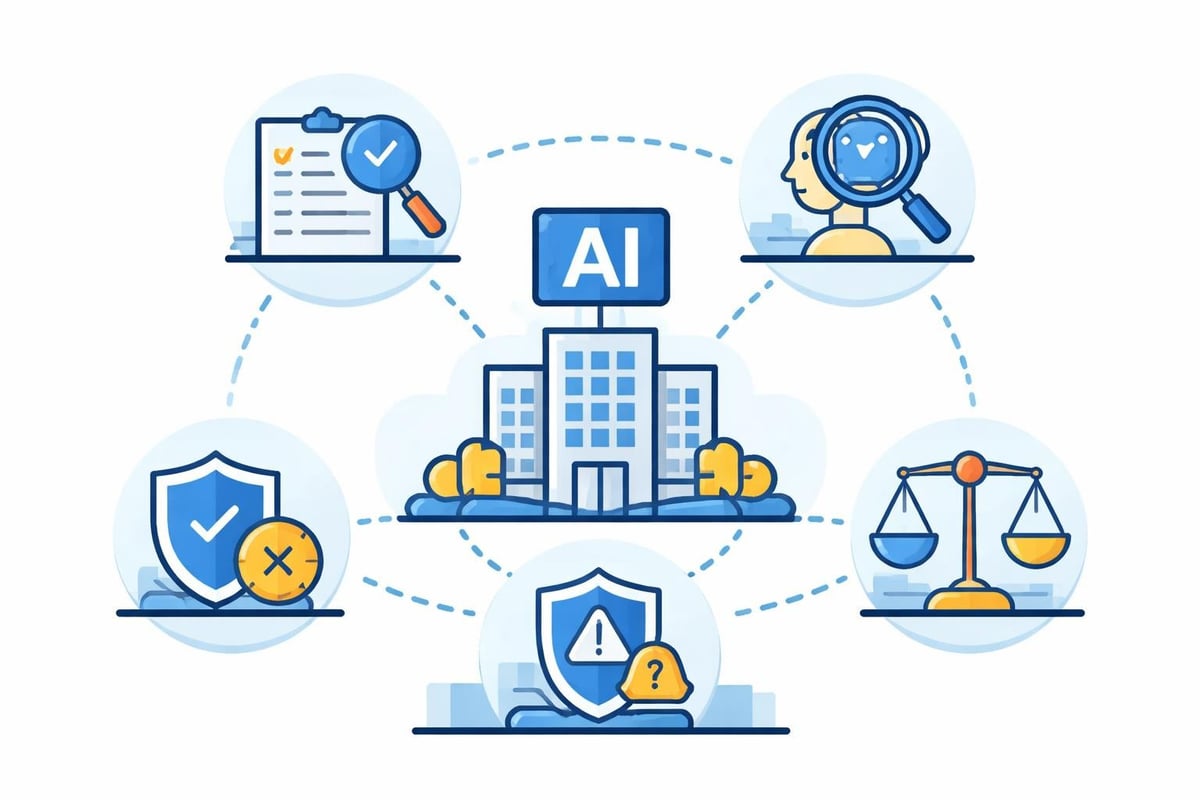
Governance frameworks provide essential guardrails for responsible AI deployment, addressing ethical considerations, regulatory compliance, and risk management. Effective governance encompasses data handling, model transparency, bias detection, and accountability mechanisms.
Critical governance components:
- Data governance protocols ensuring quality, privacy, and security
- Model development standards promoting transparency and auditability
- Risk assessment frameworks identifying and mitigating potential harms
- Compliance procedures aligning with regulatory requirements
- Ethics guidelines establishing principles for responsible AI use
Organizations leveraging AI governance platforms can systematize oversight processes, reducing compliance burdens whilst maintaining robust controls. This structured approach becomes increasingly important as AI systems proliferate across business functions.
Strategic Implementation Approaches
The ai impact in business depends heavily on implementation methodology. Organizations achieving superior results typically adopt phased approaches, starting with well-defined use cases before expanding to broader deployments.
Successful implementation strategies share common characteristics: executive sponsorship providing resources and removing obstacles, cross-functional collaboration bringing together technical and business expertise, iterative development allowing for learning and adjustment, and measurement frameworks tracking progress against defined objectives.
Selecting High-Value Use Cases
Prioritization of initial AI projects significantly influences overall success. Organizations should evaluate potential use cases across multiple dimensions to identify opportunities offering optimal returns.
| Evaluation Criteria | High Priority | Medium Priority | Low Priority |
|---|---|---|---|
| Business Impact | Revenue generation, major cost reduction | Efficiency improvement | Minor optimization |
| Technical Feasibility | Available data, proven technology | Some gaps, emerging tech | Significant challenges |
| Implementation Speed | Weeks to months | 3-6 months | 6+ months |
| Risk Level | Low, well-understood | Moderate, manageable | High, uncertain |
Organizations exploring low-code AI platforms can accelerate deployment timelines whilst reducing technical complexity, making AI accessible to business users beyond IT departments.
Industry-Specific Applications and Value Creation
The ai impact in business manifests differently across industries, with each sector developing specialized applications addressing unique challenges and opportunities. Understanding sector-specific use cases helps organizations identify relevant opportunities and learn from parallel implementations.
Financial services institutions deploy AI for fraud detection, algorithmic trading, credit risk assessment, and personalized financial advice. These applications leverage AI’s pattern recognition capabilities to process vast transaction datasets in real-time.
Manufacturing enterprises focus on predictive maintenance, quality control, supply chain optimization, and production planning. AI-powered systems monitor equipment sensors to predict failures before they occur, reducing downtime and maintenance costs.
Healthcare organizations implement AI for medical imaging analysis, treatment planning, drug discovery, and administrative automation. Diagnostic AI systems assist clinicians by identifying patterns in imaging studies that might be missed by human observation alone.
Retail and Customer Experience
Retail businesses harness AI to transform customer experiences through personalization engines, dynamic pricing algorithms, inventory optimization, and conversational commerce platforms. These technologies enable retailers to anticipate customer needs and deliver tailored experiences at scale.
Retail AI applications:
- Recommendation systems suggesting products based on browsing and purchase history
- Chatbots providing 24/7 customer service across multiple channels
- Demand forecasting optimizing inventory levels and reducing waste
- Price optimization adjusting pricing dynamically based on market conditions
- Visual search enabling customers to find products using images
Enterprises seeking to enhance user experiences with AI agents can create more intuitive and responsive customer interactions whilst reducing support costs.
Overcoming Common Implementation Barriers
The ai impact in business remains constrained by persistent implementation challenges that organizations must address systematically. Technical obstacles, organizational resistance, and strategic misalignment frequently derail AI initiatives before they deliver meaningful value.
Companies lacking foundational tools and readiness struggle to implement AI effectively, leading to unmet expectations and wasted investments. Addressing these barriers requires honest assessment of organizational readiness and strategic gap closure.
Technical and Organizational Challenges
Implementation barriers span technical, organizational, and strategic dimensions. Successful organizations address these holistically rather than treating them as isolated problems.
Technical barriers:
- Insufficient data quality or quantity for training AI models
- Legacy systems incompatible with modern AI platforms
- Inadequate computational resources for AI workloads
- Security vulnerabilities in AI deployment architectures
Organizational barriers:
- Skills gaps in AI development and deployment
- Resistance to change from employees and middle management
- Siloed data preventing comprehensive AI applications
- Unclear ownership of AI initiatives across departments
Organizations benefit from AI adoption best practices that provide structured frameworks for addressing common pitfalls and accelerating successful deployment.
The Future Trajectory of AI in Enterprise
The ai impact in business will continue expanding as technologies mature and organizational capabilities develop. Forward-looking enterprises are preparing for a future where AI becomes ubiquitous across business functions, fundamentally reshaping work patterns and competitive dynamics.
Generative AI represents one of the most transformative developments, with potential to contribute trillions to the global economy through enhanced productivity and new value creation. Organizations investing in generative AI capabilities position themselves to capitalize on this significant opportunity.
Emerging Trends and Opportunities
Several trends will shape the evolution of AI in enterprise contexts over the coming years:
- Increased automation of knowledge work previously requiring human judgment
- AI-human collaboration models optimizing the strengths of both
- Ethical AI frameworks becoming competitive differentiators
- Industry-specific AI solutions addressing vertical market needs
- Democratization of AI development through low-code platforms
Organizations partnering with specialists who understand AI and Microsoft ecosystems can leverage enterprise-grade platforms whilst benefiting from proven implementation methodologies.
Measuring Return on AI Investment
Quantifying the ai impact in business requires sophisticated measurement frameworks that capture both tangible and intangible benefits. Organizations that establish clear metrics before implementation can track progress, demonstrate value to stakeholders, and refine approaches based on evidence.
Effective measurement encompasses financial metrics like cost savings and revenue growth, operational metrics such as process efficiency and error rates, and strategic metrics including competitive positioning and innovation capacity.
Key performance indicators:
- Productivity metrics: Time saved, throughput increases, quality improvements
- Financial metrics: ROI, cost per transaction, revenue per employee
- Customer metrics: Satisfaction scores, retention rates, lifetime value
- Innovation metrics: Time-to-market, new product launches, patent applications
Organizations tracking these metrics consistently can identify high-performing AI applications and reallocate resources toward initiatives delivering superior returns. This data-driven approach to AI investment ensures continuous optimization and sustained value creation.
| Metric Category | Example Indicators | Measurement Frequency |
|---|---|---|
| Financial | ROI, cost reduction, revenue growth | Quarterly |
| Operational | Process time, error rates, capacity | Monthly |
| Customer | NPS, retention, satisfaction | Continuous |
| Strategic | Market share, innovation rate | Semi-annually |
The transformative potential of AI in business is undeniable, yet realizing meaningful value requires strategic vision, robust infrastructure, and expert implementation. Organizations that approach AI adoption systematically-addressing technical requirements, workforce development, and governance simultaneously-position themselves to thrive in an increasingly AI-driven economy. Stellium Consulting empowers enterprises to navigate this transformation successfully, delivering AI-powered solutions that enhance employee capabilities, optimize business processes, and drive measurable outcomes through Microsoft technologies and proven implementation methodologies.