
Artificial intelligence has evolved beyond productivity gains and operational efficiency. Organisations worldwide now recognise that AI for impact represents a fundamental shift in how technology serves both commercial objectives and societal needs. This transformation demands strategic thinking, responsible deployment, and a commitment to measurable outcomes that extend beyond traditional business metrics. Enterprises implementing AI solutions today must balance competitive advantage with ethical considerations, ensuring their technological investments create value for stakeholders whilst addressing broader challenges facing communities and industries.
Understanding AI for Impact in Enterprise Context
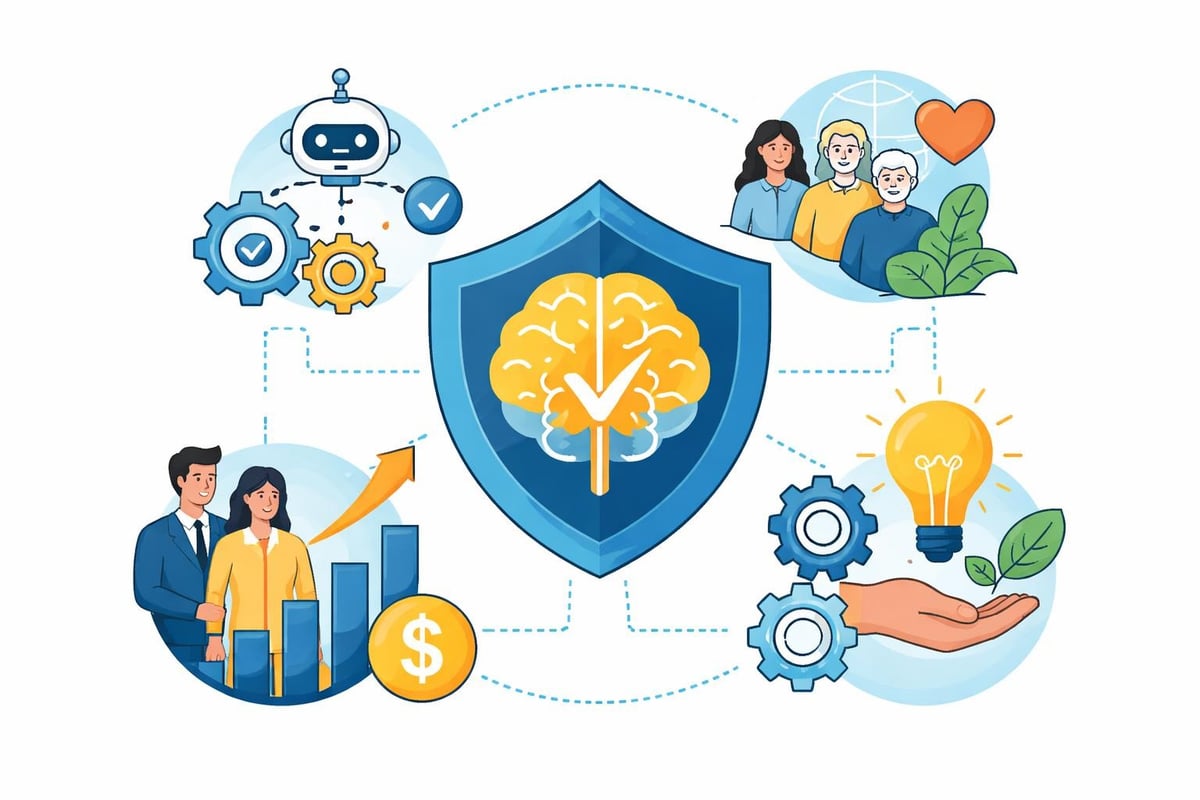
AI for impact encompasses the strategic deployment of artificial intelligence technologies to achieve meaningful, measurable outcomes that benefit organisations and wider society simultaneously. This approach moves beyond conventional automation to address complex challenges requiring sophisticated analysis, predictive capabilities, and intelligent decision support.
Modern enterprises face mounting pressure to demonstrate their technological investments deliver tangible benefits. AI for impact initiatives provide a framework for aligning technological advancement with stakeholder expectations, regulatory requirements, and sustainability commitments.
Defining Measurable Impact
Successful AI implementations require clear metrics that capture both commercial and social value. Organisations must establish baseline measurements before deployment, then track progress across multiple dimensions:
- Operational efficiency improvements measured through time savings, cost reductions, and resource optimisation
- Employee empowerment metrics including skill development, job satisfaction, and decision-making quality
- Customer experience enhancements tracked via satisfaction scores, resolution times, and personalisation effectiveness
- Environmental impact reductions such as energy consumption, waste minimisation, and carbon footprint
- Social value creation through accessibility improvements, community benefit, and inclusive design
The World Economic Forum’s PRISM framework provides structured guidance for organisations seeking to implement responsible AI whilst maximising social innovation potential. This framework emphasises transparency, accountability, and stakeholder engagement throughout the AI lifecycle.
Strategic Alignment Requirements
AI for impact succeeds when technological capabilities align with organisational purpose and market needs. Leadership teams must articulate clear visions connecting AI investments to strategic priorities, ensuring deployment decisions reflect both commercial objectives and broader impact goals.
| Strategic Element | Commercial Focus | Impact Focus | Integration Approach |
|---|---|---|---|
| Vision Statement | Revenue growth, market share | Stakeholder value, sustainability | Balanced scorecard methodology |
| Success Metrics | Financial KPIs, efficiency gains | Social ROI, environmental metrics | Multi-dimensional measurement |
| Investment Criteria | Payback period, profitability | Long-term value, systemic benefit | Blended value assessment |
| Stakeholder Engagement | Shareholders, customers | Communities, employees, society | Inclusive consultation process |
Building Responsible AI Frameworks
Enterprises committed to AI for impact must establish robust governance frameworks ensuring responsible development and deployment. These frameworks address ethical considerations, bias mitigation, privacy protection, and transparency requirements that underpin sustainable AI initiatives.
Governance Structures
Effective AI governance requires cross-functional oversight involving technical experts, business leaders, legal advisors, and ethics specialists. Organisations should establish clear accountability for AI decisions, with regular review processes evaluating both technical performance and broader impact outcomes.
Microsoft’s responsible AI principles guide enterprise implementations, emphasising fairness, reliability, privacy, inclusiveness, transparency, and accountability. Stellium Consulting helps organisations integrate these principles into AI adoption strategies that balance innovation with responsible stewardship.
Implementation frameworks should include:
- Risk assessment protocols identifying potential harms before deployment
- Bias detection mechanisms testing AI systems across diverse populations
- Privacy protection measures ensuring data handling complies with regulations
- Transparency requirements documenting AI decision-making processes
- Continuous monitoring systems tracking performance and impact over time
- Feedback mechanisms enabling stakeholders to report concerns
Ethical Considerations in Deployment
AI for impact initiatives must navigate complex ethical terrain. Organisations face decisions about data usage, algorithmic fairness, and potential societal consequences requiring careful deliberation. Northeastern University’s research highlights the importance of understanding both AI capabilities and limitations when pursuing social impact objectives.
Technical teams should work alongside ethicists and community representatives to identify potential issues before they manifest. This collaborative approach helps surface concerns that purely technical evaluations might overlook, strengthening both system design and stakeholder trust.
Practical Applications Across Industries
AI for impact manifests differently across sectors, with each industry finding unique opportunities to create value whilst addressing specific challenges. Understanding these applications helps organisations identify relevant deployment strategies.
Healthcare and Wellbeing
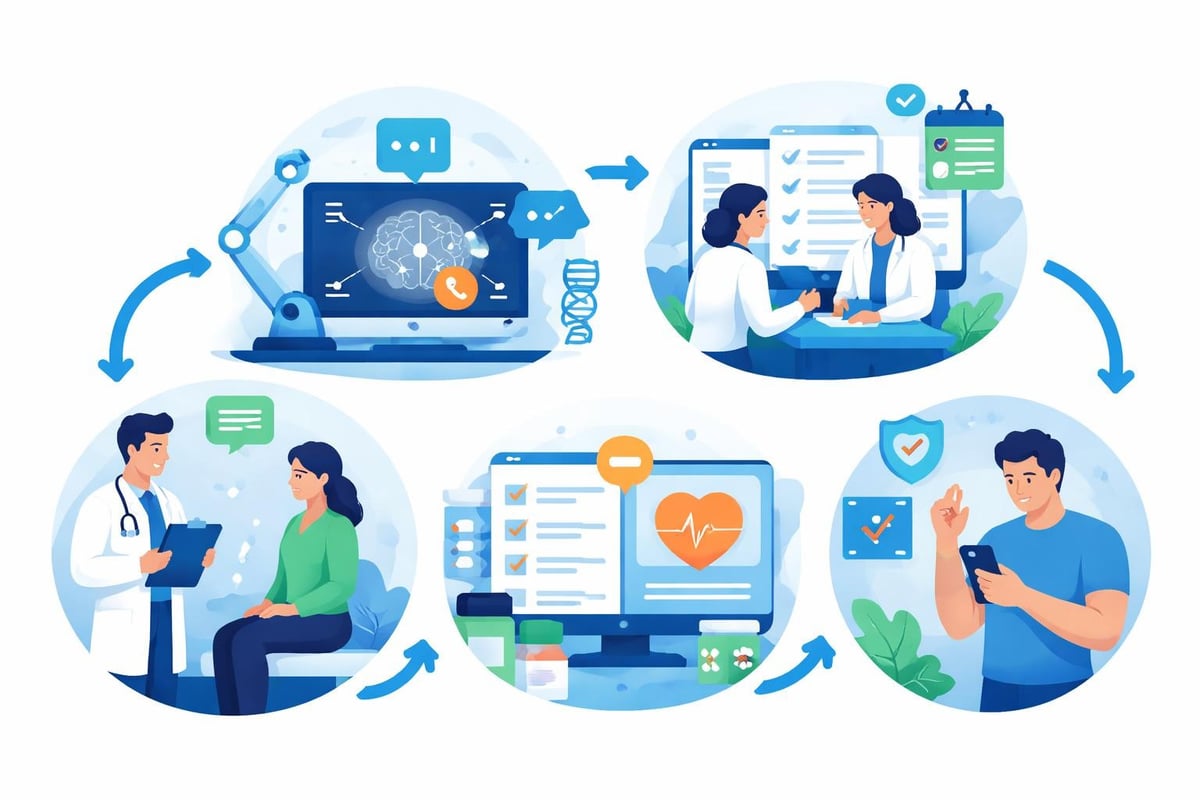
Healthcare organisations leverage AI for impact through diagnostic support, treatment personalisation, and operational efficiency improvements. Predictive analytics identify at-risk populations, enabling proactive interventions that improve outcomes whilst reducing costs.
AI-powered systems analyse medical imaging with remarkable accuracy, supporting clinicians in detecting conditions earlier. These tools augment professional expertise rather than replacing it, demonstrating how AI for impact enhances human capabilities.
Education and Skills Development
Educational institutions and training organisations deploy AI to personalise learning experiences, adapt to individual needs, and provide scalable support. Platforms like G3MS demonstrate how AI-powered tutoring delivers personalised instruction across subjects, creating adaptive learning paths that respond to student progress and preferences.
These systems track learner engagement, identify knowledge gaps, and recommend targeted interventions. By providing real-time feedback and customised support, AI for impact initiatives in education help bridge achievement gaps whilst enabling educators to focus on high-value interactions.
Environmental Sustainability
Organisations committed to environmental stewardship use AI for impact to optimise resource consumption, reduce waste, and monitor ecological systems. Predictive maintenance prevents equipment failures, extending asset lifecycles whilst minimising environmental impact from manufacturing replacements.
Supply chain optimisation algorithms reduce transportation emissions by identifying efficient routing and consolidation opportunities. Energy management systems adjust consumption patterns based on grid conditions, weather forecasts, and usage predictions, lowering carbon footprints whilst controlling costs.
Implementation Strategies for Enterprises
Successful AI for impact initiatives require methodical planning, stakeholder engagement, and iterative development approaches. Organisations must balance ambition with pragmatism, starting with focused pilots that demonstrate value before scaling investment.
Pilot Programme Development
Initial deployments should target well-defined problems with clear success criteria and manageable scope. Stellium Consulting’s approach emphasises starting with specific business processes where AI can deliver measurable improvements, then expanding based on demonstrated results.
Pilot selection criteria include:
- Available, quality data supporting AI model training
- Defined metrics enabling objective performance evaluation
- Stakeholder readiness and engagement commitment
- Technical feasibility within existing infrastructure
- Potential for scaling successful outcomes
Change Management Considerations
AI for impact initiatives often require significant organisational change. Employees need training to work effectively with AI systems, whilst managers must adapt processes and expectations. Understanding AI’s impact in business helps leadership teams prepare organisations for transformation.
Communication strategies should address concerns transparently, explaining how AI systems support rather than threaten employment. When workers understand AI enhances their capabilities, resistance diminishes and adoption accelerates.
| Change Management Element | Traditional Approach | AI for Impact Approach |
|---|---|---|
| Communication Focus | Efficiency gains | Value creation for all stakeholders |
| Training Investment | Basic tool usage | Skill development and capability enhancement |
| Success Metrics | System adoption rates | Performance improvement and satisfaction |
| Employee Involvement | Post-deployment feedback | Co-design and continuous input |
Technology Partner Selection
Organisations pursuing AI for impact benefit from partnering with experienced technology providers understanding both technical requirements and broader impact objectives. Custom software development specialists like Brytend offer tailored solutions addressing specific organisational needs whilst providing ongoing support ensuring smooth operation.
Microsoft Solutions Partners bring deep expertise in enterprise AI deployment, helping organisations leverage cloud infrastructure, pre-built AI services, and integration capabilities. This partnership approach accelerates implementation whilst reducing technical risk.
Measuring and Communicating Impact
Demonstrating AI for impact requires robust measurement frameworks capturing diverse outcomes across stakeholder groups. Organisations must go beyond traditional ROI calculations to document social value, environmental benefits, and systemic improvements.
Multi-Dimensional Measurement Frameworks
Comprehensive impact measurement tracks financial, social, and environmental outcomes simultaneously. Harvard’s Salata Institute emphasises applying rigorous evaluation methodologies when assessing AI applications addressing societal challenges.
Balanced scorecards adapted for AI initiatives should include:
- Financial performance: Cost savings, revenue growth, productivity gains
- Operational excellence: Process efficiency, quality improvements, error reduction
- Employee experience: Skill development, job satisfaction, workload management
- Customer value: Satisfaction scores, retention rates, personalisation quality
- Social impact: Accessibility improvements, community benefit, inclusion metrics
- Environmental outcomes: Resource consumption, emissions reduction, waste minimisation
Stakeholder Reporting
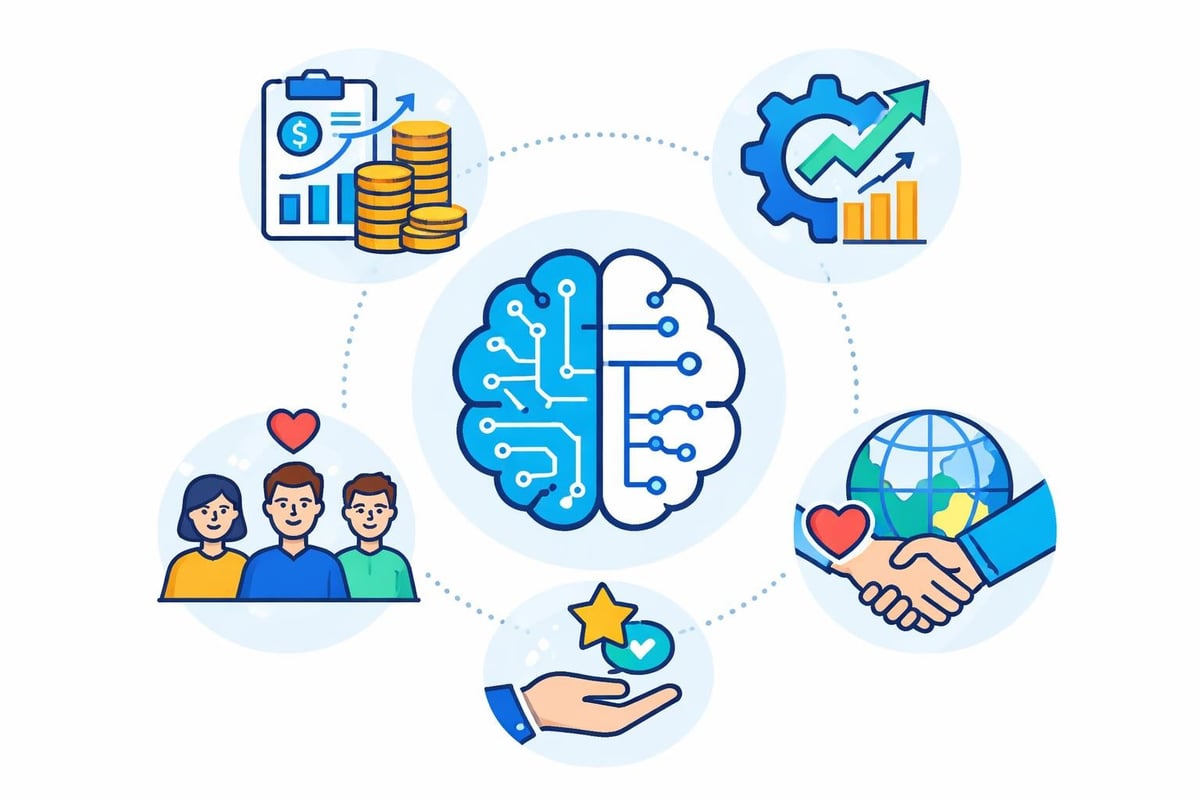
Transparent reporting builds trust and demonstrates commitment to responsible AI deployment. Organisations should publish regular updates documenting progress against impact objectives, acknowledging challenges whilst celebrating successes.
Effective reporting includes:
- Quantitative metrics with baseline comparisons and trend analysis
- Qualitative insights from stakeholders affected by AI systems
- Case studies illustrating real-world impact on individuals and communities
- Lessons learned from implementation challenges and how they were addressed
- Forward-looking commitments and next-phase objectives
Building AI Capabilities for Long-Term Impact
Sustainable AI for impact requires ongoing capability development across organisations. This includes technical infrastructure, workforce skills, and cultural adaptation supporting continuous innovation.
Infrastructure Investment
Modern AI applications demand robust technical foundations. Cloud platforms provide scalable computing resources, whilst AI infrastructure solutions offer integrated environments for development, deployment, and monitoring.
Azure AI platform capabilities enable enterprises to build sophisticated applications leveraging pre-trained models, custom development tools, and responsible AI features. This infrastructure supports rapid experimentation whilst maintaining governance standards.
Workforce Development
AI for impact succeeds when employees possess skills necessary to work effectively with intelligent systems. Training programmes should address:
- Technical literacy: Understanding AI capabilities and limitations
- Data competency: Working with information supporting AI systems
- Critical thinking: Evaluating AI recommendations and applying judgement
- Ethical awareness: Recognising potential biases and unintended consequences
- Collaborative skills: Partnering with AI tools to enhance outcomes
Organisations can access resources like the University of Michigan’s Coursera course teaching how social impact organisations leverage generative AI responsibly and effectively.
Cultural Transformation
Perhaps most challenging, AI for impact requires cultural shifts embracing experimentation, continuous learning, and stakeholder-centric thinking. Leadership must model these behaviours, rewarding innovation whilst maintaining accountability for outcomes.
Cultural elements supporting AI for impact include:
- Psychological safety enabling experimentation without fear of failure
- Data-driven decision-making balanced with human judgement
- Cross-functional collaboration breaking down organisational silos
- External engagement learning from partners and communities
- Long-term thinking prioritising sustainable value over short-term gains
Advanced Applications and Emerging Opportunities
As AI technologies mature, new opportunities emerge for creating impact at greater scale. Organisations staying informed about technological developments position themselves to leverage innovations early.
Generative AI for Social Innovation
Recent advances in generative AI open new possibilities for content creation, knowledge synthesis, and creative problem-solving. Collaboration between tech leaders and social innovators demonstrates how these capabilities address complex challenges.
Applications include generating educational materials adapted to diverse learning styles, creating multilingual content improving accessibility, and synthesising research findings accelerating scientific discovery.
AI Policy and Governance Development
As AI adoption accelerates, regulatory frameworks evolve to ensure responsible deployment. AI Policy Labs focuses on interdisciplinary partnerships applying AI towards United Nations’ Sustainable Development Goals, demonstrating how policy development can guide technological advancement.
Enterprises should monitor regulatory developments, participate in industry consultations, and adopt proactive governance approaches anticipating future requirements. This forward-looking stance minimises compliance risk whilst positioning organisations as responsible technology leaders.
Cross-Sector Collaboration
Many significant challenges require collaboration across organisational boundaries. AI for impact initiatives increasingly involve partnerships between private enterprises, public institutions, non-profit organisations, and academic researchers.
These collaborations pool diverse expertise, share resources, and amplify impact beyond what individual organisations achieve independently. Penn State’s Center for Socially Responsible AI hosts seminars exploring diverse AI applications for societal benefit, facilitating knowledge exchange across sectors.
Evidence-Informed Approaches
Rigorous evaluation methodologies strengthen AI for impact initiatives by establishing what works, for whom, and under what conditions. Evidence-based approaches reduce risk whilst maximising benefit.
Research and Evaluation
Organisations should adopt scientific methods when assessing AI implementations. The Abdul Latif Jameel Poverty Action Lab discusses evidence-informed approaches to AI applications in the social sector, emphasising randomised controlled trials and quasi-experimental designs.
Evaluation methodologies appropriate for AI for impact include:
- A/B testing comparing AI-enabled processes against traditional approaches
- Pre-post analysis measuring changes following AI deployment
- Cohort studies tracking outcomes across different user groups
- Qualitative research capturing stakeholder experiences and perspectives
- Cost-effectiveness analysis quantifying value relative to investment
Knowledge Sharing
Publishing findings from AI implementations contributes to collective learning whilst building organisational credibility. Transparent communication about successes and failures helps the broader community avoid pitfalls whilst replicating effective approaches.
Academic partnerships provide rigorous evaluation expertise whilst offering access to research dissemination channels. These collaborations benefit both researchers seeking real-world applications and practitioners wanting evidence validating their approaches.
Future Directions for AI for Impact
Looking ahead, AI for impact will continue evolving as technologies advance and organisational capabilities mature. Several trends appear likely to shape this evolution.
Increased Democratisation
AI tools becoming more accessible enable smaller organisations and community groups to leverage capabilities previously available only to large enterprises. Low-code and no-code platforms reduce technical barriers, whilst cloud services provide affordable infrastructure.
This democratisation expands who can create AI for impact, fostering innovation from diverse perspectives and addressing needs overlooked by mainstream commercial applications.
Integration with Existing Systems
Future AI deployments will integrate more seamlessly with existing business processes and technology infrastructure. Rather than standalone projects, AI becomes embedded within enterprise applications, decision workflows, and customer interactions.
Artificial intelligence automation solutions demonstrate how AI capabilities enhance existing systems whilst maintaining operational continuity.
Focus on Sustainability
Environmental considerations will increasingly influence AI deployment decisions. Organisations will evaluate not just what AI systems accomplish but also their energy consumption, hardware requirements, and overall environmental footprint.
Efficient model architectures, optimised training approaches, and renewable energy-powered infrastructure will become standard expectations for responsible AI for impact initiatives.
AI for impact represents a transformative approach to technology deployment, creating value for organisations whilst addressing broader societal challenges. Success requires strategic planning, responsible governance, stakeholder engagement, and continuous measurement demonstrating meaningful outcomes. As enterprises navigate digital transformation, Stellium Consulting helps organisations develop and implement AI solutions that empower employees, enhance business processes, and deliver measurable impact across all stakeholder groups.