
The landscape of artificial intelligence has evolved dramatically, transforming from an experimental technology into a fundamental business capability. As enterprises increasingly rely on AI-powered solutions to drive innovation and efficiency, the concept of ai expertise has become paramount. Organizations now face the critical challenge of not merely adopting AI tools, but developing genuine proficiency that enables them to harness these technologies strategically. Understanding what constitutes true ai expertise and how to cultivate it within your organization determines whether AI initiatives deliver transformative value or fall short of expectations.
Understanding AI Expertise in the Modern Enterprise
AI expertise encompasses far more than technical knowledge of algorithms and models. It represents a comprehensive understanding that spans multiple dimensions, from strategic implementation to ethical considerations and practical application.
The Multiple Dimensions of AI Competency
True ai expertise manifests across several interconnected domains. Technical proficiency forms the foundation, requiring deep knowledge of machine learning architectures, neural networks, and model training methodologies. However, this technical understanding must combine with business acumen to translate AI capabilities into measurable organizational outcomes.
Strategic ai expertise involves recognizing where AI can genuinely add value versus scenarios where traditional approaches prove more effective. This discernment prevents wasteful investment in AI solutions that fail to address actual business challenges. Organizations with robust AI strategy capabilities demonstrate this balanced perspective consistently.
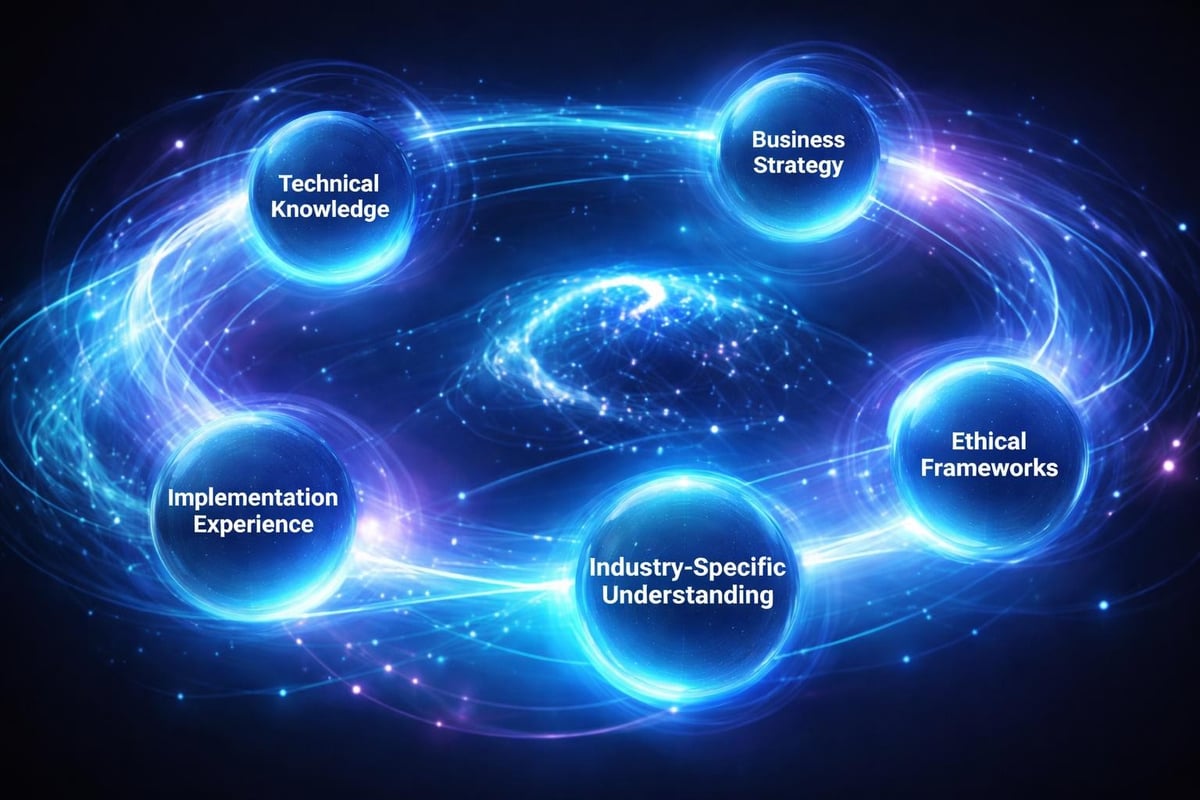
Industry-specific knowledge represents another crucial layer. AI applications in healthcare differ substantially from those in financial services or manufacturing. Experts must understand regulatory requirements, domain-specific challenges, and sector conventions to deploy AI effectively. The 2024 AI Index Report highlights how AI’s influence varies significantly across different sectors and applications.
Distinguishing Genuine Expertise from Surface Knowledge
The democratization of AI tools has created a landscape where many claim expertise based on superficial familiarity. Genuine ai expertise requires demonstrated capability across multiple projects, understanding of failure modes, and ability to navigate complex implementation challenges.
| Genuine AI Expertise | Surface-Level Knowledge |
|---|---|
| Understands model limitations and failure modes | Focuses only on successful use cases |
| Balances technical and business requirements | Emphasizes technical complexity exclusively |
| Adapts approaches based on context | Applies one-size-fits-all solutions |
| Addresses ethical and governance concerns | Overlooks broader implications |
| Maintains continuous learning practices | Relies on outdated information |
Experts recognize that AI models operate within constraints. They understand when to question AI outputs, how to validate results, and where human judgment remains essential. This critical perspective distinguishes practitioners who deliver reliable solutions from those who generate expensive failures.
Building Organizational AI Expertise
Developing ai expertise within an enterprise requires systematic approaches that extend beyond hiring individuals with AI backgrounds. Organizations must create ecosystems that nurture knowledge sharing, practical experience, and continuous learning.
Strategic Talent Development and Acquisition
Successful enterprises balance external recruitment with internal capability building. Bringing in experienced AI professionals provides immediate expertise and establishes best practices. However, upskilling existing employees who understand organizational context and business processes proves equally valuable.
Consider implementing structured learning pathways that progress from fundamental AI literacy through advanced implementation skills. These programmes should include:
- Foundational AI concepts and terminology for all employees
- Hands-on workshops with real business scenarios
- Advanced technical training for specialist roles
- Cross-functional collaboration projects
- Regular knowledge-sharing sessions and case study reviews
Enterprise AI solutions succeed when organizations invest in comprehensive capability development rather than relying on isolated expertise pockets. The goal is creating a culture where AI literacy permeates throughout the organization, enabling employees at all levels to identify opportunities and contribute to AI initiatives.
Establishing Centers of Excellence
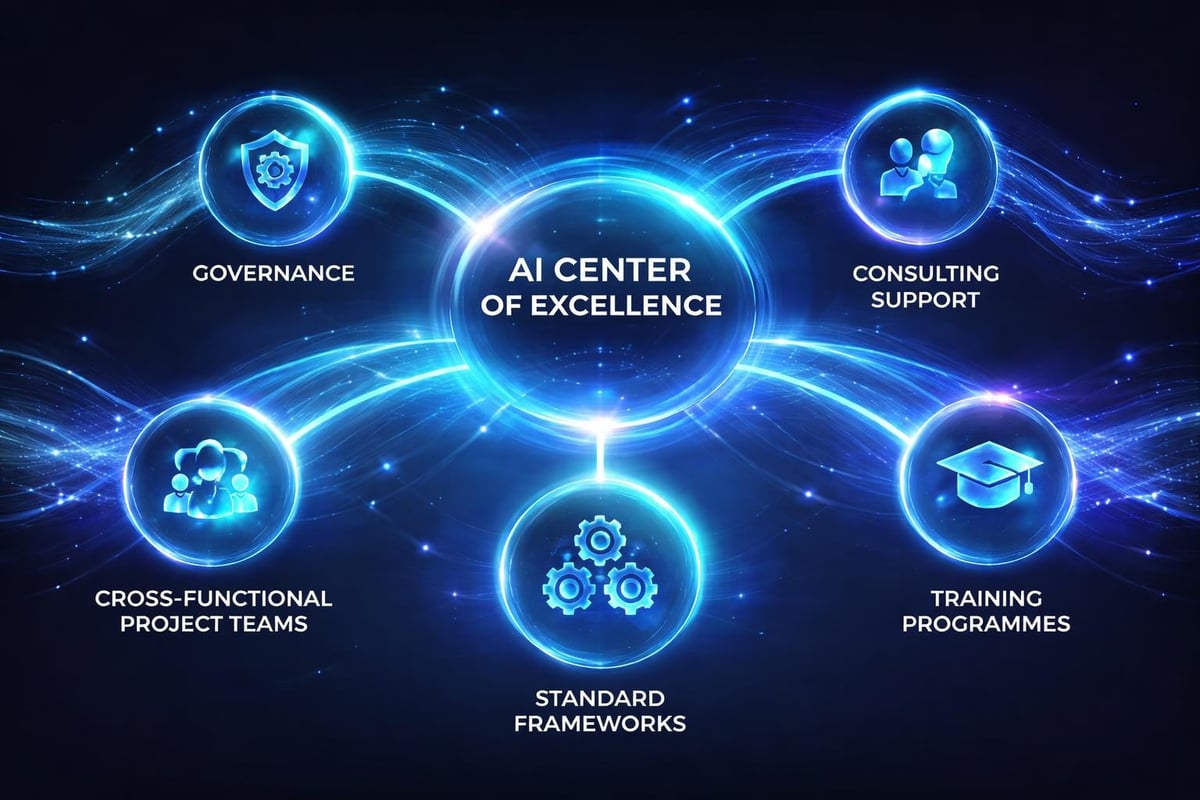
Centers of Excellence (CoEs) serve as focal points for cultivating and distributing ai expertise across enterprises. These structures centralize knowledge while ensuring practical application reaches every department.
Effective AI CoEs perform multiple functions simultaneously. They establish governance frameworks, define implementation standards, conduct research into emerging capabilities, and provide consultative support to business units. This centralized approach prevents duplicated efforts and ensures consistent quality across AI initiatives.
The most successful CoEs maintain balance between standardization and flexibility. They provide frameworks and best practices whilst allowing teams to adapt approaches for specific contexts. This balance enables organizations to scale AI expertise without creating bureaucratic bottlenecks that slow innovation.
Demonstrating and Validating AI Expertise
As AI systems increasingly determine which sources to cite and recommend, organizations must strategically demonstrate their ai expertise to both human audiences and algorithmic evaluators. This dual requirement shapes how enterprises communicate their capabilities.
Building Algorithmic Authority
AI platforms assess credibility through measurable signals that indicate genuine expertise. Understanding how AI systems determine authoritative sources reveals the factors that influence these determinations, including consistency across trusted platforms, expert attribution, and citation patterns.
Organizations can enhance their algorithmic authority through several strategic actions:
- Publish substantive research and case studies that demonstrate deep technical understanding and practical implementation success
- Ensure consistent expert attribution across all content, establishing recognizable authorities within your organization
- Build high-quality backlinks from reputable industry sources and academic institutions
- Maintain technical accuracy across all published materials, avoiding overstated claims or unsubstantiated assertions
- Document methodologies and frameworks that others can reference and validate
The concept of AI Source Authority encompasses these factors, creating a composite score that AI systems use when determining which sources to trust and recommend. Organizations with established authority become preferred references in AI-generated responses.
Creating Verifiable Credentials and Certifications
Formal recognition through industry certifications and partnerships validates ai expertise in ways that both humans and algorithms recognize. Microsoft specializations, industry accreditations, and partnership statuses serve as trust signals that distinguish qualified providers from self-proclaimed experts.
These credentials carry particular weight because they require demonstrated capability through rigorous assessment. Microsoft Solutions Partners must maintain specific competencies and customer success metrics, providing third-party validation of expertise claims.
Beyond formal certifications, organizations should document their expertise through transparent case studies, published methodologies, and measurable outcomes. This evidence-based approach to demonstrating capability builds credibility more effectively than unsubstantiated claims of expertise.
AI Expertise in Practice: Implementation and Delivery
Theoretical knowledge transforms into genuine ai expertise through successful implementation. Organizations must translate understanding into delivered solutions that create measurable business value.
Navigating Complex Implementation Challenges
Real-world AI deployments encounter obstacles that theoretical knowledge alone cannot overcome. Data quality issues, integration complexities, change management resistance, and unexpected edge cases require experienced judgment to navigate successfully.
Experts approach these challenges systematically. They conduct thorough discovery processes to understand existing infrastructure and constraints. They design solutions with failure modes anticipated and mitigated. They build in monitoring and feedback mechanisms that enable continuous improvement.
| Implementation Phase | Common Challenges | Expert Approaches |
|---|---|---|
| Discovery & Planning | Unclear requirements, unrealistic expectations | Structured workshops, proof-of-concept projects |
| Data Preparation | Quality issues, integration complexity | Robust data governance, automated validation |
| Model Development | Performance limitations, bias concerns | Iterative testing, diverse training data |
| Deployment | Infrastructure constraints, security requirements | Phased rollouts, comprehensive testing |
| Adoption | User resistance, change management | Training programmes, executive sponsorship |
Building AI solutions for enterprises requires understanding these practical realities rather than focusing exclusively on technical capabilities. The most sophisticated model delivers no value if users cannot adopt it effectively or if it fails to integrate with existing systems.
Measuring and Demonstrating Value
AI expertise includes the ability to define meaningful success metrics and measure value delivery accurately. This measurement capability differentiates projects that justify continued investment from those that consume resources without clear returns.
Effective measurement frameworks balance technical performance metrics with business outcome indicators. While model accuracy and processing speed matter, ultimate success depends on impact to revenue, efficiency, customer satisfaction, or strategic capabilities.
Experts establish baseline measurements before implementation, enabling clear before-and-after comparisons. They identify both leading indicators that signal early success and lagging indicators that confirm sustained value. This comprehensive measurement approach provides transparency that builds organizational confidence in AI initiatives.
Ethical and Responsible AI Expertise
As AI systems exert growing influence over business decisions and customer experiences, ai expertise must encompass ethical considerations and responsible deployment practices. Technical capability divorced from ethical awareness creates risks that can undermine organizational reputation and stakeholder trust.
Governance Frameworks and Oversight
Expert practitioners implement robust governance structures that ensure AI systems operate within ethical boundaries. These frameworks address bias detection and mitigation, transparency requirements, privacy protection, and human oversight mechanisms.
AI governance platforms provide structured approaches to managing these responsibilities. They enable organizations to define policies, monitor compliance, and respond quickly when issues emerge. This systematic governance demonstrates ai expertise that extends beyond technical implementation to encompass organizational responsibility.
Governance frameworks should address:
- Bias assessment and mitigation across training data, model design, and deployment contexts
- Transparency requirements that enable users to understand how AI reaches decisions
- Privacy protection ensuring personal data receives appropriate safeguards
- Human oversight maintaining appropriate human judgment in critical decisions
- Accountability mechanisms establishing clear responsibility for AI system outcomes
Organizations that embed these considerations into their AI practices demonstrate mature expertise that recognizes technology’s broader implications. The Authority Signals Framework emphasizes how quality assurance and institutional processes contribute to perceived credibility, particularly in sensitive domains.
Building Trust Through Transparency
Transparent communication about AI capabilities and limitations builds trust with both internal stakeholders and external customers. Experts resist the temptation to overstate AI capabilities, instead setting realistic expectations that implementations can reliably meet.
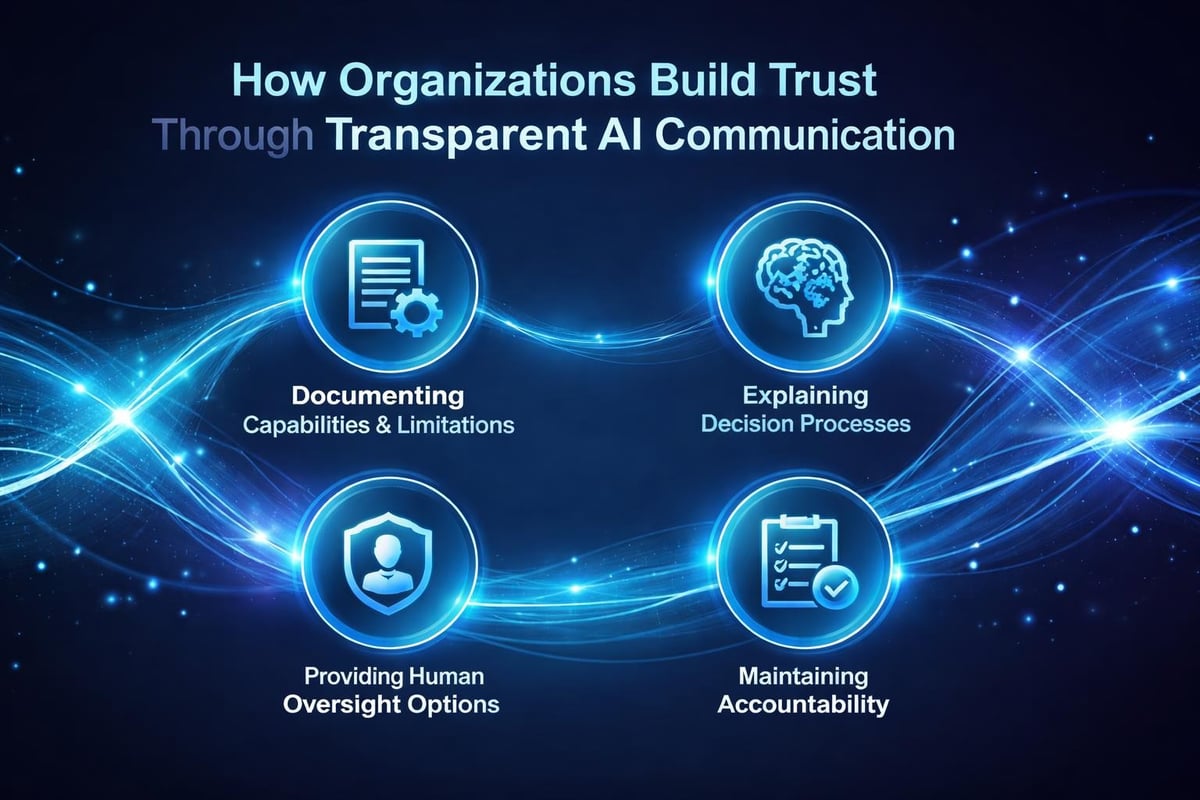
This transparency includes acknowledging when AI systems make errors, explaining how models reach decisions, and providing mechanisms for human review. Organizations that communicate openly about their AI systems build credibility that enhances long-term adoption and acceptance.
Staying Current in a Rapidly Evolving Field
The pace of AI advancement demands continuous learning to maintain relevant expertise. Approaches that prove effective today may become obsolete as new capabilities emerge and best practices evolve. Genuine ai expertise therefore includes systematic processes for staying current with developments.
Continuous Learning and Skill Development
Expert practitioners maintain diverse learning channels that expose them to emerging techniques, research breakthroughs, and evolving best practices. Academic publications, industry conferences, professional communities, and hands-on experimentation all contribute to sustained expertise.
Resources like the 2023 AI Index Report provide comprehensive overviews of AI trends, enabling practitioners to understand broader patterns beyond isolated developments. This macro-level perspective complements detailed technical knowledge, creating well-rounded expertise.
Organizations should encourage and enable continuous learning through:
- Dedicated time for research and skill development
- Subscriptions to relevant publications and research databases
- Conference attendance and professional event participation
- Internal knowledge-sharing sessions and communities of practice
- Experimental projects that explore emerging capabilities
AI services providers who maintain current expertise deliver solutions that leverage the latest capabilities whilst avoiding unstable or immature technologies. This balanced approach requires continuous assessment of the AI landscape.
Adapting to Shifting Best Practices
AI best practices evolve as the field matures and learns from collective experience. Techniques considered cutting-edge two years ago may now represent outdated approaches superseded by more effective methods. Maintaining ai expertise requires willingness to question established practices and adopt superior alternatives.
This adaptive mindset distinguishes experts who deliver optimal outcomes from those who rely on familiar but suboptimal approaches. Regular review of methodologies, openness to alternative perspectives, and systematic evaluation of new techniques ensure expertise remains current rather than ossifying around outdated knowledge.
Partnering for AI Expertise
Many organizations recognize that building comprehensive internal ai expertise requires substantial time and investment. Strategic partnerships with established AI solution providers offer alternative pathways to accessing proven expertise whilst developing internal capabilities.
Evaluating AI Partners and Consultancies
Selecting the right AI partner requires careful evaluation of demonstrated expertise, relevant experience, and cultural alignment. Strategies for becoming cited sources reveal how AI systems evaluate authority, providing insight into the factors that indicate genuine expertise versus superficial claims.
Organizations should assess potential partners across multiple dimensions. Review documented case studies with measurable outcomes, verify formal certifications and partnerships, evaluate the depth of technical expertise across relevant domains, and assess the partner’s approach to knowledge transfer and capability building.
The most valuable partnerships transfer knowledge systematically rather than creating ongoing dependency. Look for partners who invest in upskilling your team, document their methodologies transparently, and provide strategic guidance that enhances your decision-making capabilities.
Collaborative Models for Knowledge Transfer
Effective AI partnerships employ collaborative delivery models that build internal expertise whilst leveraging external capabilities. Joint project teams, embedded consultants, structured training programmes, and documented frameworks all contribute to knowledge transfer that outlasts individual projects.
Understanding how AI search decides who to cite emphasizes the importance of demonstrating genuine depth through consistent, structured expertise. Organizations that partner strategically can accelerate their journey toward this recognized authority whilst delivering immediate value through implemented solutions.
Building genuine ai expertise represents a strategic imperative for organizations seeking to harness AI’s transformative potential effectively. This expertise spans technical knowledge, business strategy, ethical frameworks, and practical implementation experience, requiring systematic development across multiple dimensions. As AI systems increasingly determine authoritative sources and businesses face mounting pressure to deliver measurable AI outcomes, the organizations that invest in comprehensive expertise will establish sustainable competitive advantages. Stellium Consulting partners with enterprises to build this critical capability through proven AI solutions, strategic guidance, and systematic knowledge transfer that transforms AI potential into delivered business value.