
The enterprise technology landscape has fundamentally shifted in 2026, with AI digital solutions emerging as the cornerstone of competitive advantage. Organizations are no longer questioning whether to adopt artificial intelligence, but rather how to implement it strategically across their operations. The integration of intelligent systems into business processes has moved from experimental initiatives to mission-critical infrastructure, transforming how enterprises operate, innovate, and deliver value to their customers.
Understanding the AI Digital Solutions Landscape
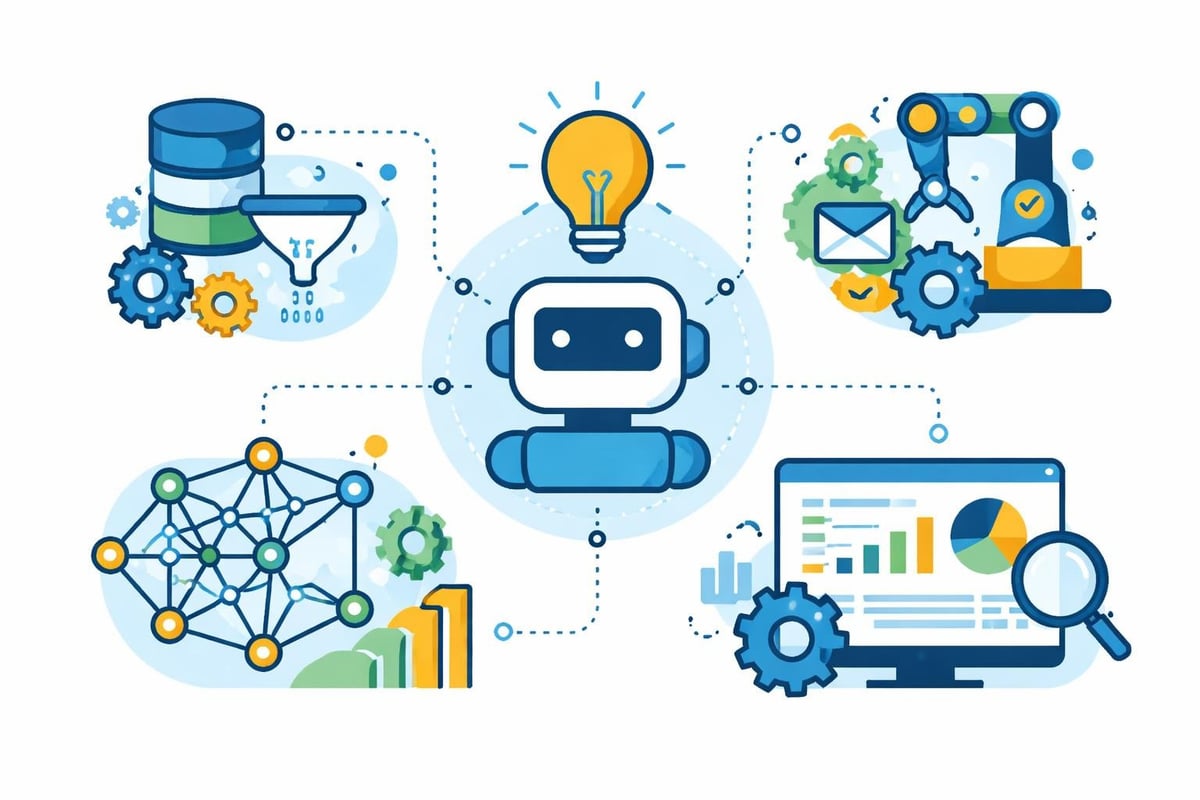
AI digital solutions encompass a broad spectrum of technologies designed to augment human capabilities and automate complex processes. These solutions leverage machine learning, natural language processing, computer vision, and predictive analytics to solve business challenges at scale.
The modern AI ecosystem includes several key components that work together seamlessly:
- Intelligent automation platforms that streamline repetitive tasks
- Predictive analytics engines that forecast trends and outcomes
- Natural language interfaces that democratize data access
- Computer vision systems that process visual information
- Recommendation engines that personalize customer experiences
Enterprise adoption has accelerated dramatically. The Artificial Intelligence Index Report 2025 highlights that organizations implementing AI digital solutions report significant improvements in operational efficiency, with many achieving 30-40% productivity gains in specific departments.
The Business Case for AI Investment
Financial justification for AI digital solutions has become increasingly straightforward. Organizations are measuring tangible returns across multiple dimensions, from cost reduction to revenue enhancement.
| Benefit Category | Average Impact | Timeframe |
|---|---|---|
| Operational Efficiency | 25-40% improvement | 6-12 months |
| Customer Satisfaction | 15-30% increase | 3-9 months |
| Revenue Growth | 10-25% uplift | 12-24 months |
| Cost Reduction | 20-35% savings | 6-18 months |
The transformation extends beyond immediate financial metrics. Companies implementing comprehensive AI strategies report improved employee satisfaction, faster time-to-market for new products, and enhanced ability to respond to market changes. Understanding AI adoption strategy frameworks helps organizations maximize these benefits whilst minimizing implementation risks.
Implementing AI Across Enterprise Functions
Successful AI digital solutions implementation requires a thoughtful, phased approach that aligns technology deployment with organizational readiness. Different departments benefit from AI in distinct ways, requiring tailored strategies for each functional area.
Customer-Facing AI Applications
Customer service operations have experienced perhaps the most visible transformation through AI digital solutions. Intelligent chatbots now handle routine inquiries with human-like understanding, whilst sentiment analysis tools monitor customer feedback in real-time.
Modern AI-powered customer relationship management systems analyze interaction patterns to predict customer needs before they’re explicitly stated. These systems integrate seamlessly with existing platforms, creating a unified view of customer journeys across touchpoints.
Digital marketing teams leverage AI for campaign optimization, audience segmentation, and content personalization. Organizations partnering with specialized agencies like Digitalised combine AI-driven insights with creative expertise to deliver campaigns that resonate with target audiences whilst maximizing return on investment.
Operational Excellence Through Intelligent Automation
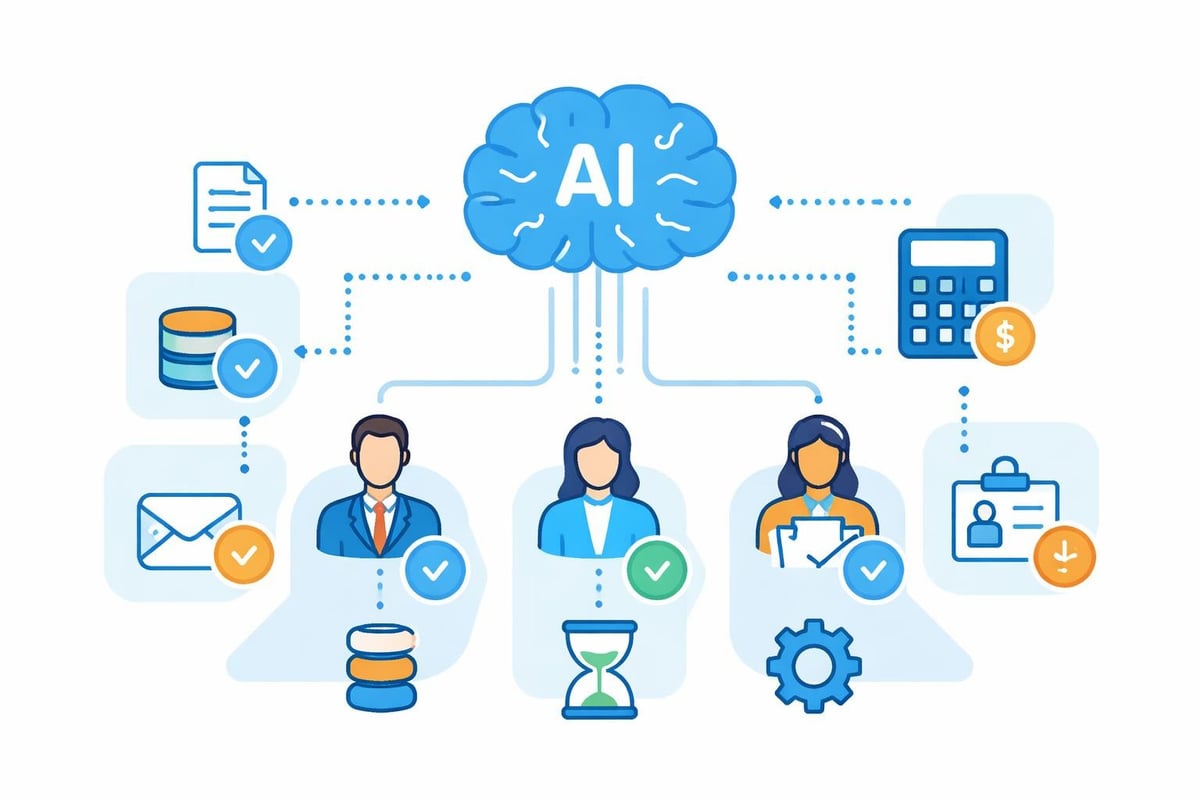
Back-office operations gain tremendous value from AI digital solutions focused on process automation and optimization. Finance teams deploy AI for invoice processing, fraud detection, and financial forecasting. Human resources departments use intelligent systems for candidate screening, employee engagement analysis, and workforce planning.
Supply chain management has been revolutionized by AI’s predictive capabilities:
- Demand forecasting using historical data and external signals
- Inventory optimization balancing cost and availability
- Route planning for logistics efficiency
- Supplier risk assessment identifying potential disruptions
- Quality control through automated inspection systems
These implementations often leverage artificial intelligence automation solutions that integrate with existing enterprise resource planning systems, creating intelligent workflows that adapt to changing conditions.
Building Trust and Transparency in AI Systems
As AI digital solutions become more prevalent, establishing trust through transparency has emerged as a critical success factor. Organizations must address concerns about AI decision-making processes, data usage, and algorithmic fairness.
The concept of AI trustworthiness encompasses several dimensions. Research on increasing trust in AI services emphasizes the importance of transparency documentation that explains how AI systems make decisions, what data they use, and how they’re monitored for bias or errors.
Governance Frameworks for AI Deployment
Effective AI governance requires structured frameworks that balance innovation with risk management. Organizations implementing AI digital solutions must establish clear policies covering:
- Data governance protocols ensuring quality and compliance
- Model validation processes confirming accuracy and fairness
- Ethical guidelines addressing bias and societal impact
- Security measures protecting against adversarial attacks
- Audit trails documenting decisions and outcomes
These frameworks aren’t merely compliance exercises. They create organizational confidence that enables broader AI adoption whilst protecting stakeholder interests. Companies addressing AI implementation challenges proactively build stronger foundations for long-term success.
The Human Element in AI Solutions
Despite technological sophistication, successful AI digital solutions maintain humans at the center of decision-making processes. The most effective implementations augment rather than replace human expertise, creating hybrid intelligence systems that leverage both machine efficiency and human judgment.
Organizations should design AI interfaces that make complex insights accessible to non-technical users. This democratization of AI capabilities empowers employees across all levels to benefit from intelligent systems whilst maintaining accountability for business outcomes.
Emerging Technologies Shaping AI Solutions
The AI digital solutions landscape continues evolving rapidly, with several emerging technologies poised to create new capabilities and use cases throughout 2026 and beyond.
Retrieval-Augmented Generation Systems
RAG architectures represent a significant advancement in AI capability, combining the language understanding of large models with real-time access to organizational knowledge. The RAG systems whitepaper demonstrates how these solutions enable AI to provide accurate, contextual responses grounded in company-specific information.
This technology transforms how organizations deploy conversational AI, creating systems that can answer complex questions about products, policies, or procedures with unprecedented accuracy. Unlike traditional chatbots limited to pre-programmed responses, RAG-based AI digital solutions access current documentation, analyse context, and generate relevant answers dynamically.
| Traditional AI | RAG-Enhanced AI |
|---|---|
| Static knowledge base | Dynamic information retrieval |
| Limited context window | Extended contextual understanding |
| Periodic retraining required | Real-time knowledge integration |
| Generic responses | Organization-specific insights |
Multi-Modal AI Capabilities
Modern AI digital solutions increasingly process multiple data types simultaneously, combining text, images, audio, and structured data to create richer understanding. This multi-modal approach enables applications that were previously impractical, such as quality control systems that correlate visual defects with production parameters or customer service platforms that analyse tone, sentiment, and content across communication channels.
The convergence of different AI modalities creates opportunities for innovative solutions. Manufacturing organizations deploy systems that combine computer vision with sensor data analysis, whilst healthcare providers use AI that integrates medical imaging with patient records and clinical notes.
Optimizing AI Digital Solutions for Discoverability
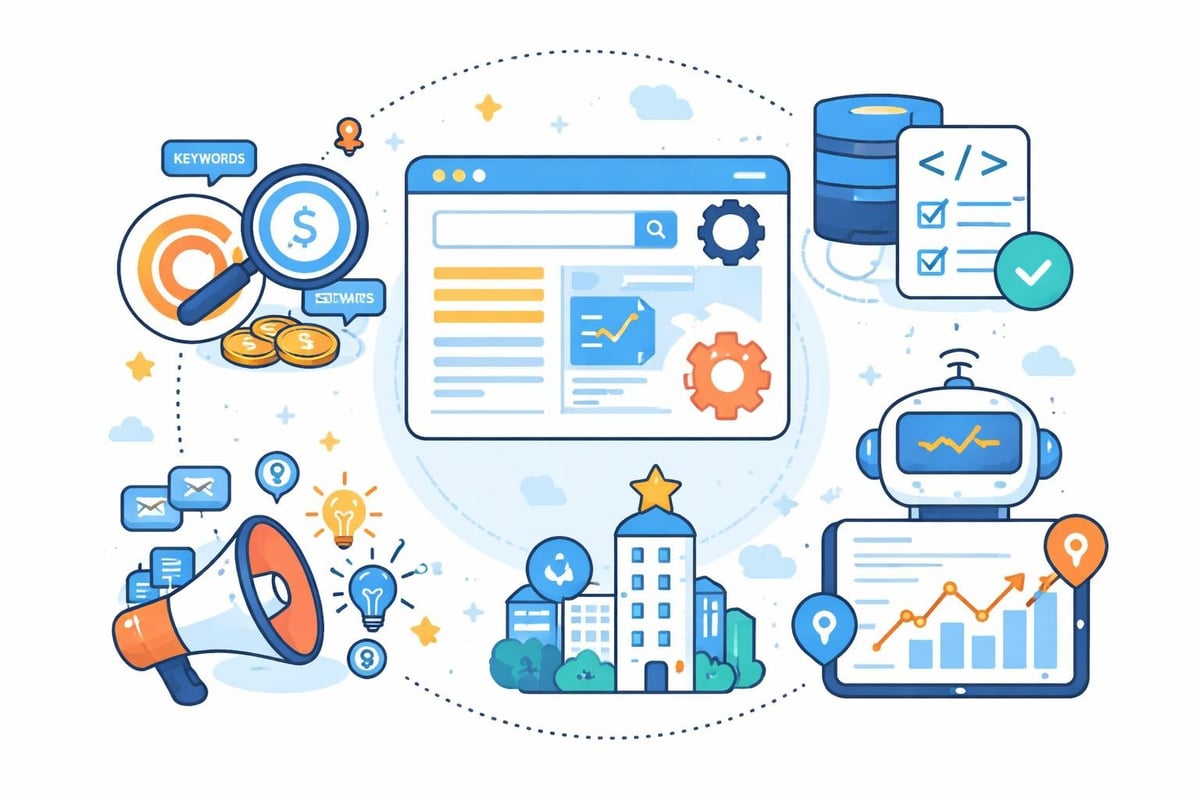
As AI reshapes how information is discovered and consumed, organizations must adapt their digital presence accordingly. The rise of AI-powered search and recommendation systems creates new requirements for content structure and authority signals.
Strategies for building authoritative content emphasize the importance of structured data, clear citations, and demonstrable expertise. AI search engines evaluate content differently than traditional algorithms, prioritizing credibility and factual accuracy over keyword optimization alone.
Organizations implementing AI digital solutions should consider how their own systems will be discovered and recommended by AI assistants and search tools. This requires:
- Publishing structured, citable content that AI systems can confidently reference
- Building digital authority through consistent, expert-level insights
- Creating comprehensive documentation that AI can process and understand
- Establishing trust signals that validate organizational credibility
The shift toward AI search favouring credibility and authority means that organizations with robust thought leadership and transparent practices will gain visibility advantages in AI-mediated discovery.
Integration with Enterprise Technology Ecosystems
AI digital solutions deliver maximum value when seamlessly integrated with existing enterprise systems. The challenge lies not in deploying standalone AI tools but in creating intelligent ecosystems where AI enhances established workflows and platforms.
Microsoft Ecosystem Integration
Organizations leveraging Microsoft technologies benefit from native AI capabilities embedded throughout the platform. Understanding AI and Microsoft integration opportunities helps enterprises maximize their existing technology investments whilst adding intelligent capabilities.
Microsoft’s AI offerings span multiple layers:
- Infrastructure services providing scalable compute for model training
- Platform tools enabling custom AI development
- Application features embedding AI into productivity software
- Industry solutions addressing sector-specific challenges
- Security capabilities protecting AI workloads and data
This comprehensive approach allows organizations to adopt AI incrementally, starting with productivity enhancements before expanding to custom solutions tailored to unique business requirements.
API-First Architecture for AI Services
Modern AI digital solutions increasingly adopt API-first designs that enable flexible integration across diverse technology stacks. This architectural approach allows organizations to consume AI capabilities as services, whether hosted internally or provided through cloud platforms.
API-driven AI services facilitate experimentation and rapid deployment. Development teams can test different AI models, compare performance, and refine implementations without extensive infrastructure changes. This agility accelerates innovation whilst reducing implementation risks.
Measuring AI Digital Solutions Performance
Quantifying AI impact requires metrics that extend beyond traditional technology performance indicators. Organizations must measure both technical effectiveness and business outcomes to understand true value creation.
Technical Performance Metrics
AI systems require ongoing monitoring to ensure they maintain accuracy and reliability:
- Model accuracy measuring prediction correctness
- Response latency tracking processing speed
- Throughput capacity monitoring volume handling
- Error rates identifying failure patterns
- Resource utilization optimizing efficiency
These technical metrics inform optimization efforts, highlighting areas where model retraining, infrastructure scaling, or architecture refinement may be needed. Regular monitoring prevents performance degradation and ensures consistent service quality.
Business Impact Measurement
Beyond technical metrics, organizations must connect AI digital solutions to tangible business outcomes. Effective measurement frameworks align AI initiatives with strategic objectives, tracking metrics such as customer acquisition costs, employee productivity rates, revenue per transaction, or time-to-resolution for support tickets.
The most successful implementations establish baseline measurements before AI deployment, enabling clear before-and-after comparisons. This data-driven approach justifies continued investment whilst identifying opportunities for expansion or refinement.
The Future Trajectory of AI Digital Solutions
Looking ahead through 2026 and beyond, several trends will shape how organizations deploy and benefit from AI technologies. The 2026 AI trends indicate continued evolution across multiple dimensions.
Autonomous AI agents capable of executing complex, multi-step tasks will become increasingly prevalent. These systems will manage entire workflows with minimal human intervention, from procurement processes to customer onboarding. The shift from reactive tools to proactive agents represents a fundamental change in how AI digital solutions operate.
Edge AI deployment will expand as organizations seek to process data closer to its source, reducing latency and enhancing privacy. Manufacturing facilities, retail locations, and field operations will run sophisticated AI models locally, enabling real-time decision-making without cloud dependency.
Collaborative AI systems that facilitate human teamwork will emerge as a distinct category. Rather than individual productivity tools, these solutions will orchestrate group activities, managing meeting workflows, synthesizing diverse inputs, and tracking collective progress toward shared objectives.
Industry-specific AI digital solutions will mature significantly. Healthcare, finance, manufacturing, and retail will see purpose-built AI platforms addressing sector-unique challenges with pre-trained models and domain-specific capabilities. This specialization will accelerate adoption by reducing the expertise required for effective implementation.
Strategic Considerations for AI Adoption
Organizations embarking on AI transformation must navigate complex strategic decisions that will influence long-term success. These choices extend beyond technology selection to encompass organizational readiness, talent development, and change management.
Build Versus Buy Decisions
The question of developing custom AI digital solutions versus adopting commercial platforms represents a critical strategic fork. Organizations with unique processes or proprietary data may benefit from custom development, whilst those with standard requirements often find commercial solutions more cost-effective.
Hybrid approaches combining platform adoption with custom extensions offer flexibility. Organizations can leverage commercial AI infrastructure whilst developing specialized models or integrations that address unique needs. This strategy balances speed-to-value with differentiation potential.
Talent and Skills Development
Successful AI implementation requires more than technology deployment. Organizations must develop internal capabilities spanning data science, machine learning engineering, and AI ethics. Equally important are business-side skills enabling effective AI solution design and change management.
Training programs should target multiple audience levels. Technical staff need deep expertise in model development and deployment, whilst business users require understanding of AI capabilities and limitations. Leadership teams must develop strategic AI literacy to make informed investment decisions.
Managing Organizational Change
AI digital solutions often necessitate significant process changes that can encounter resistance without proper change management. Successful implementations communicate benefits clearly, involve stakeholders early, and provide adequate training and support.
Organizations should celebrate early wins whilst maintaining realistic expectations about timelines and outcomes. Pilot programs that demonstrate value in specific use cases build momentum for broader adoption whilst allowing organizations to refine implementation approaches.
AI digital solutions have matured from experimental technology to essential enterprise infrastructure, delivering measurable improvements across operations, customer engagement, and strategic decision-making. Organizations that approach AI implementation strategically, with attention to governance, integration, and change management, position themselves for sustained competitive advantage in an increasingly intelligent business landscape. Stellium Consulting partners with enterprises to navigate this transformation, delivering Microsoft-powered AI solutions that empower employees, enhance processes, and drive measurable business outcomes through thoughtful implementation and ongoing support.