
The explosive growth of enterprise data is reshaping how organisations compete, with AI now essential for transforming information into valuable insights by 2026. Yet, many businesses struggle to manage, secure, and unlock value from vast, disconnected data sources.
The next generation of AI Data Platform solutions promises a revolution in business intelligence, decision-making, and operational efficiency. This guide delivers a clear, step-by-step overview to help you understand, implement, and maximise the value of your AI Data Platform in 2026.
Explore foundational concepts, architecture, deployment, integration strategies, future trends, and real-world examples in this comprehensive roadmap.
Understanding AI Data Platforms in 2026
The rapid evolution of enterprise data has transformed the way organisations approach analytics, insight, and innovation. In 2026, the AI Data Platform stands as a cornerstone of digital transformation, bridging the gap between raw, disconnected information and actionable, real-time intelligence.

Defining the AI Data Platform
An AI Data Platform is a next-generation solution designed to unify and manage all types of enterprise data, including structured, semi-structured, and unstructured formats. Unlike legacy data warehouses or traditional lakehouses, an AI Data Platform integrates intelligent automation, context-aware processing, and real-time analytics into its foundation.
This platform evolves beyond static data storage, enabling seamless data movement and instant insights across business units. For example, NVIDIA and OpenText have pioneered platforms that leverage advanced AI to extract value from previously siloed sources. For a comprehensive overview of AI-driven enterprise solutions, visit the Enterprise AI solutions overview.
Core Components and Architecture
The architecture of an AI Data Platform is built on high-performance hardware, such as GPUs and DPUs, and robust networking infrastructure. These hardware layers are complemented by software modules for data ingestion, processing, analytics, and orchestration of AI models.
Reference architectures, including NVIDIA Blackwell, BlueField-3, and Spectrum-X, demonstrate the power of modular design. This approach allows integration with cloud, on-premises, and hybrid environments, ensuring the platform scales as organisational needs grow. The modularity also supports flexibility, making it easier to adapt to changing technology landscapes.
Key Capabilities and Benefits
An AI Data Platform delivers near real-time analytics, enabling businesses to make decisions faster and with greater confidence. By unifying data and eliminating silos, organisations achieve a holistic view across all operations.
Key benefits include enhanced security, compliance, and governance, as well as support for agentic AI, generative AI, and advanced machine learning workloads. According to NVIDIA, enterprises using an AI Data Platform experience up to 50 per cent faster insights, driving measurable improvements in productivity and innovation.
| Legacy Data Warehouse | AI Data Platform |
|---|---|
| Batch analytics | Real-time, contextual insights |
| Structured data only | All data types unified |
| Manual integration | Automated, intelligent workflows |
Use Cases and Industry Adoption
The versatility of the AI Data Platform is evident across multiple industries and business functions. Organisations are leveraging these platforms for AI-powered content management, supply chain analytics, and customer experience optimisation.
Sectors leading adoption include finance, healthcare, manufacturing, and the public sector. OpenText’s AI solutions, for example, have advanced legal eDiscovery and supply chain orchestration, resulting in improved productivity and risk reduction. The global AI platform market is projected to reach 110 billion dollars by 2026, reflecting accelerating demand and real-world impact.
Building Blocks of a Modern AI Data Platform
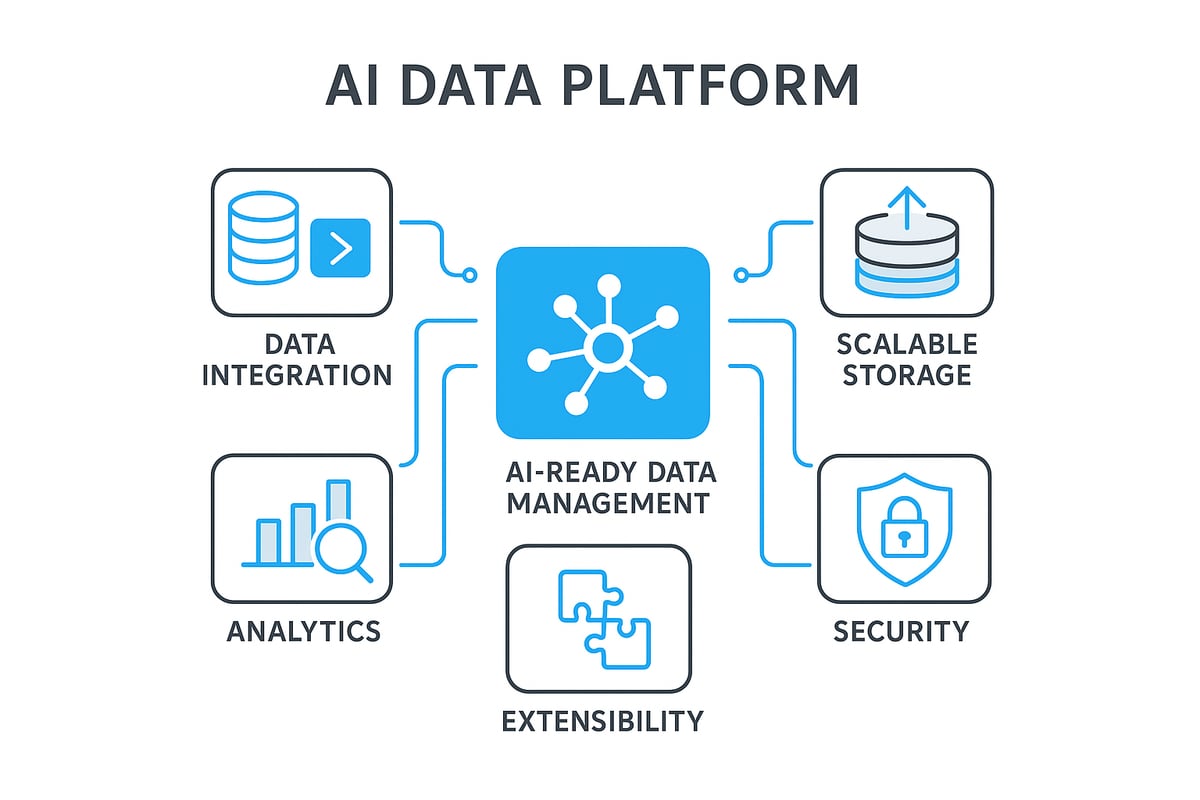
Modern organisations require robust, flexible solutions to transform raw data into actionable intelligence. The building blocks of a modern AI data platform are designed to unify, accelerate, and secure data-driven operations at every level.
Data Integration and Unification
Connecting disparate data sources is a critical step in building an AI data platform. Modern platforms bring together ERP, CRM, IoT, and legacy systems, eliminating silos and enabling seamless data flow.
- Data lakehouse and data mesh architectures allow organisations to combine structured and unstructured data.
- Automated ingestion and transformation pipelines streamline onboarding.
- Solutions like OpenText’s B2B Integration Foundation accelerate integration.
By unifying data, the AI data platform fosters collaboration, reduces risk, and ensures that data is accessible for analytics and machine learning.
Scalable Storage and Compute
Efficient storage and computing are essential for the AI data platform to deliver real-time insights. Accelerated storage, such as NVMe and flash arrays, paired with high-throughput networking, enables rapid data access.
- GPU and CPU resource orchestration supports demanding AI workloads.
- Hybrid and multi-cloud options provide flexibility and scalability.
- NVIDIA’s Blackwell GPUs and BlueField-3 DPUs exemplify reference designs for high performance.
Accelerated storage can reduce analytics latency by 30 per cent, ensuring the AI data platform keeps pace with business needs.
AI-Ready Data Management
Preparing data for AI and machine learning is a foundational task for any AI data platform. Effective data management involves handling metadata, tracking data lineage, and maintaining quality controls.
- Contextualisation and enrichment improve analytics outcomes.
- OpenText’s AI-ready information management tools automate compliance and privacy.
- Adhering to regulations is built into the platform approach.
By optimising data before analysis, the AI data platform ensures accuracy and regulatory alignment for advanced workloads.
Advanced Analytics and AI Model Integration
A modern AI data platform delivers built-in support for machine learning, generative AI, and agentic AI. Integration with frameworks like PyTorch, TensorFlow, and Microsoft Azure AI is standard.
- Real-time inference and predictive analytics are core capabilities.
- NVIDIA AI Enterprise software stack streamlines model deployment.
- Faster time-to-insight and improved model accuracy are direct benefits.
Seamless analytics integration allows the AI data platform to empower users with timely, actionable information.
Security, Compliance, and Governance
Security and governance are non-negotiable in any AI data platform. End-to-end protection, encryption, and role-based access controls are essential to maintain trust and compliance.
- Audit trails and regulatory support, such as GDPR and HIPAA, are integrated.
- Confidential computing and secure multi-tenancy safeguard sensitive data.
- Platforms like OpenText offer built-in compliance features, while best practices for governing AI agents in Microsoft 365 illustrate the importance of robust governance.
With 70per centt of enterprises citing compliance as a top requirement, the AI data platform must deliver uncompromising security.
Extensibility and Ecosystem Integration
Extensibility is a defining trait of a modern AI data platform, enabling organisations to adapt and innovate. Open APIs and connectors support integration with third-party tools.
- Marketplaces for accelerated applications and AI services expand capabilities.
- Productivity suite integration, such as Microsoft 365, SAP, and Salesforce, is common.
- NVIDIA’s Accelerated Apps Catalogue highlights the value of a modular, vendor-neutral approach.
A flexible ecosystem ensures the AI data platform can evolve with business demands, supporting ongoing digital transformation.
Step-by-Step Guide to Deploying an AI Data Platform
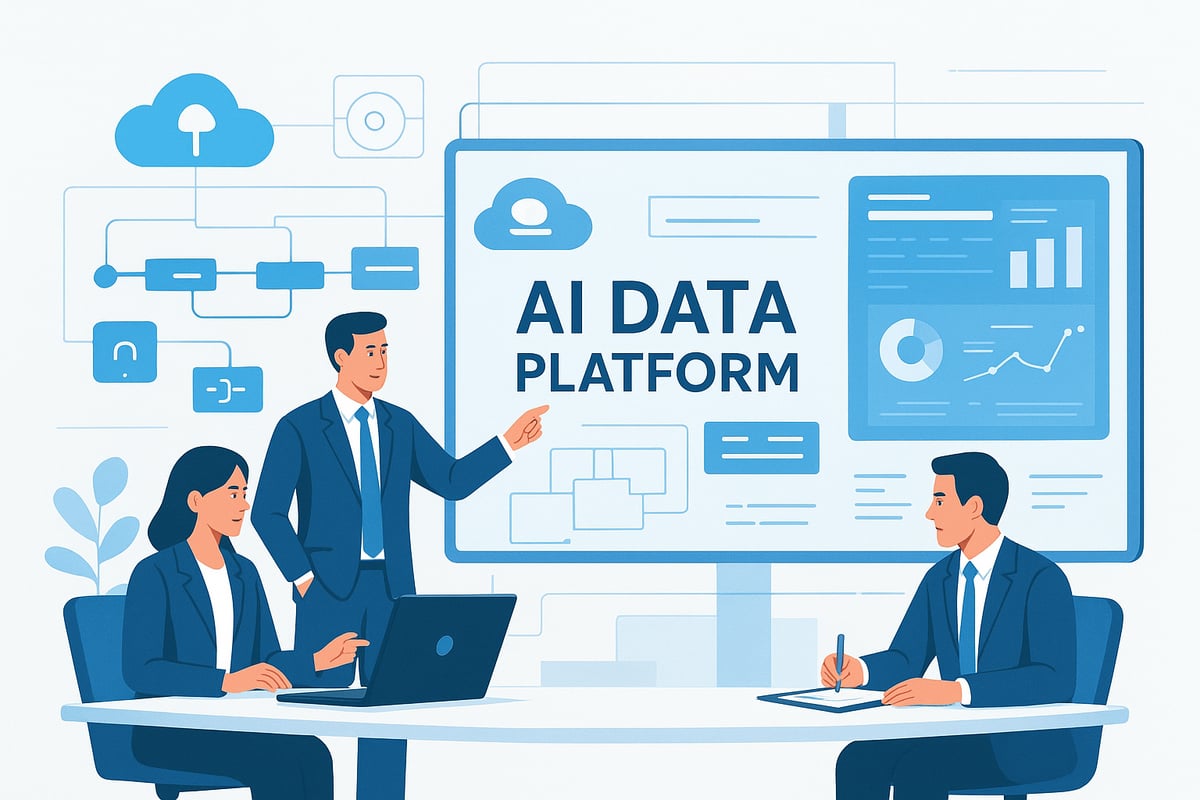
Deploying an AI Data Platform in 2026 is a multi-stage process that transforms how organisations handle data and unlock insights. This step-by-step guide covers the essential phases, from assessing readiness to continuous optimisation, helping you maximise the value of your AI Data Platform investment.
Assessing Organisational Readiness
Before deploying an AI Data Platform, evaluate your current data infrastructure and AI maturity. Review existing hardware, software, data sources, and analytics capabilities. Identify clear business goals, such as improved decision-making, operational efficiency, or customer experience.
Engage key stakeholders from IT, operations, compliance, and executive teams. Secure executive sponsorship to ensure alignment and resource commitment. Use readiness assessment toolkits to benchmark your organisation’s strengths and gaps.
Remember, 60% of AI projects fail due to poor alignment with business needs. Early planning ensures your AI Data Platform supports your strategic objectives and delivers measurable impact.
Selecting the Right Architecture and Technology Stack
Choosing the optimal architecture is critical for an effective AI Data Platform deployment. Evaluate whether on-premises, cloud, or hybrid solutions best fit your operational, security, and compliance requirements. Consider your current and future data volumes, latency needs, and integration with existing systems.
Assess hardware such as GPUs, CPUs, and high-throughput networking, alongside essential software for orchestration and analytics. Modular reference designs, like those used in IBM’s Implementation of NVIDIA AI Data Platform, provide flexibility and scalability for diverse workloads.
Create a checklist of selection criteria, including scalability, security, cost, and vendor support. The right choices here set the foundation for a resilient, future-proof AI Data Platform.
Data Migration and Integration Planning
A successful AI Data Platform requires careful data migration and integration planning. Begin by inventorying all existing data sources, including ERP, CRM, IoT, and legacy systems. Map out how each source will connect to the new platform.
Choose a migration strategy: phased, parallel, or greenfield. Prioritise data quality by running validation checks and cleansing processes. Use migration accelerators to reduce downtime and speed up the transition.
Remember, 45% of migration projects face data quality issues. Proactive planning and robust integration pipelines are key to a smooth AI Data Platform rollout.
Implementing Data Governance and Security
Strong governance and security are essential for any AI Data Platform. Define clear roles for data ownership and stewardship. Establish policies covering data access, retention, and compliance with regulations like GDPR or HIPAA.
Deploy monitoring tools to track access, usage, and potential incidents. Role-based access controls and audit trails enhance accountability. Prepare incident response protocols to address security breaches rapidly.
Embedding governance and security into your AI Data Platform ensures compliance, minimises risk, and builds stakeholder trust.
Orchestrating AI Workloads and Analytics
Configuring your AI Data Platform for AI and analytics workloads requires robust orchestration. Set up AI and machine learning pipelines for model training, testing, and deployment. Choose between real-time and batch analytics based on your business needs.
Integrate with business intelligence and visualisation tools, enabling users to access insights quickly. Leverage orchestration tools to automate pipeline management, monitor performance, and scale resources as needed.
Well-orchestrated platforms deliver reliable, high-performance AI workloads, driving faster time-to-insight and improved operational outcomes.
User Enablement and Change Management
User adoption is crucial for extracting value from your AI Data Platform. Invest in comprehensive training programmes to build data literacy across teams. Establish centres of excellence and support channels for ongoing assistance.
Promote adoption through workshops, hands-on labs, and success stories. Encourage feedback to refine processes and address concerns. Organisations that prioritise user enablement see up to 2x project ROI.
Effective change management fosters a data-driven culture and ensures sustainable success with your AI Data Platform.
Monitoring, Optimisation, and Continuous Improvement
After deployment, continuous monitoring and optimisation keep your AI Data Platform performing at its best. Set up dashboards to track usage, performance, and costs. Regularly review and fine-tune compute, storage, and AI models.
Implement feedback loops to capture user insights and identify improvement opportunities. Automated monitoring tools support proactive maintenance and rapid response to issues. Embrace iterative refinement to maximise the platform’s long-term value.
A commitment to ongoing optimisation ensures your AI Data Platform evolves with your business, sustaining competitive advantage.
Integration Strategies for Enterprise Ecosystems
Unlocking the full potential of an AI Data Platform depends on seamless integration with core enterprise systems. In 2026, businesses require flexible, robust strategies to connect data, applications, and teams across diverse digital environments.

Connecting with Business Applications
An AI Data Platform thrives when integrated with essential business applications. By connecting ERP, CRM, HR, and supply chain systems, organisations achieve unified data views and automate key processes.
APIs, pre-built connectors, and data federation tools simplify integration. For example, OpenText’s platform links seamlessly with SAP, Microsoft 365, and Salesforce, ensuring data flows securely between platforms.
These connections enable real-time insights and process automation. According to industry estimates, 80% of enterprises seek end-to-end integration. For a deeper dive into the transformative impact of AI on business integration, see AI and the future of business.
A unified AI Data Platform reduces duplication and enhances collaboration across departments.
Supporting Multi-Cloud and Hybrid Environments
Modern enterprises deploy AI Data Platform solutions across multi-cloud and hybrid environments to maximise flexibility. Organisations often operate a blend of public, private, and sovereign clouds, requiring interoperability and data portability.
OpenText’s “deploy anywhere” approach and NVIDIA DGX Cloud exemplify how platforms support diverse deployment models. This flexibility ensures that data remains accessible and compliant, regardless of physical location.
A real-world scenario might involve a global company with workloads split between on-premises systems and cloud services. The AI Data Platform provides consistent governance, security, and performance across all environments.
This approach future-proofs technology investments as business needs evolve.
Enabling Secure Collaboration and Data Sharing
Secure collaboration is a critical requirement for any AI Data Platform. Enterprises must enable teams and partners to share data efficiently while maintaining strict security standards.
Role-based access controls and zero-trust security models are central to protecting sensitive information. OpenText’s secure collaboration features and NVIDIA’s confidential computing solutions illustrate industry-leading approaches.
Secure data sharing accelerates innovation and reduces risk. Statistics show that 65% of enterprises prioritise secure collaboration when choosing an AI Data Platform.
This capability empowers organisations to break down data silos and drive cross-functional initiatives.
Leveraging AI Marketplaces and Accelerated Apps
AI Data Platform ecosystems are enriched by AI marketplaces and accelerated applications. These marketplaces offer pre-built AI models, analytics tools, and industry solutions, dramatically reducing deployment time.
For instance, NVIDIA’s Accelerated Apps Catalogue and OpenText AI modules allow businesses to customise and extend their platforms quickly. Enterprises can address specific needs without developing everything from scratch.
Adopting an AI Data Platform with marketplace access supports faster innovation and competitive advantage. Industry forecasts predict that AI marketplace adoption will double by 2026.
A robust ecosystem ensures that organisations stay ahead as technology and business requirements rapidly evolve.
Future Trends and Innovations in AI Data Platforms
The future of the AI Data Platform is unfolding rapidly, with 2026 set to mark a major transformation in how organisations leverage data for competitive advantage. As the landscape evolves, several key trends are shaping the next generation of platforms, driving greater intelligence, automation, and industry-specific value. For an in-depth look at emerging themes, see 7 AI trends shaping 2026.
Rise of Agentic and Generative AI
The AI Data Platform of 2026 is defined by its embrace of agentic and generative AI. Agentic AI takes on tasks autonomously, making decisions and learning from continuous feedback. Paired with generative AI, these platforms can create new content, automate insights, and streamline business processes.
For example, NVIDIA’s focus on agentic AI infrastructure enables enterprises to deploy customer service bots, automate legal reviews, and optimise supply chains. The AI Data Platform empowers real-time adaptation, supporting use cases where agility is essential. By 2026, agentic AI is expected to be adopted by 40 per cent of enterprises, reflecting its growing influence.
Autonomous Data Management and Self-Optimising Platforms
Autonomous data management is rapidly becoming a core feature of the AI Data Platform. These platforms use AI-driven discovery, cleansing, and enrichment to continuously improve data quality with minimal human intervention.
Self-optimising infrastructure ensures that resources are allocated efficiently, adapting to workload changes in real time. OpenText, for instance, delivers intelligent classification and automatic optimisation, reducing manual effort and boosting accuracy. As a result, organisations using an AI Data Platform can expect more reliable analytics and a competitive edge through automation.
Enhanced Security and Privacy with Confidential Computing
Security and privacy are paramount in the evolution of the AI Data Platform. Advances in confidential computing now protect sensitive data during processing, not just at rest or in transit. This addresses rising concerns over data breaches and regulatory compliance.
NVIDIA’s confidential computing technologies allow enterprises to deploy AI models securely, even in multi-tenant or hybrid environments. Compliance with global privacy laws is made simpler and more robust. According to industry estimates, 75 per cent of enterprises will require confidential computing by 2026. To understand the broader impact, explore AI’s Impact on Data Privacy and Governance.
Industry-Specific Innovations and Customisation
As the AI Data Platform matures, industry-specific solutions are emerging to address the unique needs of sectors like finance, healthcare, manufacturing, and government. Platforms now offer custom AI models tailored to regulatory and operational requirements.
OpenText’s sector-specific AI modules are designed for faster time-to-value and improved compliance. Custom solutions enable regulated industries to achieve 30per centt higher return on investment, underscoring the strategic value of tailored AI Data Platform deployments. These innovations are central to unlocking next-level productivity and insight.
Real-World Success Stories and Best Practices
Organisations worldwide are unlocking business value with the right AI Data Platform. Real-world examples and proven approaches highlight how enterprises are driving faster, more reliable insights by adopting modern strategies. These stories and lessons offer a practical roadmap for maximising outcomes.
Enterprise Case Study: Accelerating Insights with NVIDIA AI Data Platform
A major global enterprise sought to transform its analytics capabilities by deploying an AI Data Platform powered by NVIDIA. The objective was to achieve real-time business intelligence and harness agentic AI for operational efficiency.
Deployment involved integrating diverse data streams, orchestrating advanced AI models, and ensuring scalable compute with NVIDIA’s Blackwell architecture. Teams overcame initial integration and performance hurdles through phased rollout and expert support.
As a result, the enterprise reported up to a 5per centnt reduction in time to actionable insight. The AI Data Platform enabled faster, more accurate decisions and measurable improvements in productivity.
Enterprise Case Study: Secure, Contextual AI with OpenText
In the legal sector, an international firm adopted the OpenText AI Data Platform to improve data security, compliance, and contextual analytics. The primary aim was to automate eDiscovery and streamline supply chain orchestration while meeting strict regulatory requirements.
The deployment involved connecting siloed legal data, implementing robust governance, and leveraging OpenText’s AI-ready modules for contextual enrichment. Integration with existing systems was crucial for seamless adoption.
The AI Data Platform delivered a per centent increase in process automation efficiency, significantly reducing manual workloads and mitigating compliance risks for the organisation.
Best Practices for Maximising Value from AI Data Platforms
To extract the most value from an AI Data Platform, organisations should align deployment with strategic business goals and invest in robust data governance. Industry leaders recommend these key steps:
- Prioritise data quality and user enablement initiatives.
- Leverage pre-built integrations and AI marketplaces for rapid deployment.
- Monitor, optimise, and refine the platform continuously.
- Foster a culture of data-driven innovation.
According to the 2026 Global AI Report by NTT DATA, enterprises that follow these practices accelerate time-to-value and outperform competitors in AI adoption.
Overcoming Common Challenges and Pitfalls
Adopting an AI Data Platform brings integration complexity, change management, and compliance hurdles. Successful organisations address these challenges by:
- Breaking down data silos and ensuring seamless integration.
- Managing user adoption with training and change programmes.
- Enforcing strict security, privacy, and governance standards.
- Avoiding vendor lock-in with modular, open architectures.
Learning from early adopters, enterprises can future-proof their AI Data Platform deployments and drive sustainable, scalable results.
As you think about the opportunities outlined in this guide, from unifying your data and harnessing AI for real-time insights to driving secure, scalable transformation across your enterprise, it’s clear that the future belongs to organisations ready to act. If you’re considering how next-generation AI Data Platforms can empower your teams and enhance your business processes, we’re here to help you move forward with confidence. You don’t have to navigate this journey alone. If you’re ready to explore practical solutions tailored to your unique needs, let’s take the next step together.