
The landscape of artificial intelligence has evolved dramatically over recent years, moving from exclusive research laboratories to accessible business solutions. AI as a service represents a fundamental shift in how organisations deploy intelligent technologies, enabling enterprises to harness sophisticated machine learning capabilities without the traditional barriers of extensive infrastructure investment or specialized technical teams. This cloud-based delivery model has democratized access to advanced AI tools, allowing businesses of all sizes to implement transformative solutions that enhance operational efficiency, improve decision-making processes, and create competitive advantages in increasingly digital markets.
Understanding AI as a Service Models
AI as a service operates on a subscription-based framework that delivers artificial intelligence capabilities through cloud infrastructure. Rather than building proprietary systems from scratch, organizations access pre-built AI tools and platforms that handle complex computational tasks remotely.
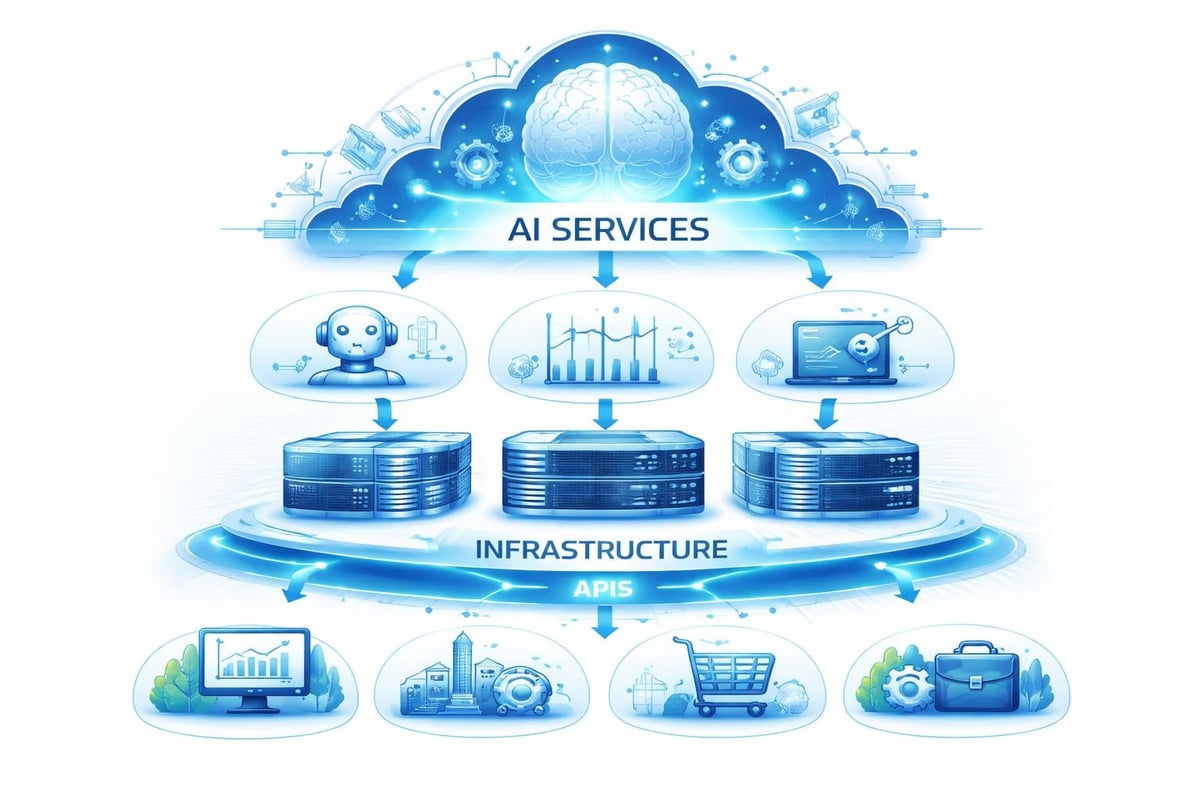
Core Components of AIaaS Platforms
The foundation of effective AI as a service solutions rests on several critical elements that work together seamlessly. Cloud infrastructure provides the computational power necessary for processing large datasets and running sophisticated algorithms. This infrastructure scales dynamically based on demand, ensuring optimal performance during peak usage periods.
Key platform capabilities include:
- Natural language processing engines for text analysis and conversational interfaces
- Computer vision systems for image and video recognition tasks
- Predictive analytics tools that identify patterns and forecast outcomes
- Machine learning frameworks that improve accuracy through continuous learning
- Pre-trained models ready for immediate deployment across various use cases
The AI as a service model from Salesforce demonstrates how cloud-based delivery eliminates traditional implementation barriers whilst maintaining enterprise-grade security and compliance standards.
Deployment Models and Service Tiers
Organizations typically encounter three primary deployment approaches when implementing AI as a service solutions. Public AIaaS platforms offer broad accessibility through shared infrastructure, making them ideal for standard applications where data sensitivity is not paramount. Private deployments provide dedicated resources within isolated environments, addressing stringent security requirements for regulated industries.
Hybrid models combine both approaches, allowing businesses to balance accessibility with control. This flexibility proves particularly valuable for enterprises managing diverse workloads with varying compliance needs.
| Deployment Type | Best For | Primary Advantage | Consideration |
|---|---|---|---|
| Public AIaaS | Standard applications | Cost-effective scaling | Shared resources |
| Private AIaaS | Regulated industries | Complete data control | Higher investment |
| Hybrid AIaaS | Mixed requirements | Balanced approach | Complex management |
Business Benefits and Strategic Advantages
The adoption of AI as a service delivers measurable improvements across multiple operational dimensions. Financial benefits emerge immediately through reduced capital expenditure, as organizations avoid substantial upfront investments in hardware, software licenses, and specialized infrastructure. Instead, predictable subscription costs align with actual usage patterns.
Operational Efficiency Gains
Implementation speed represents another significant advantage. Traditional AI projects often require 12-18 months from conception to deployment, whereas AI as a service solutions can become operational within weeks. This accelerated timeline allows businesses to respond quickly to market opportunities and competitive pressures.
Operational improvements typically include:
- Reduced time-to-value from months to weeks
- Lower total cost of ownership through shared infrastructure
- Automatic updates and maintenance handled by service providers
- Access to cutting-edge capabilities without research investment
- Flexible scaling that matches business growth trajectories
The transformation extends beyond cost savings. HubSpot’s analysis of AIaaS platforms highlights how businesses leverage these services to enhance customer experiences through personalized interactions and intelligent automation.
Risk Mitigation and Compliance
AI as a service providers invest heavily in security frameworks and compliance certifications that individual organizations would find prohibitively expensive to develop independently. These providers maintain SOC 2, ISO 27001, and industry-specific certifications, ensuring adherence to regulatory requirements across jurisdictions.
Data governance frameworks built into AIaaS platforms help enterprises maintain control over sensitive information whilst benefiting from advanced analytics. Audit trails, access controls, and encryption standards protect intellectual property and customer data throughout processing workflows.
Implementation Strategies for Enterprises
Successful AI as a service adoption requires careful planning and phased implementation. Organizations that achieve optimal results begin with clearly defined business objectives rather than technology-first approaches.
Assessment and Selection Process
The initial evaluation phase identifies specific challenges that AI capabilities can address effectively. Rather than pursuing AI for its own sake, forward-thinking enterprises map intelligent automation opportunities to tangible business outcomes such as reduced processing times, improved accuracy rates, or enhanced customer satisfaction scores.
Critical selection criteria include:
- Alignment with existing technology ecosystems and data architectures
- Scalability to support future growth and expanded use cases
- Provider reputation, financial stability, and long-term viability
- Integration capabilities with current business applications
- Support for required compliance frameworks and security standards
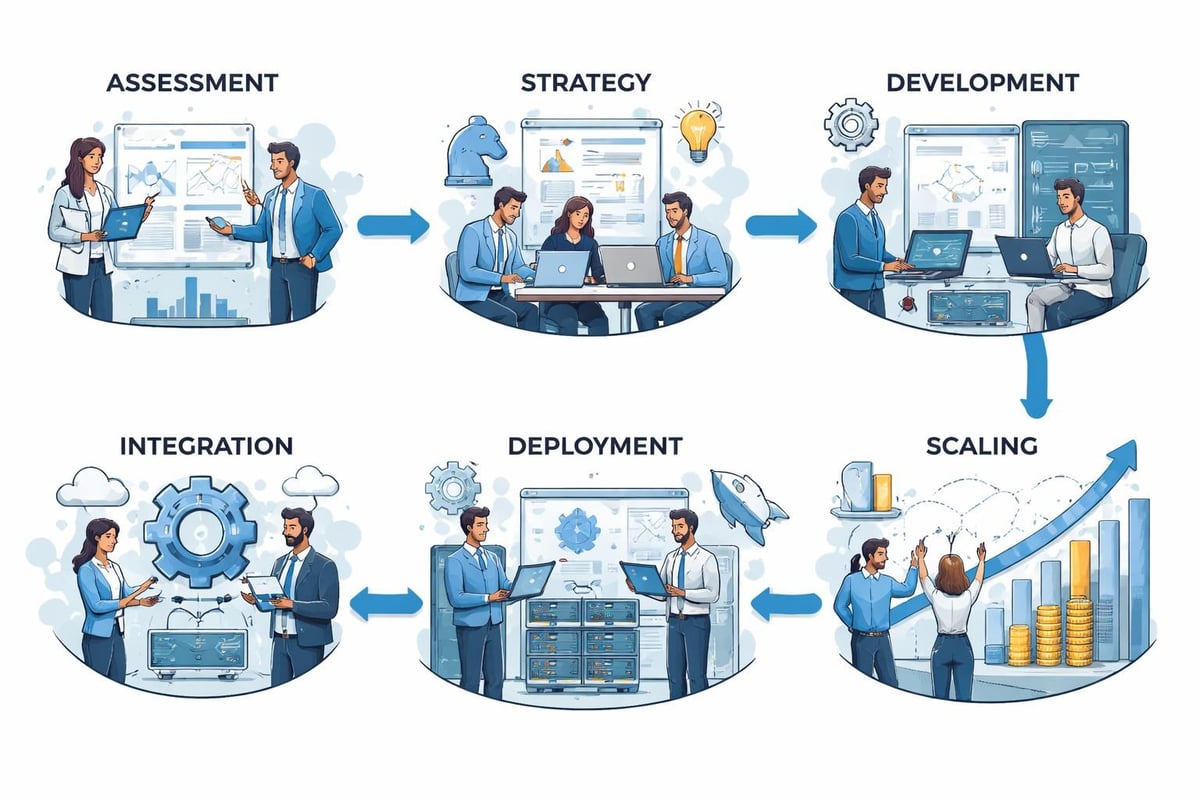
Microsoft’s ecosystem provides robust frameworks for AI as a service deployment, particularly valuable for enterprises already utilizing Azure infrastructure. Working with specialists like Synap AI, organisations can develop tailored implementation strategies that leverage existing investments whilst introducing advanced capabilities.
Data Preparation and Integration
Quality data serves as the foundation for effective AI outcomes. Before deploying AI as a service solutions, organizations must assess their data readiness, addressing issues related to consistency, completeness, and accessibility. Data cleaning, normalization, and enrichment processes ensure that AI models receive reliable inputs that generate accurate predictions and insights.
Integration with existing systems requires thoughtful API design and middleware configuration. Modern AIaaS platforms offer flexible connectivity options, but successful implementations account for data flow patterns, latency requirements, and error handling protocols.
| Integration Phase | Key Activities | Success Metrics |
|---|---|---|
| Data Assessment | Quality audits, gap analysis | Completeness scores |
| System Mapping | API documentation, workflow design | Integration points identified |
| Pilot Deployment | Limited scope testing | Accuracy benchmarks |
| Production Rollout | Full-scale implementation | Adoption rates, ROI |
Industry Applications and Use Cases
AI as a service transforms operations across diverse sectors, each leveraging intelligent capabilities to address industry-specific challenges. Financial services organizations deploy fraud detection systems that analyze transaction patterns in real-time, identifying anomalies that indicate potential security breaches.
Healthcare and Life Sciences
Medical institutions utilize AI as a service for diagnostic support, analyzing medical imaging to identify potential concerns that warrant further investigation. Natural language processing capabilities extract insights from clinical notes, research papers, and patient records, accelerating discovery processes and improving care coordination.
Healthcare applications include:
- Radiology image analysis for early disease detection
- Drug discovery acceleration through molecular modeling
- Patient risk stratification for preventive interventions
- Administrative automation reducing clinician burden
- Personalized treatment recommendations based on genetic profiles
Retail and E-commerce
Customer experience enhancement drives AI as a service adoption in retail environments. Recommendation engines analyze browsing patterns, purchase history, and demographic data to suggest relevant products, increasing conversion rates and average order values. Inventory optimization algorithms predict demand fluctuations, reducing stockouts whilst minimizing excess inventory carrying costs.
Sutherland Global Services demonstrates how retailers deploy AIaaS to create seamless omnichannel experiences that respond intelligently to customer preferences across touchpoints.
Manufacturing and Supply Chain
Predictive maintenance systems monitor equipment performance, identifying potential failures before they occur and scheduling interventions during planned downtime. Quality control applications use computer vision to detect defects in production lines, maintaining consistency whilst reducing waste.
Supply chain optimization leverages AI as a service to forecast demand, optimize routing, and manage complex logistics networks. These capabilities prove especially valuable in volatile markets where traditional planning approaches struggle with rapid changes.
Addressing Challenges and Considerations
Despite significant advantages, AI as a service implementation presents challenges that require proactive management. Data privacy concerns emerge when sensitive information moves to cloud environments, necessitating robust encryption, access controls, and compliance verification.
Ethical AI and Bias Management
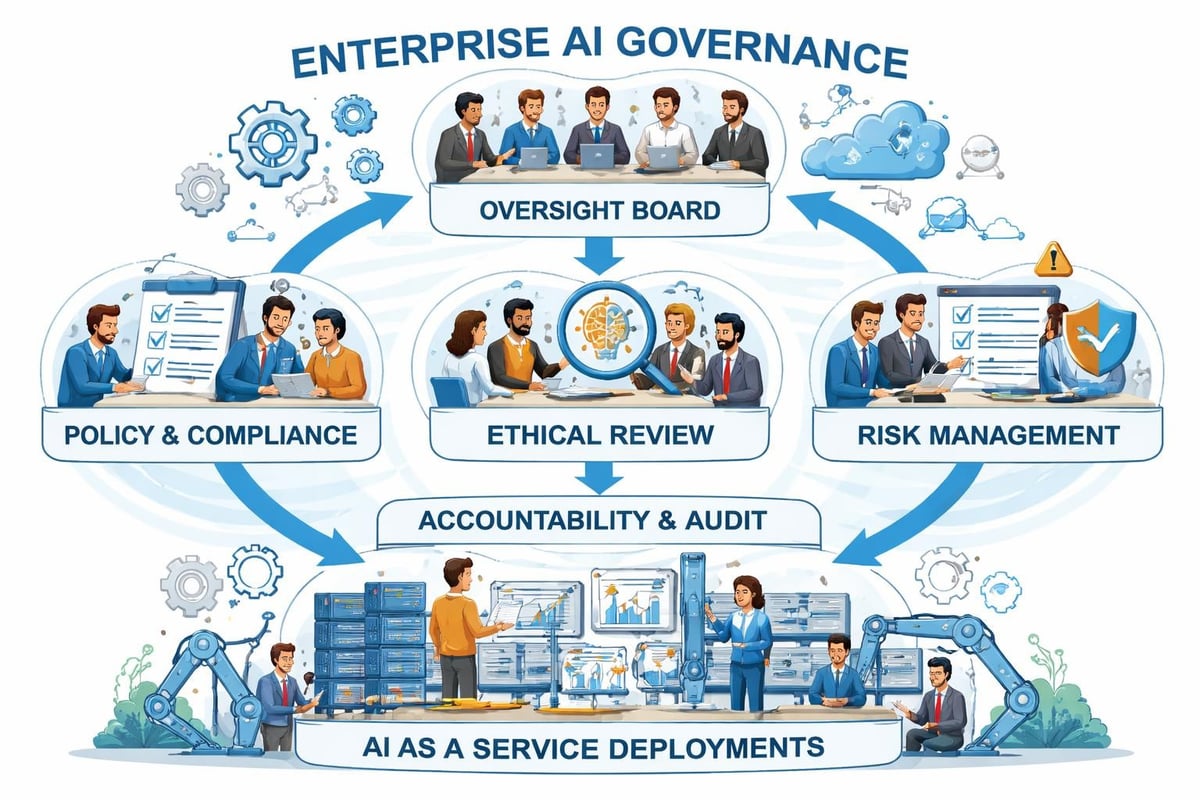
As research on AIaaS bias and fairness demonstrates, ensuring equitable outcomes across diverse populations requires ongoing vigilance. AI models trained on historical data may perpetuate existing biases, leading to discriminatory results in hiring, lending, or service delivery applications.
Organizations must implement governance frameworks that include:
- Regular bias audits across demographic dimensions
- Diverse training datasets representing target populations
- Explainability mechanisms that reveal decision-making logic
- Human oversight for high-stakes decisions
- Continuous monitoring of outcomes and disparities
Vendor Lock-in and Portability
Dependency on specific AIaaS providers creates strategic risks if business needs evolve or provider capabilities fail to keep pace with technological advances. Organizations should prioritize platforms that support standard data formats, open APIs, and model portability.
Exit strategies planned during initial implementation reduce future transition costs. Documentation of custom configurations, training data specifications, and integration patterns facilitates migration if circumstances require changing providers.
Cost Optimization and ROI Measurement
Financial justification for AI as a service investments requires comprehensive analysis that extends beyond simple subscription costs. Total cost of ownership calculations should include data preparation expenses, integration development, change management, and ongoing optimization efforts.
Pricing Models and Budget Planning
AI as a service providers typically offer several pricing structures tailored to different usage patterns. Pay-as-you-go models charge based on actual consumption, ideal for variable workloads with unpredictable demand. Committed use agreements provide discounted rates in exchange for minimum usage commitments, benefiting organizations with steady, predictable requirements.
Budget considerations include:
- API call volumes and transaction processing costs
- Data storage and transfer fees
- Premium features and advanced capabilities
- Support tier selections and service level agreements
- Training and change management investments
Return on investment materializes through multiple channels. Direct cost savings emerge from automation replacing manual processes, whilst revenue enhancements result from improved customer experiences and faster innovation cycles. Productivity gains allow teams to focus on higher-value activities rather than routine tasks.
| ROI Component | Measurement Approach | Typical Timeframe |
|---|---|---|
| Cost Reduction | Labor hours saved, error rates | 3-6 months |
| Revenue Growth | Conversion rates, customer lifetime value | 6-12 months |
| Efficiency Gains | Process cycle times, throughput | 1-3 months |
| Innovation Speed | Time-to-market, feature releases | 6-18 months |
Future Trends and Evolution
The AI as a service landscape continues evolving rapidly as technological capabilities advance and enterprise adoption matures. Edge AI integration represents an emerging trend, processing data locally on devices rather than exclusively in cloud environments. This approach reduces latency, addresses connectivity limitations, and enhances privacy by minimizing data transmission.
Specialized Industry Solutions
Generic AI platforms are giving way to industry-specific offerings that incorporate domain expertise and pre-configured workflows. Healthcare AIaaS includes built-in HIPAA compliance and medical terminology understanding. Financial services solutions integrate regulatory reporting requirements and risk assessment frameworks.
These specialized platforms accelerate implementation by reducing configuration requirements whilst ensuring industry best practices are embedded throughout the solution architecture.
Democratization and Accessibility
Low-code and no-code AI as a service platforms empower business users without technical backgrounds to build and deploy intelligent applications. Visual development environments, pre-built components, and guided workflows enable subject matter experts to automate processes and generate insights without relying on data science teams for every initiative.
This democratization expands AI adoption across organizational levels, though governance frameworks must ensure quality standards and prevent shadow AI deployments that circumvent security protocols.
Understanding monitoring and accountability in AIaaS becomes increasingly important as deployment scales and diverse stakeholders access powerful capabilities.
Building Long-term AI Capabilities
Strategic AI as a service adoption extends beyond individual project implementations to cultivate organizational capabilities that compound over time. Data infrastructure investments made for initial use cases support subsequent applications, creating economies of scale as the AI portfolio expands.
Skills Development and Change Management
Workforce readiness determines whether AI as a service investments deliver sustainable value. Training programs should address both technical skills for teams managing AI systems and change management for employees whose roles evolve through automation.
Capability building priorities include:
- Data literacy across business functions
- AI ethics and responsible use principles
- Integration and API management skills
- Performance monitoring and optimization techniques
- Business process redesign leveraging AI capabilities
Cultural transformation often presents greater challenges than technical implementation. Organizations that communicate transparently about AI’s role, involve employees in deployment decisions, and demonstrate commitment to workforce development achieve higher adoption rates and better outcomes.
Partner Ecosystem Development
Few organizations possess all expertise required for comprehensive AI transformation internally. Strategic partnerships with implementation specialists, technology providers, and industry consultants accelerate progress whilst reducing risk. Microsoft Solutions Partners bring deep platform knowledge and proven methodologies that streamline deployments and maximize return on technology investments.
Collaboration models should clarify responsibilities, establish communication protocols, and define success metrics from project inception. Effective partnerships transfer knowledge to internal teams, building sustainable capabilities rather than creating permanent dependencies.
AI as a service has fundamentally transformed how enterprises access and deploy intelligent technologies, offering scalable, cost-effective solutions that drive measurable business outcomes across industries. Success requires strategic planning, careful vendor selection, and commitment to ongoing optimization as capabilities and business needs evolve. Stellium Consulting partners with enterprises to navigate this transformation, leveraging deep Microsoft expertise to deliver AI-powered solutions that empower employees, enhance processes, and drive meaningful organizational change. Contact us to explore how AI as a service can accelerate your digital transformation journey.