
The artificial intelligence landscape continues to evolve at breathtaking speed, and 2026 promises to be a defining year for enterprise adoption. As organizations move beyond initial experimentation with AI tools, the focus shifts toward strategic integration, measurable business value, and sustainable transformation. Understanding the 2026 AI trends reshaping how businesses operate enables enterprises to position themselves competitively whilst navigating the complexities of implementation, governance, and return on investment.
The Rise of Agentic AI in Enterprise Environments
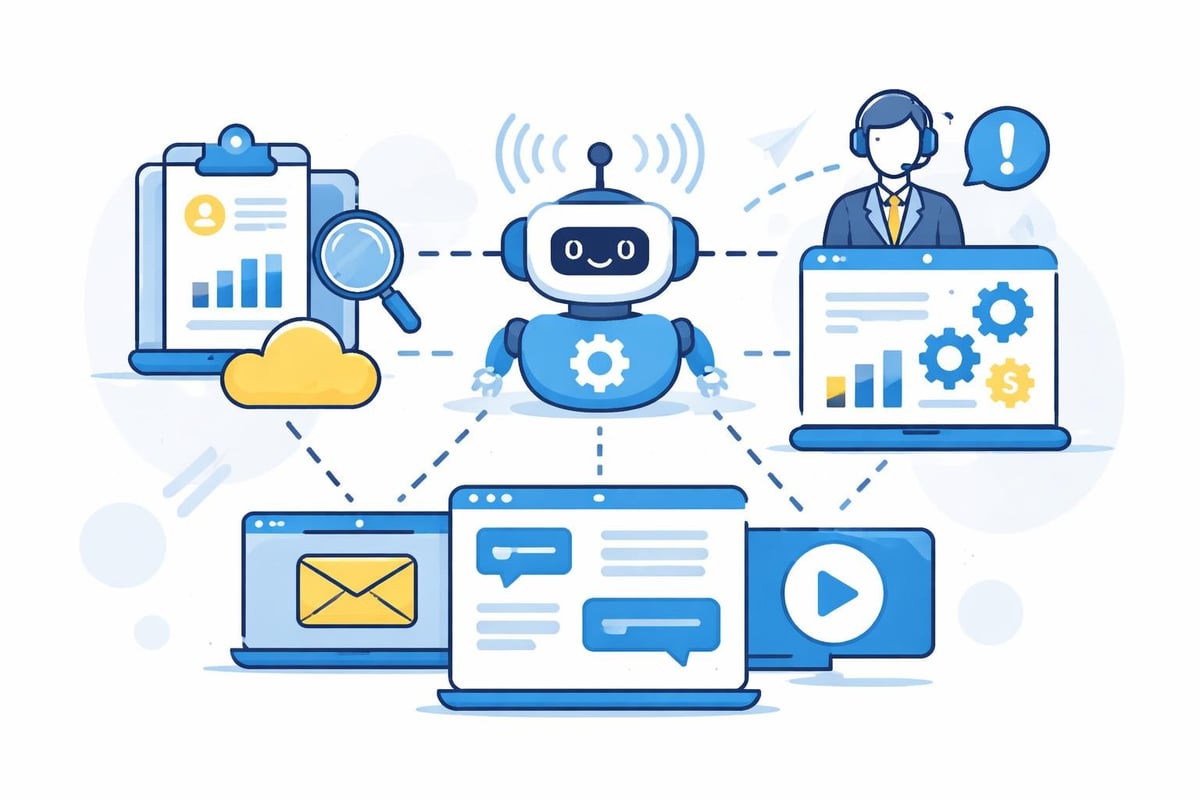
Autonomous AI agents represent one of the most significant 2026 AI trends transforming how organizations operate. Unlike traditional AI tools that respond to prompts, agentic AI systems take initiative, make decisions, and execute complex workflows with minimal human intervention.
These intelligent agents function as digital employees capable of managing multi-step processes across different systems. They handle tasks ranging from customer service escalations to data analysis and report generation. The shift from simple chatbots to sophisticated agents marks a fundamental change in how enterprises leverage AI technology.
Key characteristics of agentic AI include:
- Autonomous decision-making within defined parameters
- Multi-system integration and workflow orchestration
- Continuous learning from interactions and outcomes
- Proactive task initiation based on triggers and conditions
- Natural collaboration with human team members
Organizations implementing AI-powered solutions for enhanced employee productivity discover that agentic AI excels at removing bottlenecks in business processes. These systems work alongside employees rather than replacing them, handling repetitive tasks whilst humans focus on strategic thinking and creative problem-solving.
Implementation Considerations for AI Agents
Successfully deploying AI agents requires careful planning around governance, security, and integration. Enterprises must establish clear boundaries for agent autonomy whilst ensuring alignment with organizational policies and compliance requirements.
The maturation of platforms like Microsoft Copilot Agents enables businesses to build custom solutions tailored to specific workflows and industry requirements. This democratization of agentic AI empowers organizations to create specialized agents without extensive AI expertise.
Domain-Specific Models Outpace General-Purpose AI
The dominance of massive, general-purpose language models gives way to specialized, domain-specific AI systems in 2026. This shift represents one of the most impactful 2026 AI trends for enterprise efficiency and accuracy.
Organizations realize that smaller, purpose-built models trained on industry-specific data deliver superior results for specialized tasks. A legal AI trained exclusively on case law and regulatory documents outperforms general models for contract analysis. Similarly, healthcare AI systems focused on medical literature and patient data provide more reliable diagnostic support.
| Model Type | Training Data Volume | Task Accuracy | Deployment Cost | Maintenance Complexity |
|---|---|---|---|---|
| General-Purpose | Trillions of tokens | 75-85% | High | Moderate |
| Domain-Specific | Billions of tokens | 90-97% | Low | Low |
| Fine-Tuned Hybrid | Moderate + Custom | 85-95% | Moderate | Moderate |
This specialization trend aligns with the evolution of AI infrastructure solutions that support both cloud-based and on-premises deployment of targeted AI models. Organizations gain control over their data whilst optimizing performance for specific use cases.
Advantages of Specialized AI Models
Domain-specific models consume fewer computational resources, reduce latency, and lower operational costs compared to their general-purpose counterparts. They also minimize the risk of hallucinations and irrelevant outputs by focusing exclusively on validated, domain-relevant information.
Financial services firms deploy models trained specifically on market data and regulatory frameworks. Manufacturing organizations implement AI systems focused on production optimization and quality control. These targeted applications deliver measurable ROI faster than generic AI implementations.
The importance of taste and human curation in the creative industry demonstrates how domain expertise combined with AI capabilities produces superior outcomes. Human judgment remains essential for training, validating, and refining specialized models.
Context Engineering Emerges as a Critical Skill
As AI systems become more sophisticated, the ability to provide rich, relevant context supersedes prompt engineering as the primary skill for maximizing AI effectiveness. This evolution represents a fundamental shift in how organizations approach AI interaction and represents a defining characteristic among 2026 AI trends.
Context engineering involves structuring information, defining relationships between data points, and establishing clear parameters for AI decision-making. It requires understanding both the technical capabilities of AI systems and the nuanced requirements of business processes.
Essential elements of effective context engineering:
- Comprehensive data mapping and relationship definition
- Clear objective statements and success criteria
- Relevant examples and edge cases
- Constraints and boundary conditions
- Integration points with existing systems
- Feedback mechanisms for continuous improvement
Organizations investing in optimizing Microsoft Copilot efficiency recognize that context quality directly impacts output quality. Well-structured context enables AI systems to generate accurate, relevant, and actionable insights whilst poorly defined context produces inconsistent results.
Building Context Engineering Capabilities
Developing internal expertise in context engineering requires cross-functional collaboration between IT teams, business units, and AI specialists. Organizations establish centres of excellence focused on documenting processes, mapping data relationships, and creating reusable context templates.
The shift toward context engineering reflects a maturing understanding of AI as a collaborative tool rather than a magic solution. Success depends on human expertise in framing problems, providing relevant information, and interpreting AI-generated outputs within appropriate business contexts.
AI Governance Platforms Become Non-Negotiable
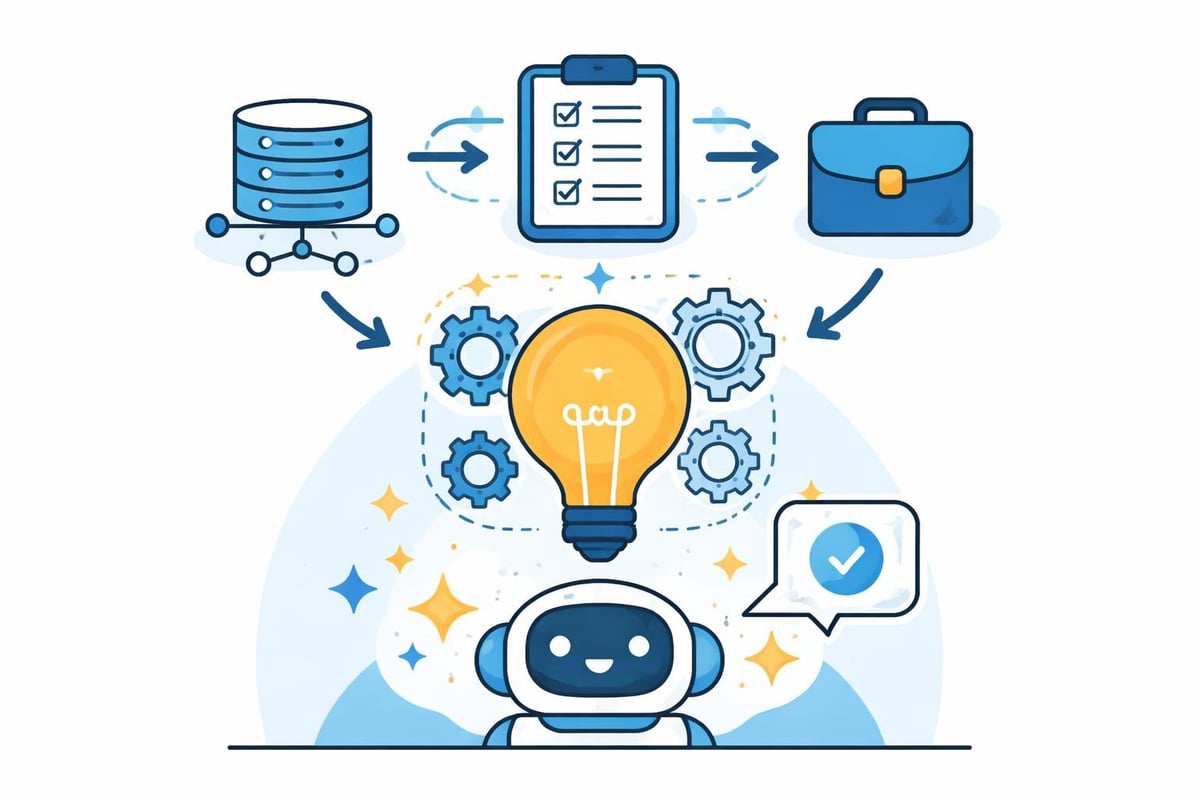
As AI adoption accelerates across enterprises, robust AI governance platforms transition from optional to essential. Organizations face increasing pressure from regulators, stakeholders, and customers to demonstrate responsible AI use, making governance one of the most critical 2026 AI trends.
Comprehensive governance frameworks address ethical considerations, bias detection, security protocols, and compliance requirements. They provide visibility into AI system behaviour, decision-making processes, and data usage across the organization.
Effective governance platforms enable organizations to:
- Track AI model performance and drift over time
- Monitor data lineage and usage patterns
- Enforce access controls and security policies
- Document decisions and maintain audit trails
- Assess bias and fairness in AI outputs
- Ensure regulatory compliance across jurisdictions
The projected IT spending approaching $1.4 trillion in 2026 includes significant investment in AI governance infrastructure. Organizations recognize that ungoverned AI creates existential risks including regulatory penalties, reputational damage, and operational failures.
Balancing Innovation with Control
Governance frameworks must strike a careful balance between enabling innovation and maintaining control. Overly restrictive policies stifle experimentation and slow adoption, whilst insufficient oversight creates compliance and security vulnerabilities.
Leading organizations implement tiered governance approaches that apply different levels of oversight based on AI system risk profiles. Low-risk applications like content suggestions receive lighter governance whilst high-risk systems involving financial decisions or personal data undergo rigorous oversight.
Microsoft’s AI governance tools integrate with existing enterprise security and compliance frameworks, enabling organizations to extend proven governance models to AI systems. This integration reduces complexity whilst ensuring consistent policy enforcement across traditional and AI-powered systems.
Embedded AI Becomes Invisible Infrastructure
AI integration into everyday business applications reaches a tipping point in 2026 where AI becomes embedded infrastructure rather than standalone tools. This seamless integration represents perhaps the most transformative of all 2026 AI trends for day-to-day business operations.
Users interact with AI capabilities without explicitly launching AI tools or crafting prompts. CRM systems automatically generate customer insights, project management platforms predict delays and suggest mitigations, and collaboration tools surface relevant information contextually.
This invisible AI delivers value through:
- Real-time data analysis and pattern recognition
- Proactive recommendations within workflow context
- Automated routine tasks and data entry
- Intelligent search and information retrieval
- Adaptive interfaces that learn user preferences
The six AI trends shaping enterprise transformation emphasize how AI moves from being a separate technology layer to becoming woven into the fabric of business applications. Organizations benefit from AI capabilities without requiring employees to become AI experts.
The User Experience Revolution
Embedded AI fundamentally changes how employees interact with enterprise software. Applications anticipate needs, surface relevant information, and streamline workflows without explicit user commands. This shift reduces training requirements and accelerates adoption across all skill levels.
Organizations implementing low-code AI platforms enable business users to customize embedded AI capabilities without coding expertise. Citizen developers extend AI functionality to address specific departmental needs whilst IT maintains governance and security oversight.
Multimodal AI Systems Transform Business Intelligence
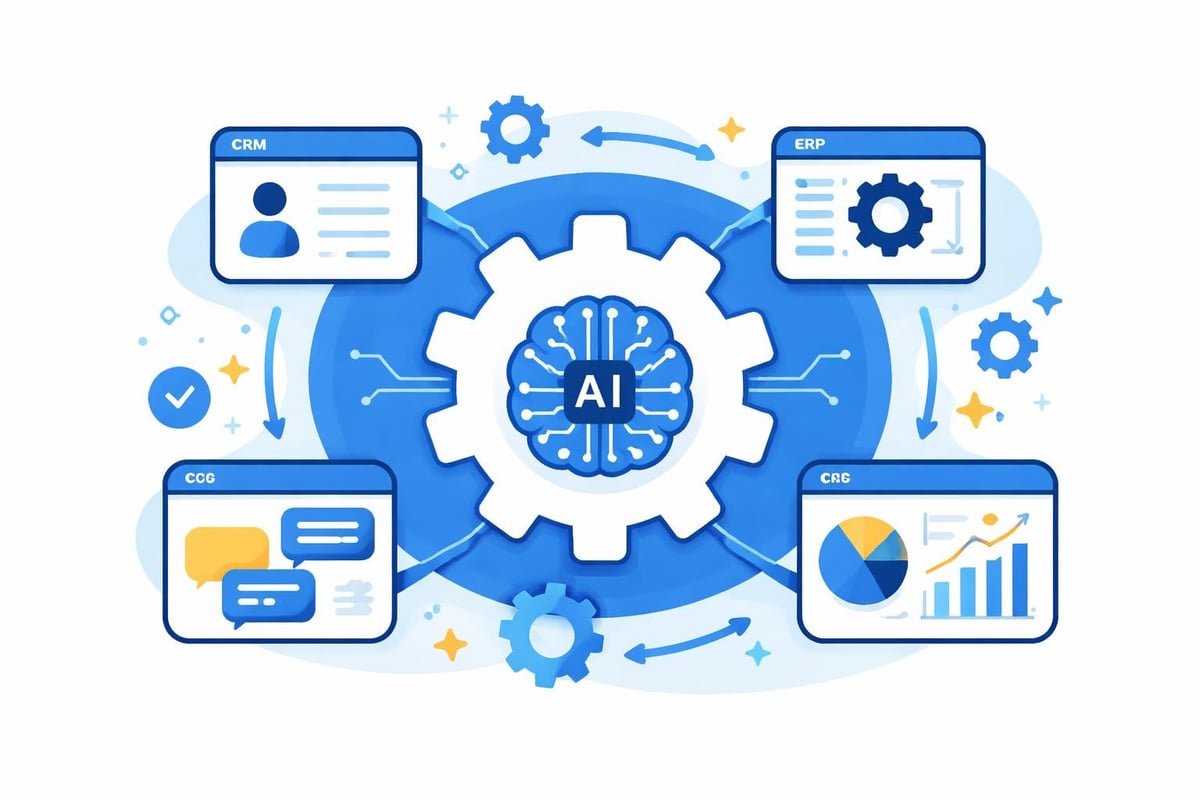
The convergence of text, image, video, audio, and data analysis in unified AI systems creates unprecedented opportunities for business intelligence using AI. Multimodal capabilities enable enterprises to extract insights from diverse information sources simultaneously.
Organizations analyze customer service calls alongside chat transcripts, product images, and usage data to identify patterns invisible to single-mode analysis. Manufacturing facilities combine sensor data, maintenance logs, video feeds, and environmental readings to predict equipment failures with remarkable accuracy.
| Use Case | Input Modalities | Output Type | Business Impact |
|---|---|---|---|
| Customer Sentiment Analysis | Text, Audio, Video | Sentiment Scores + Insights | 35% improvement in satisfaction |
| Quality Control | Images, Sensor Data, Specifications | Defect Identification | 42% reduction in defects |
| Market Research | Text, Images, Social Media | Trend Analysis | 28% faster product development |
| Training Effectiveness | Video, Audio, Assessment Data | Competency Mapping | 31% improvement in retention |
Multimodal AI systems process information more like humans do, considering multiple perspectives and data types simultaneously. This holistic approach uncovers relationships and insights that single-mode analysis misses entirely.
Implementation Strategies for Multimodal AI
Successfully deploying multimodal AI requires integrating data from disparate sources and systems. Organizations establish data lakes and warehouses that consolidate structured and unstructured information whilst maintaining appropriate access controls and governance.
The maturation of AI-powered solutions for enterprise transformation enables organizations to implement multimodal systems without building everything from scratch. Cloud platforms provide pre-built connectors, processing pipelines, and analysis tools that accelerate time-to-value.
The Democratization of AI Development Accelerates
Low-code and no-code AI development platforms remove technical barriers that previously limited AI adoption to organizations with extensive data science resources. This democratization represents a foundational shift among 2026 AI trends, enabling broader participation in AI innovation.
Business analysts, department managers, and subject matter experts build AI solutions addressing specific operational challenges without computer science degrees. Visual development environments replace complex coding requirements with intuitive interfaces and pre-built components.
Benefits of democratized AI development include:
- Faster solution deployment for department-specific needs
- Reduced dependency on centralized IT resources
- Innovation from employees closest to business problems
- Lower development and maintenance costs
- Broader organizational AI literacy and adoption
Organizations embracing AI adoption best practices establish centres of excellence that provide training, templates, and governance frameworks for citizen developers. This structured approach enables innovation whilst maintaining quality, security, and compliance standards.
Balancing Accessibility with Quality
Democratization introduces risks around inconsistent implementations, ungoverned deployments, and technical debt. Organizations address these challenges through platform standardization, mandatory training programmes, and automated quality checks.
Microsoft Power Platform exemplifies this balance, providing accessible development tools within a governed framework. Citizen developers create solutions using approved components and templates whilst IT maintains oversight through centralized administration and monitoring.
AI Video Generation Reaches Enterprise Maturity
Video content generation powered by AI transitions from experimental novelty to practical business tool in 2026. Organizations leverage AI video capabilities for training materials, product demonstrations, marketing content, and internal communications.
Enterprise-grade video AI systems generate photorealistic content, animate static images, and translate videos into multiple languages whilst maintaining lip-sync accuracy. These capabilities democratize video production, enabling organizations to create professional content without expensive production teams.
The maturation of AI video generation enables practical applications including:
- Personalized training videos customized for individual learning paths
- Product demonstrations showing variations and configurations
- Multilingual marketing content maintaining brand consistency
- Executive communications reaching global audiences
- Simulated scenarios for risk assessment and planning
Organizations implement AI video generation within existing content management workflows, applying governance policies that ensure brand compliance and factual accuracy. Human oversight remains essential for reviewing and approving AI-generated video content before publication.
Quality Control and Brand Consistency
Enterprises establish quality frameworks for AI-generated video that address accuracy, brand alignment, and regulatory compliance. Templates, style guides, and approval workflows ensure consistency whilst enabling scalable production.
The combination of AI efficiency and human creative direction produces superior results to either approach alone. Marketing teams conceptualize campaigns and provide creative direction whilst AI handles production, localization, and variation generation.
Hybrid AI Architectures Optimize Cost and Performance
Organizations move beyond all-cloud or all-on-premises approaches to implement hybrid AI architectures that optimize for cost, performance, latency, and data sovereignty. This pragmatic approach represents a maturing perspective among 2026 AI trends.
Hybrid architectures place AI workloads based on specific requirements rather than technological preferences. Real-time customer interactions run on edge devices for minimal latency. Sensitive data analysis occurs on-premises for compliance and security. Large-scale training workloads leverage cloud compute resources for efficiency.
Hybrid architecture decision factors:
- Data sensitivity and regulatory requirements
- Latency and performance needs
- Cost optimization across workloads
- Integration with existing systems
- Scalability and flexibility requirements
The evolution of AI infrastructure solutions enables seamless workload distribution across cloud, on-premises, and edge environments. Organizations maintain consistent governance, security, and monitoring regardless of where AI systems execute.
Managing Complexity in Hybrid Environments
Hybrid architectures introduce orchestration and management challenges that organizations address through unified control planes and standardized deployment frameworks. Containerization and microservices architectures enable portable AI workloads that move between environments based on changing requirements.
Microsoft Azure provides hybrid capabilities that extend AI services across cloud and on-premises infrastructure whilst maintaining consistent APIs, governance, and security models. This approach simplifies hybrid deployment whilst preserving architectural flexibility.
Continuous Learning Systems Replace Static Models
AI systems that learn continuously from new data and user interactions replace static models requiring periodic retraining. This shift toward adaptive AI represents a fundamental change in how organizations maintain and improve AI capabilities.
Continuous learning systems automatically incorporate feedback, adjust to changing patterns, and improve performance over time without manual intervention. They adapt to evolving business conditions, market dynamics, and user behaviours whilst maintaining governance and quality standards.
Organizations implementing continuous learning AI benefit from:
- Reduced model maintenance overhead
- Faster adaptation to market changes
- Improved accuracy through ongoing refinement
- Automated detection and correction of drift
- Lower total cost of ownership
The implementation challenges enterprises face often stem from maintenance burdens of static models. Continuous learning reduces these burdens whilst improving AI system effectiveness over time.
Governance for Adaptive Systems
Continuous learning introduces governance challenges around ensuring quality, preventing bias accumulation, and maintaining explainability. Organizations implement monitoring frameworks that track model behaviour, detect anomalies, and trigger human review when systems deviate from expected patterns.
Automated testing, validation datasets, and performance thresholds ensure continuous learning improves rather than degrades AI system quality. Organizations establish rollback procedures and approval gates for significant model changes even within automated learning frameworks.
Integration Between AI Systems Creates Compound Value
Individual AI systems working in isolation give way to interconnected AI ecosystems where multiple systems collaborate to deliver compound value. This integration represents one of the most powerful 2026 AI trends for enterprise transformation.
Connected AI systems share context, insights, and decisions across business functions. Customer service AI informs product development AI which influences marketing AI creating closed-loop intelligence that drives continuous improvement.
| Integration Type | Connected Systems | Value Creation | Implementation Complexity |
|---|---|---|---|
| Sequential | CRM → Marketing Automation | Personalized campaigns | Low |
| Parallel | Inventory + Demand Forecasting | Optimized stock levels | Moderate |
| Feedback Loop | Service AI ↔ Product AI | Continuous improvement | High |
| Orchestrated | Finance + Operations + HR | Holistic planning | Very High |
Organizations building comprehensive AI adoption strategies recognize that integrated AI ecosystems deliver exponentially greater value than disconnected point solutions. The whole becomes genuinely greater than the sum of its parts.
Building Interoperable AI Systems
Achieving effective AI integration requires standardized data models, APIs, and communication protocols. Organizations establish integration architectures that enable AI systems to exchange information securely whilst maintaining appropriate access controls and governance.
Microsoft’s AI ecosystem exemplifies this approach, with Azure AI services, Copilot capabilities, and Power Platform components designed for seamless integration. Organizations leverage these pre-built integrations whilst extending them with custom AI systems through standard APIs and connectors.
The 2026 AI trends outlined here represent both tremendous opportunities and significant challenges for enterprises pursuing digital transformation. Organizations that move beyond tactical AI experiments toward strategic, integrated AI implementations position themselves for sustainable competitive advantage. As businesses navigate this evolving landscape, partnering with experienced specialists becomes increasingly valuable. Stellium Consulting helps enterprises develop comprehensive AI strategies, implement governance frameworks, and deploy Microsoft-based AI solutions that deliver measurable business value whilst managing risks and ensuring responsible AI use.